
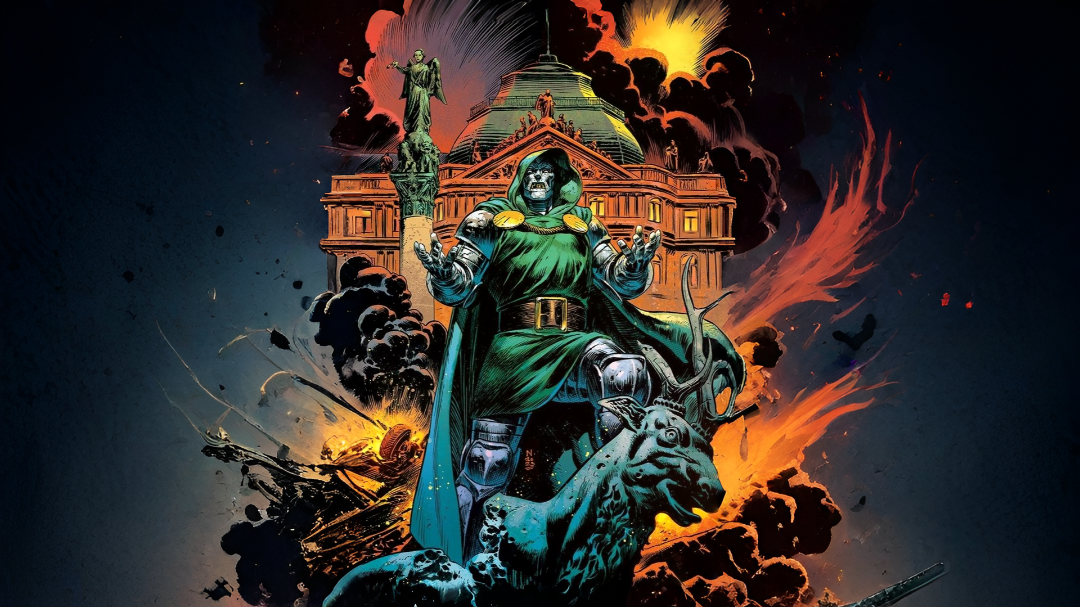
Doctor Doom has spent decades as one of Marvel’s most dangerous villains, but his motivations have never been as simple as destroying everything for the sake of destruction. In Marvel Comics, Victor von Doom has repeatedly believed that his intelligence and power give him the ability to create a better future, even when his methods are ruthless.
That makes his role in Avengers: Doomsday especially interesting. Marvel has confirmed Robert Downey Jr. will play Victor von Doom, while Disney describes the movie as a story involving heroes from three distinct universes facing an existential threat. The film is currently scheduled for December 18, 2026.
What Marvel has not confirmed is Doom’s complete objective.
There is no official confirmation that he wants to destroy the multiverse. There is also no confirmation that he intends to save it. Those questions remain open, which is why Doom’s comic-book history has become so important when trying to understand the possibilities.
One of the biggest clues comes from the 2015 Secret Wars storyline. In that story, Doom actually saves what remains of the collapsing multiverse before creating Battleworld and placing himself at its center. Marvel’s official guide describes his actions as both an attempt to preserve reality and an attempt to reshape it according to his own vision.
That creates a very different picture of Doctor Doom.
He may not see himself as the villain.
He may believe that he is the only person capable of saving everyone.
Why Fans Are Questioning Doctor Doom’s Real Motives
The biggest reason fans are questioning Doctor Doom’s motives is his history in Marvel Comics. Doom is undeniably a villain, but he is not always motivated by simple destruction.
His character is built around a combination of extraordinary intelligence, enormous ambition and an almost absolute belief in his own superiority. He frequently believes that other heroes are too weak, too emotional or too divided to make the decisions necessary to protect the world.
That becomes particularly important when reality itself is threatened.
In the 2015 Secret Wars story, Marvel establishes that the multiverse is facing catastrophic destruction. Doom works with Molecule Man against the Beyonders and eventually gains the power necessary to preserve what remains of reality. Marvel’s official guide says Doom used that power to salvage the remaining multiverse and create his own version of Battleworld.
So the interesting question is not simply whether Doom can save reality.
The comics show that he can.
The bigger question is what he believes he is entitled to do after saving it.
Doom’s solution does not leave the surviving heroes with their old lives. Battleworld becomes a reality built around Doom’s authority, and its inhabitants are made to accept the world he has created. Marvel notes that the surviving heroes eventually realize what Doom has done and challenge his rule.
That moral conflict could be extremely important for the MCU.
If Avengers: Doomsday gives Doom a similar philosophy, he could genuinely believe that his actions are necessary while the Avengers see them as unacceptable.
What Does Saving the Multiverse Actually Mean?
Saving the multiverse sounds straightforward until the word “saving” is examined more closely.
If every universe is in danger of being destroyed, the ideal solution would be to protect every reality and every person living inside them. But a multiversal crisis could create situations where saving everything is impossible.
Marvel Comics has already explored this idea through incursions and the events leading to Secret Wars. In the 2015 storyline, realities are destroyed as the multiverse collapses, leaving only a tiny portion of what once existed. Doom ultimately uses his power to preserve fragments of those lost realities and combine them into Battleworld.
From one perspective, Doom has saved something.
From another, he has destroyed the original reality and replaced it with his own creation.
That difference is exactly where Doom’s morality becomes complicated.
A person who saves one billion people while allowing another billion to die might describe the result as a necessary sacrifice. The people who lost everything would probably describe it very differently.
For Doom, this distinction may not matter as much because he tends to judge outcomes according to his own standards.
If he believes his plan prevents total destruction, he may consider almost any cost acceptable.
The MCU has not confirmed that this will be Doom’s philosophy in Doomsday. But it is a strong example of why the phrase “saving the multiverse” may not mean restoring everything exactly as it was.
Could Destroying One Universe Save Another?
In a multiversal crisis, one of the most difficult possibilities is that saving one reality could require sacrificing another.
This idea is closely connected to the concept of an incursion in Marvel Comics. When two universes move toward destruction through an incursion, there may be no simple solution that allows both realities to survive.
The 2015 Secret Wars storyline takes this concept to its most extreme conclusion. As the multiverse collapses, entire realities disappear. Doom eventually uses the remnants of destroyed universes to construct Battleworld rather than allowing everything to vanish completely.
That creates a disturbing question for the Avengers: if they can save their own universe only by allowing another one to die, should they do it?
Doom might answer yes.
The Avengers might not.
This is one possible reason Doom could see the heroes as obstacles rather than allies. If he believes there is only one viable solution, he may not be willing to let moral hesitation stop him.
The MCU has not confirmed that Doomsday will involve one universe being deliberately sacrificed to save another. That remains speculation.
But the existence of multiple universes in the movie’s confirmed setup makes the broader question highly relevant. Disney describes heroes from three distinct universes facing an existential threat, meaning the movie is clearly operating on a much larger scale than a normal Earth-based superhero conflict.
Why Might the Avengers Disagree With Doctor Doom?
The Avengers and Doctor Doom could potentially agree about the problem while completely disagreeing about the solution.
That would be a much more interesting conflict than simply having Doom announce that he wants to destroy the universe.
Imagine that Doom discovers that the multiverse really is approaching a catastrophic collapse.
His response could be to impose a single solution on everyone.
The Avengers, however, are unlikely to accept the idea that one person should decide which worlds survive and which ones do not.
That philosophical difference is consistent with Doom’s comic-book history. In Secret Wars, he creates a reality in which he is effectively the supreme ruler. Marvel’s official history describes Battleworld as a patchwork of realities under Doom’s control, with different regions governed by warlords who ultimately answer to him.
The Avengers would have another reason to distrust him: Doom’s definition of peace often involves control.
A world where nobody can fight because Doom controls everything might look peaceful from his perspective. To the Avengers, removing people’s freedom to make their own choices would not be a victory.
This could make Doom’s argument surprisingly difficult to defeat.
The heroes may not be able to prove that his assessment of the crisis is wrong. They may only be able to argue that his solution is unacceptable.
That distinction could become central to the conflict in Avengers: Doomsday.
Could Doctor Doom Be Using Extreme Methods for a Greater Purpose?
Doctor Doom’s history makes this possibility especially believable.
He has repeatedly demonstrated a willingness to use extreme methods when he believes they will produce a result he considers necessary. His actions can be ruthless, manipulative and morally indefensible, but the character often sees those methods as part of a larger objective.
The 2015 Secret Wars story provides the clearest example.
Doom does not simply stand back and watch the multiverse collapse. He actively works against the force responsible for the destruction, eventually gains enormous power and uses it to preserve what remains. Marvel’s official guide explicitly describes him as saving the remaining multiverse before rebuilding it in his own image.
The problem is what happens next.
Doom does not restore the multiverse and quietly disappear.
He creates Battleworld and rules it.
That is the central contradiction of his character: Doom can sometimes do something that genuinely benefits others while simultaneously using the situation to increase his own power.
This is why calling him simply a hero would be inaccurate.
A character does not become heroic merely because one of his actions produces a positive result.
Doom’s motives, methods and final objective all matter.
If the MCU adapts this aspect of the character, Doomsday could present a villain whose plan has a legitimate reason behind it but whose methods create an entirely different danger.
What Do Marvel Comics Reveal About Doom’s Moral Complexity?
Marvel Comics have repeatedly shown that Doctor Doom is capable of both extraordinary cruelty and unexpected acts that can benefit other people.
That does not erase his villainous nature.
Instead, it makes him unpredictable.
Marvel’s official Doctor Doom reading guide highlights stories across his history that show this complicated character. In one storyline, Doom seeks help from the Fantastic Four despite being their sworn enemy. In another, he becomes a godlike figure and must be stopped by the Avengers. The same guide also identifies Secret Wars (2015), where Doom saves the Marvel Multiverse from collapse before rebuilding it in his own image.
There are also stories where Doom takes on more complicated heroic roles.
For example, Marvel’s guide identifies Infamous Iron Man, where Victor emerges as “a new kind of hero” following Tony Stark’s death, although he continues to struggle with his past.
That does not mean Doom has permanently transformed into a hero.
Instead, it demonstrates that Marvel has already explored the idea of Victor temporarily occupying a heroic position while remaining fundamentally complicated.
This history gives the MCU plenty of material to work with.
If Avengers: Doomsday presents Doom as someone who genuinely believes he is saving reality, audiences may understand his argument without agreeing with him.
That is much more interesting than making him evil simply because the story requires a villain.
Has Doctor Doom Ever Saved Reality Before?
Yes. Marvel Comics have explicitly portrayed Doctor Doom as saving the multiverse from total collapse.
The clearest example is the 2015 Secret Wars storyline.
According to Marvel’s official guide, the Beyonders had created a plan involving Molecule Men across different universes that would ultimately result in the destruction of everything in the multiverse. Doom and Molecule Man developed a counter-plan, eventually allowing Doom to confront the Beyonders and gain their power.
Doom then used that power to salvage what remained of the multiverse and create Battleworld.
So, in a very literal sense, Doom became the person who preserved something when almost everything else was being destroyed.
But there is an important catch.
Doom did not save the multiverse simply because he wanted to help everyone.
He used the opportunity to create a reality in which he was the supreme ruler.
The surviving heroes eventually discovered what had happened and opposed him. Reed Richards ultimately confronted Doom and helped restore the multiverse.
That story perfectly captures Doom’s moral complexity.
He can be the person who prevents complete annihilation and still become the person the heroes need to defeat afterward.
That is why his comic-book history is so relevant to the question surrounding Avengers: Doomsday.
Could the Avengers Eventually Need Doctor Doom’s Help?
It is possible, but there is currently no official confirmation that the Avengers will willingly work with Doctor Doom in Avengers: Doomsday.
The idea makes sense because a sufficiently large multiversal crisis could require knowledge or abilities that the heroes do not possess.
Doom is not simply a physically powerful villain. His comic-book character is built around science, technology, strategy and, in many stories, mystical knowledge. If the threat involves the structure of reality itself, those abilities could make him uniquely valuable.
But needing Doom would not necessarily mean trusting him.
The Avengers could theoretically cooperate with him because the alternative is worse.
That type of uneasy alliance would also fit Marvel’s broader history with the character. Doom has previously worked alongside characters and groups that he normally opposes when circumstances required it, while continuing to pursue his own interests. Marvel’s official reading guide even highlights a story in which Doom seeks aid from the Fantastic Four despite their long-standing rivalry.
The biggest problem would be the moment Doom’s interests diverge from the heroes’ goals.
If Doom believes sacrificing one universe is necessary, would the Avengers accept it?
If he believes humanity must surrender freedom for survival, would they agree?
If he believes only one person can control the new reality, would they allow him to be that person?
Those questions could make any alliance extremely fragile.
For now, an Avengers-Doom alliance remains a possibility rather than a confirmed part of the movie’s story.
What Happens If Doctor Doom’s Plan Is Actually the Only Solution?
This could be the most difficult scenario for the Avengers.
If Doom’s plan is simply evil, the heroes know what they need to do: stop him.
But what if Doom discovers a genuine multiversal threat and develops the only method capable of preventing total destruction?
Then defeating Doom might actually make the situation worse.
That is where the distinction between the problem and the solution becomes important.
Doom could be completely correct that reality is in danger while still being completely wrong about his right to control everyone.
The 2015 Secret Wars story demonstrates this contradiction. Doom really did preserve what remained of the multiverse, but he also transformed it into Battleworld and ruled over the surviving population. Marvel’s official account presents both sides of his actions: he saved the remnants of reality, then created a world built around his own authority.
The MCU could potentially use a similar moral dilemma without copying the comic exactly.
The Avengers might eventually discover that Doom’s warning is correct.
They could even be forced to work with him temporarily.
But that would not necessarily mean accepting his final solution.
The heroes could attempt to find a third option: one that saves reality without placing every surviving universe under Doom’s control.
Whether such an option exists is exactly the kind of question that could drive the story toward Avengers: Secret Wars.
For now, there is no official confirmation that Doom’s plan is the only solution. The movie’s full plot remains unrevealed.
What is clear is that Doctor Doom’s comic-book history gives Marvel a powerful way to make the conflict morally complicated: Doom can be right about the danger without being right about what should happen next.
FAQs
1. Is Doctor Doom actually evil?
Doctor Doom is generally portrayed as a villain in Marvel Comics, particularly because of his ambition, authoritarian rule and willingness to use extreme methods. However, his morality is more complicated than simple destruction. Marvel has also depicted him saving reality and temporarily taking on heroic roles. His actions in the 2015 Secret Wars storyline are a major example of this complexity.
2. Has Doctor Doom ever saved the world?
Yes. Doctor Doom has saved the world or reality in several Marvel Comics stories. The clearest example is Secret Wars (2015), where he saves what remains of the multiverse from total collapse and creates Battleworld. However, Doom then rules that new reality himself, showing that his idea of saving the world can come with a very high price.
3. Could Doctor Doom be an antihero in Avengers: Doomsday?
It is possible, but Marvel has not confirmed that the MCU version of Doctor Doom will be an antihero. His comic-book history includes morally complicated and temporarily heroic periods, including Infamous Iron Man. However, the movie’s exact characterization and motives have not yet been fully revealed.
4. Why would Doctor Doom want to save the multiverse?
If the MCU follows elements of Doom’s comic-book history, he could believe that the multiverse is facing a threat that only he can solve. In Secret Wars (2015), Doom genuinely acts to prevent the complete destruction of the multiverse before creating Battleworld and ruling it. Whether the MCU will use a similar motivation remains unconfirmed.
5. Will the Avengers work with Doctor Doom?
There is currently no official confirmation that the Avengers will form an alliance with Doctor Doom in Avengers: Doomsday. An uneasy alliance is possible if the multiversal threat becomes severe enough, but it remains speculation until Marvel reveals more of the story.
6. What is Doctor Doom’s real motivation?
Marvel has not publicly revealed Doctor Doom’s complete motivation in Avengers: Doomsday. His comic-book history suggests that power, control, protection of reality and his belief in his own superiority can all influence his decisions. The 2015 Secret Wars story shows that Doom can genuinely try to save reality while simultaneously reshaping it according to his own vision.
Conclusion
Doctor Doom may be one of Marvel’s most dangerous villains, but the idea that he simply wants to destroy the multiverse does not fully fit his comic-book history.
In Secret Wars (2015), Doom actually saves what remains of the multiverse from complete collapse. The problem is that his version of salvation comes with absolute control: he creates Battleworld, rules it as its supreme authority and reshapes reality according to his own vision.
That history does not prove that the MCU will give Doctor Doom the same plan in Avengers: Doomsday. Marvel has not yet revealed his complete objective.
But it creates an important possibility.
Doom could believe that the multiverse genuinely needs to be saved while the Avengers believe that his method of saving it is worse than the crisis itself.
If that is the direction Marvel takes, the most important question may not be whether Doctor Doom is right or wrong.
It may be whether the Avengers can find a way to save reality without allowing Doom to decide what that reality becomes.
Doctor Doom has spent decades as one of Marvel’s most dangerous villains, but his motivations have never been as simple as destroying everything for the sake of destruction. In Marvel Comics, Victor von Doom has repeatedly believed that his intelligence and power give him the ability to create a better future, even when his methods are ruthless.
That makes his role in Avengers: Doomsday especially interesting. Marvel has confirmed Robert Downey Jr. will play Victor von Doom, while Disney describes the movie as a story involving heroes from three distinct universes facing an existential threat. The film is currently scheduled for December 18, 2026.
What Marvel has not confirmed is Doom’s complete objective.
There is no official confirmation that he wants to destroy the multiverse. There is also no confirmation that he intends to save it. Those questions remain open, which is why Doom’s comic-book history has become so important when trying to understand the possibilities.
One of the biggest clues comes from the 2015 Secret Wars storyline. In that story, Doom actually saves what remains of the collapsing multiverse before creating Battleworld and placing himself at its center. Marvel’s official guide describes his actions as both an attempt to preserve reality and an attempt to reshape it according to his own vision.
That creates a very different picture of Doctor Doom.
He may not see himself as the villain.
He may believe that he is the only person capable of saving everyone.
Why Fans Are Questioning Doctor Doom’s Real Motives
The biggest reason fans are questioning Doctor Doom’s motives is his history in Marvel Comics. Doom is undeniably a villain, but he is not always motivated by simple destruction.
His character is built around a combination of extraordinary intelligence, enormous ambition and an almost absolute belief in his own superiority. He frequently believes that other heroes are too weak, too emotional or too divided to make the decisions necessary to protect the world.
That becomes particularly important when reality itself is threatened.
In the 2015 Secret Wars story, Marvel establishes that the multiverse is facing catastrophic destruction. Doom works with Molecule Man against the Beyonders and eventually gains the power necessary to preserve what remains of reality. Marvel’s official guide says Doom used that power to salvage the remaining multiverse and create his own version of Battleworld.
So the interesting question is not simply whether Doom can save reality.
The comics show that he can.
The bigger question is what he believes he is entitled to do after saving it.
Doom’s solution does not leave the surviving heroes with their old lives. Battleworld becomes a reality built around Doom’s authority, and its inhabitants are made to accept the world he has created. Marvel notes that the surviving heroes eventually realize what Doom has done and challenge his rule.
That moral conflict could be extremely important for the MCU.
If Avengers: Doomsday gives Doom a similar philosophy, he could genuinely believe that his actions are necessary while the Avengers see them as unacceptable.
What Does Saving the Multiverse Actually Mean?
Saving the multiverse sounds straightforward until the word “saving” is examined more closely.
If every universe is in danger of being destroyed, the ideal solution would be to protect every reality and every person living inside them. But a multiversal crisis could create situations where saving everything is impossible.
Marvel Comics has already explored this idea through incursions and the events leading to Secret Wars. In the 2015 storyline, realities are destroyed as the multiverse collapses, leaving only a tiny portion of what once existed. Doom ultimately uses his power to preserve fragments of those lost realities and combine them into Battleworld.
From one perspective, Doom has saved something.
From another, he has destroyed the original reality and replaced it with his own creation.
That difference is exactly where Doom’s morality becomes complicated.
A person who saves one billion people while allowing another billion to die might describe the result as a necessary sacrifice. The people who lost everything would probably describe it very differently.
For Doom, this distinction may not matter as much because he tends to judge outcomes according to his own standards.
If he believes his plan prevents total destruction, he may consider almost any cost acceptable.
The MCU has not confirmed that this will be Doom’s philosophy in Doomsday. But it is a strong example of why the phrase “saving the multiverse” may not mean restoring everything exactly as it was.
Could Destroying One Universe Save Another?
In a multiversal crisis, one of the most difficult possibilities is that saving one reality could require sacrificing another.
This idea is closely connected to the concept of an incursion in Marvel Comics. When two universes move toward destruction through an incursion, there may be no simple solution that allows both realities to survive.
The 2015 Secret Wars storyline takes this concept to its most extreme conclusion. As the multiverse collapses, entire realities disappear. Doom eventually uses the remnants of destroyed universes to construct Battleworld rather than allowing everything to vanish completely.
That creates a disturbing question for the Avengers: if they can save their own universe only by allowing another one to die, should they do it?
Doom might answer yes.
The Avengers might not.
This is one possible reason Doom could see the heroes as obstacles rather than allies. If he believes there is only one viable solution, he may not be willing to let moral hesitation stop him.
The MCU has not confirmed that Doomsday will involve one universe being deliberately sacrificed to save another. That remains speculation.
But the existence of multiple universes in the movie’s confirmed setup makes the broader question highly relevant. Disney describes heroes from three distinct universes facing an existential threat, meaning the movie is clearly operating on a much larger scale than a normal Earth-based superhero conflict.
Why Might the Avengers Disagree With Doctor Doom?
The Avengers and Doctor Doom could potentially agree about the problem while completely disagreeing about the solution.
That would be a much more interesting conflict than simply having Doom announce that he wants to destroy the universe.
Imagine that Doom discovers that the multiverse really is approaching a catastrophic collapse.
His response could be to impose a single solution on everyone.
The Avengers, however, are unlikely to accept the idea that one person should decide which worlds survive and which ones do not.
That philosophical difference is consistent with Doom’s comic-book history. In Secret Wars, he creates a reality in which he is effectively the supreme ruler. Marvel’s official history describes Battleworld as a patchwork of realities under Doom’s control, with different regions governed by warlords who ultimately answer to him.
The Avengers would have another reason to distrust him: Doom’s definition of peace often involves control.
A world where nobody can fight because Doom controls everything might look peaceful from his perspective. To the Avengers, removing people’s freedom to make their own choices would not be a victory.
This could make Doom’s argument surprisingly difficult to defeat.
The heroes may not be able to prove that his assessment of the crisis is wrong. They may only be able to argue that his solution is unacceptable.
That distinction could become central to the conflict in Avengers: Doomsday.
Could Doctor Doom Be Using Extreme Methods for a Greater Purpose?
Doctor Doom’s history makes this possibility especially believable.
He has repeatedly demonstrated a willingness to use extreme methods when he believes they will produce a result he considers necessary. His actions can be ruthless, manipulative and morally indefensible, but the character often sees those methods as part of a larger objective.
The 2015 Secret Wars story provides the clearest example.
Doom does not simply stand back and watch the multiverse collapse. He actively works against the force responsible for the destruction, eventually gains enormous power and uses it to preserve what remains. Marvel’s official guide explicitly describes him as saving the remaining multiverse before rebuilding it in his own image.
The problem is what happens next.
Doom does not restore the multiverse and quietly disappear.
He creates Battleworld and rules it.
That is the central contradiction of his character: Doom can sometimes do something that genuinely benefits others while simultaneously using the situation to increase his own power.
This is why calling him simply a hero would be inaccurate.
A character does not become heroic merely because one of his actions produces a positive result.
Doom’s motives, methods and final objective all matter.
If the MCU adapts this aspect of the character, Doomsday could present a villain whose plan has a legitimate reason behind it but whose methods create an entirely different danger.
What Do Marvel Comics Reveal About Doom’s Moral Complexity?
Marvel Comics have repeatedly shown that Doctor Doom is capable of both extraordinary cruelty and unexpected acts that can benefit other people.
That does not erase his villainous nature.
Instead, it makes him unpredictable.
Marvel’s official Doctor Doom reading guide highlights stories across his history that show this complicated character. In one storyline, Doom seeks help from the Fantastic Four despite being their sworn enemy. In another, he becomes a godlike figure and must be stopped by the Avengers. The same guide also identifies Secret Wars (2015), where Doom saves the Marvel Multiverse from collapse before rebuilding it in his own image.
There are also stories where Doom takes on more complicated heroic roles.
For example, Marvel’s guide identifies Infamous Iron Man, where Victor emerges as “a new kind of hero” following Tony Stark’s death, although he continues to struggle with his past.
That does not mean Doom has permanently transformed into a hero.
Instead, it demonstrates that Marvel has already explored the idea of Victor temporarily occupying a heroic position while remaining fundamentally complicated.
This history gives the MCU plenty of material to work with.
If Avengers: Doomsday presents Doom as someone who genuinely believes he is saving reality, audiences may understand his argument without agreeing with him.
That is much more interesting than making him evil simply because the story requires a villain.
Has Doctor Doom Ever Saved Reality Before?
Yes. Marvel Comics have explicitly portrayed Doctor Doom as saving the multiverse from total collapse.
The clearest example is the 2015 Secret Wars storyline.
According to Marvel’s official guide, the Beyonders had created a plan involving Molecule Men across different universes that would ultimately result in the destruction of everything in the multiverse. Doom and Molecule Man developed a counter-plan, eventually allowing Doom to confront the Beyonders and gain their power.
Doom then used that power to salvage what remained of the multiverse and create Battleworld.
So, in a very literal sense, Doom became the person who preserved something when almost everything else was being destroyed.
But there is an important catch.
Doom did not save the multiverse simply because he wanted to help everyone.
He used the opportunity to create a reality in which he was the supreme ruler.
The surviving heroes eventually discovered what had happened and opposed him. Reed Richards ultimately confronted Doom and helped restore the multiverse.
That story perfectly captures Doom’s moral complexity.
He can be the person who prevents complete annihilation and still become the person the heroes need to defeat afterward.
That is why his comic-book history is so relevant to the question surrounding Avengers: Doomsday.
Could the Avengers Eventually Need Doctor Doom’s Help?
It is possible, but there is currently no official confirmation that the Avengers will willingly work with Doctor Doom in Avengers: Doomsday.
The idea makes sense because a sufficiently large multiversal crisis could require knowledge or abilities that the heroes do not possess.
Doom is not simply a physically powerful villain. His comic-book character is built around science, technology, strategy and, in many stories, mystical knowledge. If the threat involves the structure of reality itself, those abilities could make him uniquely valuable.
But needing Doom would not necessarily mean trusting him.
The Avengers could theoretically cooperate with him because the alternative is worse.
That type of uneasy alliance would also fit Marvel’s broader history with the character. Doom has previously worked alongside characters and groups that he normally opposes when circumstances required it, while continuing to pursue his own interests. Marvel’s official reading guide even highlights a story in which Doom seeks aid from the Fantastic Four despite their long-standing rivalry.
The biggest problem would be the moment Doom’s interests diverge from the heroes’ goals.
If Doom believes sacrificing one universe is necessary, would the Avengers accept it?
If he believes humanity must surrender freedom for survival, would they agree?
If he believes only one person can control the new reality, would they allow him to be that person?
Those questions could make any alliance extremely fragile.
For now, an Avengers-Doom alliance remains a possibility rather than a confirmed part of the movie’s story.
What Happens If Doctor Doom’s Plan Is Actually the Only Solution?
This could be the most difficult scenario for the Avengers.
If Doom’s plan is simply evil, the heroes know what they need to do: stop him.
But what if Doom discovers a genuine multiversal threat and develops the only method capable of preventing total destruction?
Then defeating Doom might actually make the situation worse.
That is where the distinction between the problem and the solution becomes important.
Doom could be completely correct that reality is in danger while still being completely wrong about his right to control everyone.
The 2015 Secret Wars story demonstrates this contradiction. Doom really did preserve what remained of the multiverse, but he also transformed it into Battleworld and ruled over the surviving population. Marvel’s official account presents both sides of his actions: he saved the remnants of reality, then created a world built around his own authority.
The MCU could potentially use a similar moral dilemma without copying the comic exactly.
The Avengers might eventually discover that Doom’s warning is correct.
They could even be forced to work with him temporarily.
But that would not necessarily mean accepting his final solution.
The heroes could attempt to find a third option: one that saves reality without placing every surviving universe under Doom’s control.
Whether such an option exists is exactly the kind of question that could drive the story toward Avengers: Secret Wars.
For now, there is no official confirmation that Doom’s plan is the only solution. The movie’s full plot remains unrevealed.
What is clear is that Doctor Doom’s comic-book history gives Marvel a powerful way to make the conflict morally complicated: Doom can be right about the danger without being right about what should happen next.
FAQs
1. Is Doctor Doom actually evil?
Doctor Doom is generally portrayed as a villain in Marvel Comics, particularly because of his ambition, authoritarian rule and willingness to use extreme methods. However, his morality is more complicated than simple destruction. Marvel has also depicted him saving reality and temporarily taking on heroic roles. His actions in the 2015 Secret Wars storyline are a major example of this complexity.
2. Has Doctor Doom ever saved the world?
Yes. Doctor Doom has saved the world or reality in several Marvel Comics stories. The clearest example is Secret Wars (2015), where he saves what remains of the multiverse from total collapse and creates Battleworld. However, Doom then rules that new reality himself, showing that his idea of saving the world can come with a very high price.
3. Could Doctor Doom be an antihero in Avengers: Doomsday?
It is possible, but Marvel has not confirmed that the MCU version of Doctor Doom will be an antihero. His comic-book history includes morally complicated and temporarily heroic periods, including Infamous Iron Man. However, the movie’s exact characterization and motives have not yet been fully revealed.
4. Why would Doctor Doom want to save the multiverse?
If the MCU follows elements of Doom’s comic-book history, he could believe that the multiverse is facing a threat that only he can solve. In Secret Wars (2015), Doom genuinely acts to prevent the complete destruction of the multiverse before creating Battleworld and ruling it. Whether the MCU will use a similar motivation remains unconfirmed.
5. Will the Avengers work with Doctor Doom?
There is currently no official confirmation that the Avengers will form an alliance with Doctor Doom in Avengers: Doomsday. An uneasy alliance is possible if the multiversal threat becomes severe enough, but it remains speculation until Marvel reveals more of the story.
6. What is Doctor Doom’s real motivation?
Marvel has not publicly revealed Doctor Doom’s complete motivation in Avengers: Doomsday. His comic-book history suggests that power, control, protection of reality and his belief in his own superiority can all influence his decisions. The 2015 Secret Wars story shows that Doom can genuinely try to save reality while simultaneously reshaping it according to his own vision.
Conclusion
Doctor Doom may be one of Marvel’s most dangerous villains, but the idea that he simply wants to destroy the multiverse does not fully fit his comic-book history.
In Secret Wars (2015), Doom actually saves what remains of the multiverse from complete collapse. The problem is that his version of salvation comes with absolute control: he creates Battleworld, rules it as its supreme authority and reshapes reality according to his own vision.
That history does not prove that the MCU will give Doctor Doom the same plan in Avengers: Doomsday. Marvel has not yet revealed his complete objective.
But it creates an important possibility. Also read this blog What Is Doctor Doom Really Planning in Avengers: Doomsday?
Doom could believe that the multiverse genuinely needs to be saved while the Avengers believe that his method of saving it is worse than the crisis itself.
If that is the direction Marvel takes, the most important question may not be whether Doctor Doom is right or wrong.
It may be whether the Avengers can find a way to save reality without allowing Doom to decide what that reality becomes.