

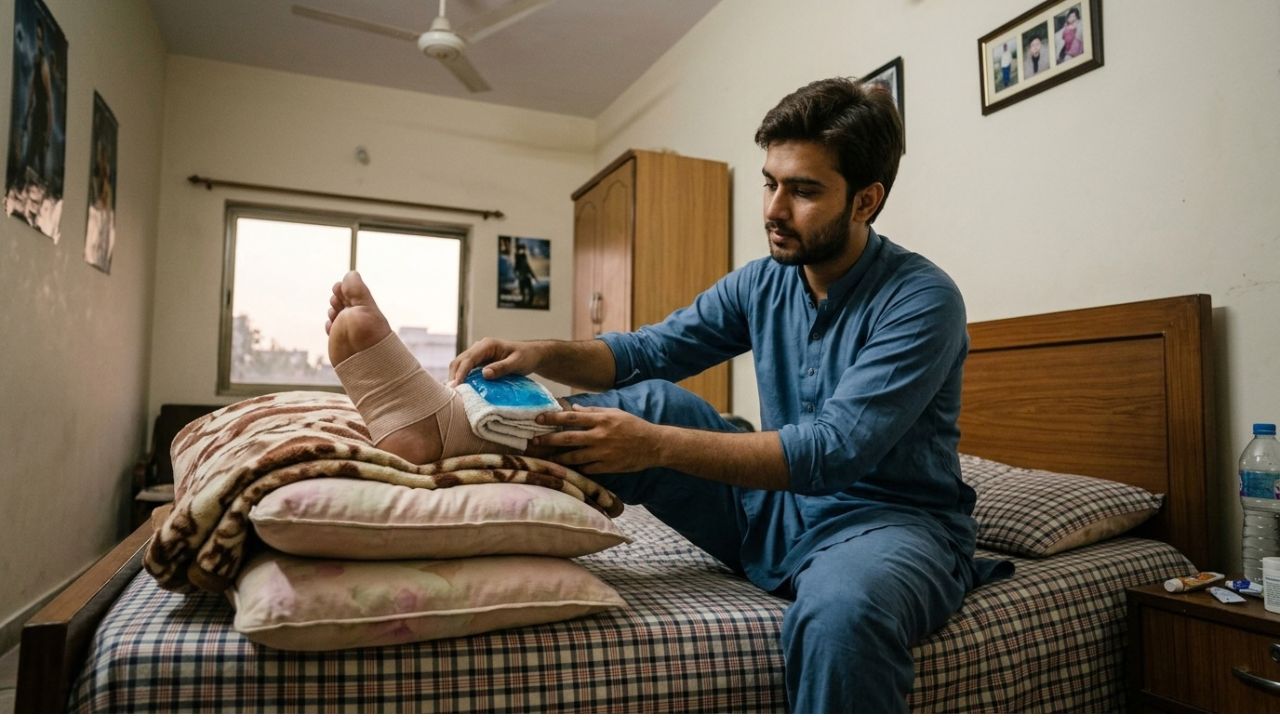
A sprained ankle can cause pain, swelling, bruising, and difficulty walking. It often happens when you twist your foot, step awkwardly, or roll your ankle during sports or everyday activities. If you are looking for how to heal a sprained ankle overnight, the most important thing to know is that a ligament injury usually cannot heal completely in one night.
However, you can take simple steps to reduce pain, control swelling, and protect your ankle while it begins to recover. Early care can make the injury easier to manage and may help prevent further damage.
The best first steps are to rest your ankle, apply a wrapped ice pack, use gentle compression, and keep your foot raised. You should also know when an injury needs medical attention because a fracture can sometimes look like a sprain.
What Is a Sprained Ankle?
A sprained ankle happens when the ligaments around the ankle stretch too far or tear. Ligaments are strong bands of tissue that connect bones and help keep a joint stable.
This injury often occurs when your foot turns inward or outward unexpectedly. It can happen while running, playing football, walking on uneven ground, or missing a step.
Common symptoms include:
- Pain around the ankle, especially when standing or walking
- Swelling around the joint
- Bruising that may appear hours or days later
- Tenderness when touching the injured area
- Stiffness or difficulty moving the foot
- A feeling that the ankle is weak or unstable
A mild sprain may improve relatively quickly, while a severe sprain can take several weeks or longer to recover. If you cannot put weight on your foot or have severe pain, do not assume it is only a sprain.
How to Heal a Sprained Ankle Overnight
You cannot force damaged ligaments to repair themselves overnight. However, the following steps can help you manage a new, mild ankle sprain during the first 24 hours.
1. Rest Your Ankle Immediately
Stop running, exercising, or walking around unnecessarily as soon as you injure your ankle. Continuing to put pressure on the joint can increase pain and may make the injury worse.
Sit or lie down somewhere comfortable. Keep your injured foot supported and avoid activities that cause sharp pain.
If walking is painful, do not force yourself to walk without support. Crutches or an appropriate ankle brace may help, but severe pain or an inability to bear weight should be assessed by a healthcare professional.
Rest does not mean keeping your ankle completely still for weeks. Once the initial pain settles and serious injury has been ruled out, gentle movement and gradual weight-bearing may help recovery.
2. Apply Ice to Reduce Swelling
Ice can help relieve pain and limit swelling during the early stages of an ankle sprain.
Follow these steps:
- Wrap an ice pack or a bag of frozen vegetables in a thin towel.
- Place it gently against the injured ankle.
- Leave it in place for around 15 to 20 minutes.
- Remove it and allow your skin to return to its normal temperature.
- Repeat every two to three hours while awake if needed.
Never put ice directly on your skin because it can cause a cold injury. Do not fall asleep with an ice pack against your ankle.
Ice may make the ankle feel more comfortable, but it does not instantly repair the injured ligament.
3. Use Compression Carefully
A compression bandage or suitable ankle support can help control swelling and support the joint.
Wrap the bandage firmly but not tightly. Your toes should remain their normal colour and temperature.
Loosen or remove the bandage if you notice numbness, tingling, increasing pain, cold toes, or a change in skin colour. These can be signs that the bandage is restricting circulation.
If you are unsure how to wrap your ankle, ask a pharmacist or healthcare professional to show you the correct technique.
Compression should make the ankle feel supported, not squeezed.
4. Elevate Your Foot Above Heart Level
Elevation is one of the simplest ways to help manage ankle swelling.
Lie down and place pillows under your lower leg so that your ankle rests above the level of your heart when possible. Make sure the pillows support your leg comfortably rather than pressing painfully against the injured area.
Keep your ankle elevated while resting during the day and, if comfortable, while sleeping.
You may notice less swelling after keeping your foot raised for a period of time. However, the amount of improvement depends on the severity of the injury.
5. Consider Suitable Pain Relief
Pain relief may help you rest more comfortably while your ankle begins to recover.
Paracetamol may help reduce pain. Some people may also be able to use ibuprofen gel or oral ibuprofen, which can help with pain and inflammation.
The right option depends on your age, medical history, other medicines, and the product’s instructions.
Ask a pharmacist or healthcare professional before using anti-inflammatory medicines if you are pregnant, have kidney disease, stomach ulcers, certain heart conditions, or take blood-thinning medicines. Do not combine medicines containing the same active ingredient or exceed the recommended dose.
Painkillers can ease symptoms, but they do not make a torn ligament heal overnight.
6. Wear Supportive Footwear or an Ankle Brace
An appropriate ankle brace or supportive shoe may help protect the joint when you need to move around.
Avoid high heels, loose footwear, and shoes that make your ankle feel unstable. Do not use a brace to push through severe pain or continue playing sports.
If you cannot walk comfortably, seek medical advice rather than relying on support alone.
The right support can help you avoid unnecessary twisting while the injured ligament recovers.
7. Get Comfortable Before Sleeping
The way you rest your ankle overnight can affect how comfortable you feel in the morning.
Before bed, consider these steps:
- Apply a wrapped ice pack for 15 to 20 minutes if needed.
- Raise your ankle on pillows.
- Remove any compression bandage that causes numbness, tingling, or colour changes.
- Avoid heat packs and vigorous massage during the first couple of days.
- Keep your ankle away from positions that cause pain.
Do not wrap your ankle so tightly that circulation is restricted while you sleep. If you have been advised to wear a specific brace or support overnight, follow the instructions given by your healthcare professional.
When you wake up, check whether pain and swelling have improved. Do not assume that feeling better means the ligament has fully healed.
What Is the RICE Method for a Sprained Ankle?
The RICE method stands for Rest, Ice, Compression, and Elevation. It is a commonly used approach to initial sprain care.
Each step has a different purpose.
Rest: Reduce activities that place stress on the injured ankle.
Ice: Use a wrapped cold pack to help relieve pain and swelling.
Compression: Apply a suitable bandage or support without restricting circulation.
Elevation: Raise the ankle to help manage swelling.
Some healthcare guidance uses the broader PRICE approach, which adds Protection. This means protecting the injured area from further harm.
For practical guidance, read the NHS resource on sprains and strains. It explains self-care, symptoms, recovery, and when to seek medical help.
What Not to Do After Spraining Your Ankle
Some actions can make a new sprain more painful or increase swelling.
Avoid Heat During the First Couple of Days
Hot baths, heat packs, and other direct heat treatments may increase swelling during the early stages of an injury.
Choose a wrapped cold pack instead if it helps relieve your symptoms.
Do Not Massage the Injured Area Aggressively
Deep massage can irritate injured tissues and make discomfort worse. Avoid vigorous rubbing during the early stages of recovery.
Do Not Exercise Through the Pain
Running, jumping, football, and other high-impact activities can put extra stress on damaged ligaments.
Wait until pain, swelling, movement, and strength have improved before returning to sport. A severe sprain may need professional rehabilitation.
Do Not Force Your Ankle to Move
Gentle movement can help prevent stiffness when it is appropriate, but forcing a painful joint is not a good way to speed up recovery.
Stop if an exercise causes sharp pain or makes your symptoms worse.
Do Not Ignore Severe Symptoms
A fracture, significant ligament tear, or other injury may need medical assessment. Do not rely on home treatment if you have serious symptoms.
How Long Does a Sprained Ankle Take to Heal?
Recovery depends on how badly the ligaments have been stretched or torn.
| Injury severity | General recovery expectation |
| Mild sprain | Often improves over several days to a couple of weeks |
| Moderate sprain | May take several weeks |
| Severe sprain | May take several weeks or months |
These are general estimates, not a diagnosis. Your actual recovery time may vary based on the injury, your health, and whether you receive appropriate treatment.
Pain and swelling may start to improve within the first few days, but the ankle can remain weak or stiff after the initial discomfort settles.
Do not return to running or sport simply because you can walk. You should be able to move the ankle comfortably and gradually regain strength and balance before returning to demanding activities.
Can You Walk on a Sprained Ankle the Next Day?
It depends on the severity of the injury.
With a mild sprain, you may be able to put some weight on the foot after resting and controlling the swelling. Start slowly and avoid movements that increase pain.
If walking causes significant pain, do not force it. Use appropriate support and seek medical advice.
You should get an urgent assessment if you cannot walk more than a few steps, have severe pain, or notice major swelling or bruising. These symptoms may indicate a more serious injury, including a fracture.
When Should You See a Doctor for a Sprained Ankle?
Home care is not suitable for every ankle injury. Seek urgent medical attention if:
- You cannot put weight on the foot or walk more than a few steps.
- The ankle looks deformed or sits at an unusual angle.
- You have severe or rapidly worsening pain.
- Your toes become blue, white, cold, numb, or tingly.
- You heard a crack during the injury or suspect a broken bone.
- There is a large wound or bone visible.
Arrange medical advice if swelling or pain continues to worsen, the ankle repeatedly gives way, or symptoms are not improving as expected.
People with diabetes, reduced sensation in their feet, or certain circulation problems should seek advice early because foot injuries may need special care.
How to Prevent Another Ankle Sprain
Once the ankle has recovered enough for normal movement, focus on rebuilding strength and balance.
Helpful steps include:
- Wear shoes that fit well and provide suitable support.
- Warm up before exercise and sport.
- Increase activity gradually after an injury.
- Practise ankle-strengthening and balance exercises when appropriate.
- Follow a physiotherapist’s advice if the ankle remains weak or unstable.
A previous sprain can increase the risk of another one, particularly if strength and balance have not fully returned. Proper rehabilitation can help reduce that risk.
Frequently Asked Questions
How to heal a sprained ankle overnight fast?
You cannot fully heal a ligament injury overnight. Rest, wrapped ice, gentle compression, elevation, and suitable pain relief may help reduce symptoms during the first night.
How do I reduce ankle swelling overnight?
Rest with your ankle elevated, use a wrapped ice pack for 15 to 20 minutes at a time, and consider a comfortable compression bandage. Make sure the bandage does not restrict circulation.
Should I wrap my sprained ankle at night?
A compression bandage should never be so tight that it causes numbness, tingling, pain, or colour changes. Follow the advice given with your support or by a healthcare professional, and remove or loosen it if circulation seems affected.
Is heat or ice better for a new ankle sprain?
A wrapped ice pack is generally preferred during the first couple of days to help manage pain and swelling. Avoid heat packs and hot baths during this early period.
Can a mild ankle sprain heal in 24 hours?
A mild sprain may feel more comfortable within 24 hours, but the ligament still needs time to recover. Do not return to strenuous activity simply because the pain has reduced.
Can I walk on a sprained ankle?
Some mild sprains allow comfortable, gradual weight-bearing. Do not force yourself to walk if it causes significant pain. Inability to walk or bear weight needs prompt medical assessment.
When should I start ankle exercises?
Gentle movement may be appropriate once the initial pain settles and serious injury has been ruled out. Begin within a comfortable range and stop if the movement causes sharp pain. A healthcare professional can advise you on the right exercises.
How do I know if my ankle is sprained or broken?
Both injuries can cause pain, swelling, and bruising, so it may be difficult to tell the difference at home. Deformity, severe pain, or an inability to bear weight requires urgent assessment. A clinician may recommend an X-ray.
Final Thoughts
If you are searching for how to heal a sprained ankle overnight, focus on reducing pain and swelling rather than trying to force the injury to heal immediately.
Rest your ankle, use a wrapped ice pack, apply compression carefully, and keep your foot elevated. Use pain relief only when it is appropriate for you, and avoid heat, aggressive massage, and strenuous activity during the early stages.
Most importantly, do not ignore severe pain, deformity, numbness, or difficulty bearing weight. These signs may indicate an injury that needs prompt medical care. Giving your ankle the right support and enough recovery time is the safest way to return to normal activity.
As a trusted hub for latest trends, practical tips, and global news, Weekly Magazine delivers high-quality reading material on a wide range of topics. Visit our home page regularly to never miss out on key updates and fresh perspectives.