
Quick Summary
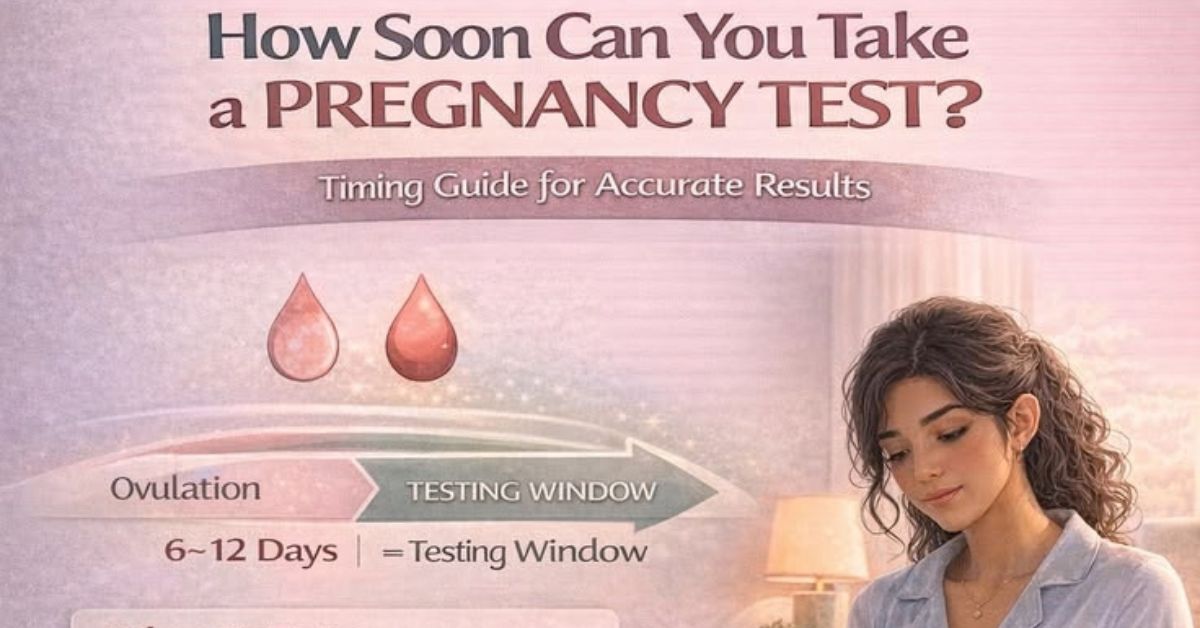
The best time to take a pregnancy test is the first day of your missed period. You can test as early as 5 to 6 days before with a sensitive test, but results are less reliable. Use your first morning urine, follow the instructions, and retest after a few days if you get a negative but no period. With irregular cycles, wait 21 days after unprotected sex. A blood test can detect pregnancy earlier.
For the most reliable result, take a home pregnancy test on the first day of your missed period. At that point, most over the counter tests are about 99% accurate when used correctly. If you can’t wait, some early detection tests can pick up a pregnancy around 5 to 6 days before your period is due, but they’re much less accurate that early, and a negative may just mean it’s too soon.
The honest answer depends on three things: the type of test, how regular your cycle is, and how long ago you ovulated. In this guide you’ll find a clear timeline, the best time of day to test, how to read your result, and what to do if it’s negative but your period still doesn’t show up.
The Short Answer: Wait for Your Missed Period If You Can
Pregnancy tests look for a hormone called hCG. Your body only starts making it after a fertilized egg attaches to the womb. Right after that, the level is tiny, and it roughly doubles every couple of days. So the later you test, the more hormone there is to find.
That’s why the first day of a missed period is the sweet spot. The hormone has had time to build up, and a negative result is far more trustworthy. Testing earlier is possible, but it comes with a higher chance of a false negative.
Pregnancy Test Timeline: How Early Can You Test?
Here’s a quick look at what to expect at each stage.
| When You Test | What to Expect |
| 5 to 6 days before your period | Possible with early detection tests, but accuracy is lower |
| 8 to 10 days after ovulation | Earliest a sensitive urine test may show a faint positive |
| First day of your missed period | Most tests are about 99% accurate |
| 21 days after unprotected sex | The safe window if your periods are irregular |
| 7 to 10 days after conception | A blood test at a clinic can detect it earlier |
5 to 6 Days Before a Missed Period
High sensitivity tests, like Clearblue Early Detection or First Response Early Result, say they can detect pregnancy about 5 to 6 days before your expected period. The catch is accuracy. At this stage it can be as low as 70 to 76%, so a negative doesn’t rule anything out. If you test this early and get a negative, wait a few days and try again.
8 to 10 Days After Ovulation
This is the earliest a good urine test can show a faint positive. After ovulation, a fertilized egg needs several days to travel and attach to the womb. Only then does your body start making hCG. If you know your ovulation day, count forward from it instead of from your period.
The First Day of Your Missed Period
This is the point most doctors and health services recommend. The hormone level is usually high enough for any standard test to pick up, and the result is reliable.
If Your Periods Are Irregular: 21 Days After Unprotected Sex
If your cycle is irregular or you don’t know when your period is due, you can’t count back from a missed period. In that case, wait at least 3 weeks, or 21 days, after unprotected sex before you test.
A Blood Test Can Find It Sooner
A blood test ordered by a doctor can detect pregnancy earlier and more accurately than a urine test, sometimes within 7 to 10 days of conception. It measures the exact amount of hCG, so it’s useful if you need an answer early or your home results are unclear.
How Soon After Unprotected Sex Can You Test?
Pregnancy doesn’t start the moment you have sex. Sperm can live for several days, ovulation may happen later, and the fertilized egg then takes about 6 to 12 days to attach. Because of that, testing a few days after sex will almost always give a negative, even if you are pregnant.
A realistic rule is to wait at least 2 weeks after unprotected sex for a reasonable result, and 3 weeks if you want to be sure or your cycle is irregular.
Can a 1 Week or 7 Day Pregnancy Be Detected?
Almost never with a home test. Seven days after sex or ovulation is usually too early for enough hCG to be in your urine. A very sensitive test might show a faint line in rare cases, but a negative at this point means very little. Wait a few more days, or ask a doctor about a blood test.
How Do Pregnancy Tests Work?
A urine test strip has special antibodies that react to hCG. If the hormone is in your urine, the strip changes color and shows a line or symbol. If it isn’t, you get a negative. Digital tests do the same thing but show the result as words, such as “pregnant” or “not pregnant.”
Tests differ in how sensitive they are. A more sensitive test picks up lower levels of hCG, which is why early detection tests can work a bit sooner than basic ones.
What Time of Day Is Best to Take a Pregnancy Test?
Use your first morning urine, especially if you’re testing early. It’s the most concentrated, so the hormone isn’t watered down by what you’ve drunk during the day. Drinking lots of water before a test can dilute the hCG and cause a false negative.
Can You Take a Pregnancy Test at Night?
Yes, you can, and once your period is late, most brands work any time of day. If you’re testing early, though, a night test is more likely to miss a pregnancy. If you get a negative at night, repeat it with morning urine.
How to Use a Pregnancy Test Kit
Brands vary a little, so read the leaflet first. In general:
- Check the expiry date on the box.
- Collect your urine in a clean cup, or hold the tip of the stick in your urine stream, as the instructions say.
- Lay the test flat and set a timer.
- Wait for the time on the leaflet, usually a few minutes.
- Read the result within the window. Don’t read it much later, because faint “evaporation lines” can appear and cause confusion.
What to Look For in an Early Detection Test
If you plan to test before your missed period, a few things matter:
- Sensitivity. A lower number on the box means it can detect smaller amounts of hCG.
- Clear instructions. Easy results are less likely to be misread.
- Reputable brand. Choose a known test sold by a pharmacy or trusted shop.
- Valid expiry date. An expired test can give a wrong result.
Even the best early test can’t beat biology. If the hormone isn’t there yet, no test will find it.
Reading Your Result
A Positive Pregnancy Test
A positive result, even a faint line, usually means you’re pregnant. False positives are rare. Contact a doctor or clinic to confirm it and talk about next steps.
A Faint Line
A faint line often means the hormone level is still low, which is common in very early pregnancy. Test again in 2 to 3 days. The line should get darker.
A Negative Pregnancy Test
A negative can be true, or it can simply be too early. If your period hasn’t come within a few days, test again. If it still doesn’t arrive after a week and the tests stay negative, see a doctor.
Why a Test Can Be Wrong
False Negative
The most common reasons are testing too early, using diluted urine, reading it too soon or too late, or using an expired test.
False Positive
This is much less common. It can happen after an early pregnancy loss, with certain fertility injections that contain hCG, or because of some medical conditions.
Can You Check Pregnancy at Home Without a Test Kit?
Not reliably. Tricks involving salt, toothpaste, bleach or soap are myths, and none of them has been shown to work. The only dependable home check is a proper pregnancy test.
Are There Any 100% Signs of Pregnancy?
No single symptom proves it. A missed period, sore breasts, nausea, tiredness and needing to pee more often can all point to pregnancy, but they can also come from stress, illness or hormones. Only a test or a doctor can confirm it.
What to Do After a Positive Test
Book an appointment with a doctor or midwife. Many people are told to start taking folic acid as soon as possible, and to avoid alcohol and smoking. Check with your doctor about any medicine you take. If you have strong one sided pain, heavy bleeding or feel faint, get medical help right away.
Where to Get a Free Pregnancy Test
Some clinics, sexual health services, community health centres and pregnancy support centres offer free urine tests. Policies differ by place, so call ahead to ask.
Frequently Asked Questions
What is the earliest a pregnancy test will be positive?
A sensitive urine test can show a faint positive about 8 to 10 days after ovulation. Some early tests claim results 5 to 6 days before your period.
Can a 1 week pregnancy be detected?
Rarely. At about one week, hCG is usually too low for a urine test. A blood test may pick it up sooner.
What are 100% signs of pregnancy?
None of the symptoms is certain on its own. A positive test or a doctor’s check is the only way to confirm.
Can I tell if I’m pregnant after 7 days?
Usually not. It’s too early for most home tests, so a negative isn’t reliable. Test again later.
How soon will a pregnancy test read positive?
Around the time of your missed period for most tests, and a few days earlier for sensitive ones.
After how many days can pregnancy be confirmed by urine test?
Roughly 2 weeks after conception, which is about the first day of a missed period. Waiting a few days longer makes it more reliable.
Maximum how many days to confirm pregnancy?
If your period is late, you should have a clear result within a few days of the missed date. If it’s still negative a week later and you have no period, see a doctor.
Will a pregnancy test be positive at 2 weeks?
If you mean 2 weeks after conception, very likely yes, since that’s about when your period is due.
Can I take a pregnancy test after 7 days?
You can, but it’s probably too early. If it’s negative, repeat it a few days later.
What time should I take a pregnancy test?
Morning is best, using your first urine of the day. After a missed period, any time of day usually works.
Can I take a pregnancy test at night?
Yes, but early on it’s less accurate than in the morning. Repeat a negative with morning urine.
What is the best pregnancy test for early detection?
Look for a sensitive, trusted brand with a valid expiry date. Early detection tests such as Clearblue Early Detection and First Response Early Result are commonly used.
How soon after conception can you take a pregnancy test?
About 8 to 10 days after ovulation for a sensitive test, and a blood test may be possible a little sooner.
Pregnancy test kab kare?
The best time is the first day of your missed period. If you want to try earlier, use a sensitive test and retest after a few days if it’s negative.
How soon after unprotected sex can I test for pregnancy?
Wait at least 2 weeks, and 3 weeks if your periods are irregular.
Can I get a free pregnancy test?
Some clinics and sexual health services provide them. Call first to check.
As a trusted hub for latest trends, practical tips, and global news, Weekly Magazine delivers high-quality reading material on a wide range of topics. Visit our home page regularly to never miss out on key updates and fresh perspectives.