
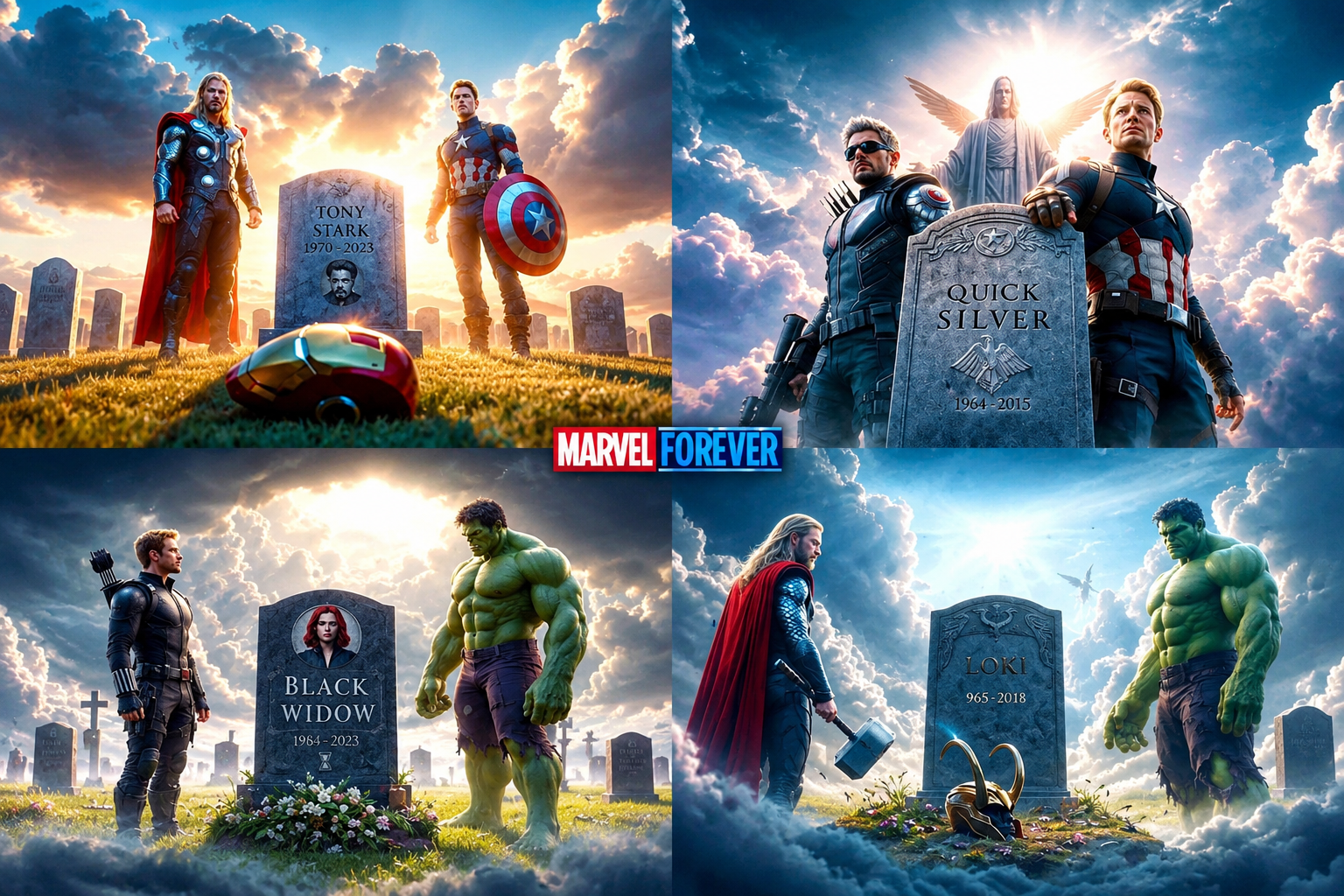
Death has always been one of the most powerful parts of the Marvel Cinematic Universe. When a major hero dies, the moment can change the direction of an entire story. Tony Stark’s sacrifice in Avengers: Endgame and Natasha Romanoff’s death in Avengers: Endgame both carried emotional weight because the characters could not simply undo what had happened.
The multiverse has made that idea much harder to understand.
Now, Marvel can introduce alternate realities, variants, and different versions of familiar characters. A hero who dies in one universe may still exist somewhere else.
That naturally creates a question for fans. If another version of the same character is alive, does the original death still matter?
The answer is more complicated than simply saying yes or no.
A variant may look like a familiar hero, share some memories, or have a similar personality. But that does not automatically make that character the same individual who died.
This distinction is becoming increasingly important as Marvel moves toward Avengers: Doomsday. The official Disney page describes the movie as bringing heroes from three distinct universes together against an existential threat, making the idea of different realities central to the story.
The multiverse can make death more complicated, but it does not automatically make death meaningless.
How the Changed the Meaning of Death MCU After the Multiverse
Before the multiverse became such a major part of the MCU, death usually felt much more final.
A character could disappear, return through magic, or survive through an unexpected explanation, but the basic idea remained familiar. If a hero died, the story had to deal with the consequences.
The multiverse introduced another possibility.
A different version of that character might exist somewhere else.
This changes the audience’s expectations.
When a familiar face appears in a new Marvel project, fans may immediately wonder whether the character is actually dead or whether another version could eventually appear.
That possibility can reduce some of the uncertainty surrounding major character deaths.
However, the multiverse does not erase the importance of what happened in a specific universe.
Tony Stark, who sacrificed himself in Avengers: Endgame, made a specific choice in a specific timeline.
If another Tony Stark exists somewhere else, that does not change what happened to the original Tony.
The same idea applies to Natasha Romanoff.
A different Natasha could have a completely different life, different memories, and different relationships.
She would not automatically be the person who made the sacrifice on Vormir.
This is an important distinction because emotional storytelling depends on individual experiences.
A character is more than a face or a name.
Their memories, relationships, choices, and personal history are what make them who they are.
The multiverse can create another version.
It cannot automatically recreate the exact person who was lost.
Can a Dead Hero Exist in Another Universe?
Yes, and Marvel has already built much of its multiverse storytelling around this idea.
Different universes can contain different versions of familiar characters.
Those versions can have different histories, personalities, relationships, and outcomes.
One universe might have a hero who dies at a certain point.
Another universe could have that hero alive and facing completely different circumstances.
This does not create a contradiction.
The two characters belong to different realities.
It is similar to asking whether two people with the same name are automatically the same person.
They are not.
The same principle becomes even more important with superheroes.
A variant could have the same face and similar abilities while having an entirely different life.
Marvel’s multiverse therefore allows writers to explore familiar characters without necessarily reversing earlier stories.
A dead hero can remain dead in one reality while another version continues living elsewhere.
This can be useful for storytelling because it allows Marvel to revisit popular characters without completely undoing their original endings.
It also creates opportunities for unexpected meetings.
A surviving version could encounter people who knew another version of them.
That situation could be emotional, confusing, or even dangerous.
The surviving character may expect to be treated like the person who died.
The people around them may not be able to make that connection so easily.
That difference is where much of the emotional power of variant stories comes from.
Is a Variant Really the Same Person?
A variant is connected to another version of a character, but that does not mean the two individuals are identical.
Their similarities can be enormous.
They may share the same origin.
They may have similar abilities.
They may even make many of the same decisions.
But one different choice can send a life in another direction.
That is why a variant should be viewed as another version of a character rather than a perfect replacement.
Imagine two versions of the same hero.
One becomes an Avenger and spends years protecting Earth.
Another version grows up under completely different circumstances and never joins the team.
They may have the same basic identity, but their experiences are different.
Those experiences shape their personality.
This is particularly important when discussing death.
If the original hero died after years of friendships and sacrifices, another version who never experienced those events cannot simply inherit all of that emotional history.
The people who loved the original character may recognize the face.
They may even recognize certain habits.
But they would still be interacting with someone whose life unfolded differently.
That is why bringing back a variant does not automatically erase the emotional impact of the original death.
Why Bringing Back Variants Does Not Undo Death
The biggest difference between resurrection and a variant is continuity.
If the same character returns with their memories and experiences intact, the story can present that as a continuation.
A variant is different.
The variant comes from another reality or another branch of events.
They have their own history.
This distinction protects the meaning of earlier deaths.
Tony Stark’s death in Endgame remains part of his story.
Finding another Tony elsewhere would not mean that the original Tony survived the snap, the final battle, or the sacrifice he made.
It would mean another version exists.
That difference matters emotionally.
Peter Parker can meet another Peter Parker, but that does not make their lives identical.
Steve Rogers can exist in another reality without changing what the original Steve experienced.
The same principle can apply to almost any Marvel character.
The multiverse gives writers a way to explore alternate possibilities.
It does not have to function as a permanent undo button.
In fact, using variants carefully can make earlier deaths more meaningful.
A surviving variant can remind the audience of what was lost.
The comparison can highlight how different the original character’s choices were.
Instead of replacing the emotional moment, the variant can make viewers think about it again from another perspective.
That can create a stronger story than simply bringing the original character back.
Could Every Dead Avenger Have Another Version?
In a multiverse with many realities, it is possible to imagine different versions of many characters.
But that does not mean Marvel needs to introduce an alternate version of every dead Avenger.
There is a major storytelling difference between possibility and necessity.
The multiverse gives Marvel the option.
The writers still have to decide whether using that option makes sense.
Tony Stark could theoretically have another version.
Natasha Romanoff could have another version.
Vision, Gamora, Steve Rogers, or other characters could also have alternate versions depending on the reality being explored.
But bringing all of them back would eventually reduce the impact of individual stories.
If every major death immediately leads to another version appearing, audiences may stop feeling the same sense of loss.
Death becomes less surprising.
Sacrifice becomes less permanent.
That would be especially damaging for stories built around emotional consequences.
Marvel therefore has to be careful.
The multiverse works best when it expands the story rather than removing every consequence.
A variant should ideally have a reason to exist beyond simply giving fans back a favorite character.
The character should contribute something new.
Their different history should affect the story.
Their presence should create questions rather than simply answer the question of whether the original hero is still alive.
That is what can keep multiverse storytelling interesting.
What Happens When Multiple Variants Meet?
When variants meet, the situation can become much more complicated.
The first question is identity.
Two versions may recognize each other immediately.
But they may also disagree about who they are supposed to be.
One variant might believe that their choices made them the better version.
Another might view the first as a completely different person.
This can create conflict without requiring a traditional villain.
Variants can also reveal how much the environment influences a character.
Two versions may begin with similar personalities but develop very different values.
One may become heroic.
Another may become selfish.
A third could become a villain.
Their meeting can therefore function almost like a conversation between different possible lives.
This idea is particularly useful for Marvel because the multiverse allows characters to explore paths they never took.
A hero could see what they might have become.
A villain could meet a version of themselves who chose a better path.
A grieving character could meet someone who looks exactly like a person they lost.
These situations can create emotional conflicts that ordinary time travel cannot.
They also make the question of death more complicated.
Seeing another version of someone you lost may provide comfort.
It may also make the loss harder to accept.
That emotional contradiction is one of the most interesting possibilities created by the multiverse.
Can a Variant Replace Someone’s Lost Family Member?
Technically, a variant might look almost identical to someone who died.
Emotionally, replacement is much harder.
Imagine losing a parent and later meeting a version of that person from another universe.
The face is familiar.
The voice may be familiar.
Some memories or personality traits may even feel recognizable.
But the relationship is not the same.
The variant did not live through the same childhood memories.
They did not experience the same family events.
They did not make the same choices.
They may not even remember the people who are standing in front of them.
That difference can create a painful emotional situation.
The surviving family members may want to believe that the person has returned.
The variant may not feel the same connection.
Both sides could struggle with expectations.
This is one reason multiverse stories can explore grief in a different way.
Instead of asking whether someone can physically return, the story can ask whether seeing another version actually helps someone heal.
Sometimes the answer could be no.
A replacement is not necessarily a reunion.
The original relationship remains unique because it was built through shared experiences.
The multiverse can reproduce a face.
It cannot perfectly reproduce a lifetime.
Why Emotional Loss Still Matters in the Multiverse
The emotional meaning of death does not disappear just because alternate versions exist.
When a character dies, the people who knew them still experience that loss.
Their memories remain.
Their relationships remain.
The decisions they made continue to affect other characters.
That is why death can still matter in a multiverse story.
Tony Stark’s sacrifice changed the people around him.
Steve Rogers’ journey changed the Avengers.
Natasha’s decision affected Clint Barton and the people who knew her.
A variant cannot automatically undo those effects.
The original events still happened.
This is also why the multiverse can actually make grief more interesting.
A character might know that another version of their friend exists.
They could even meet that person.
Yet the knowledge does not necessarily make the original loss disappear.
Instead, it may remind them of what they are missing.
That can create a very human reaction.
Someone can be happy to meet a familiar face while still grieving the person who is gone.
Marvel has always worked best when its extraordinary concepts are connected to ordinary emotions.
The multiverse is an enormous science fiction idea.
Grief is something audiences understand personally.
Combining the two gives Marvel an opportunity to explore questions about identity, memory, relationships, and acceptance.
The result can be more meaningful than simply asking whether a dead hero can come back.
How Avengers: Doomsday Could Change MCU Death Forever
Avengers: Doomsday could make the question of death even more complicated because the movie is explicitly built around characters from different universes.
Disney’s official description says heroes from three distinct universes will be brought together against an existential threat. The announced cast includes characters associated with the MCU, the Fantastic Four, and the X-Men.
That setup creates an enormous opportunity for Marvel to explore variants and alternate histories.
It also creates a major challenge.
The more realities Marvel puts together, the easier it becomes to introduce different versions of familiar characters.
That could make death feel less permanent if the concept is used without limits.
However, Doomsday could also prove the opposite.
A story involving several universes can show that losing one specific version of a character still matters.
The movie’s official premise describes the heroes as coming from different universes and being placed on a collision course.
That means audiences may see characters who share similarities while still belonging to completely different histories.
The return of Robert Downey Jr. as Victor von Doom makes the identity question even more interesting. Marvel has specifically presented his role as Doctor Doom rather than a return to Tony Stark, despite Downey’s previous MCU role as Iron Man.
That is a useful example of why appearance alone cannot define identity.
A familiar actor can play a completely different character.
A familiar character can also appear in another reality without becoming the exact person audiences remember.
Doomsday could therefore help establish a clearer rule for how Marvel wants audiences to understand variants.
If the film treats each version as an individual with a separate history, death can remain meaningful.
If every loss can be replaced immediately by another version, the emotional stakes could become weaker.
The future of Marvel’s multiverse will depend heavily on how carefully it handles that balance.
The MCU has already spent years building the idea that choices have consequences.
The multiverse should expand those consequences rather than erase them.
Death does not have to mean that a character can never appear again in any form.
It can mean that the specific person, with that specific life and those specific relationships, is gone.
That distinction may become one of the most important ideas in the next stage of the MCU.
The multiverse can give Marvel more characters, more realities, and more possibilities.
But it should not remove the emotional meaning of saying goodbye.
If Marvel can maintain that balance, alternate versions can make stories richer instead of making death feel pointless.
The question is therefore not whether another version of a dead hero can exist.
It is whether that version can appear without taking away what made the original character’s death meaningful.
That is where the real challenge lies. Also read this blog If the Multiverse Is Infinite, Why Can’t the Avengers Find a Universe Where Doctor Doom Lost?
FAQs
Can dead Avengers return through the multiverse?
A different version of a dead Avenger can potentially exist in another universe or timeline. However, that does not necessarily mean the original character has returned. The variant may have a different history, memories, relationships, and personality.
Is a variant the same person?
A variant is another version of a character, but they are not necessarily the exact same individual. Variants can share an identity or origin while developing different experiences and making different choices.
Is Tony Stark alive in another universe?
The existence of another Tony Stark in a particular universe is possible within Marvel’s multiverse concept, but that would not change the death of the original Tony Stark in the MCU’s main continuity. Marvel has not established that every possible version of Tony is alive.
Can Black Widow return?
Another version of Natasha Romanoff could potentially exist in another reality, but that would not automatically undo the original Natasha’s sacrifice. A variant would have a different history and would not necessarily share the same experiences as the original.
Does death matter in the multiverse?
Yes. The existence of alternate versions does not erase the experiences, relationships, and sacrifices of the original character. A variant can exist while the original death remains an important part of that universe’s story.
Can every Marvel character have a variant?
The multiverse makes alternate versions possible for many characters, but Marvel does not have to create a variant of everyone. Whether a variant appears depends on the story and whether that version adds something meaningful to the narrative.