
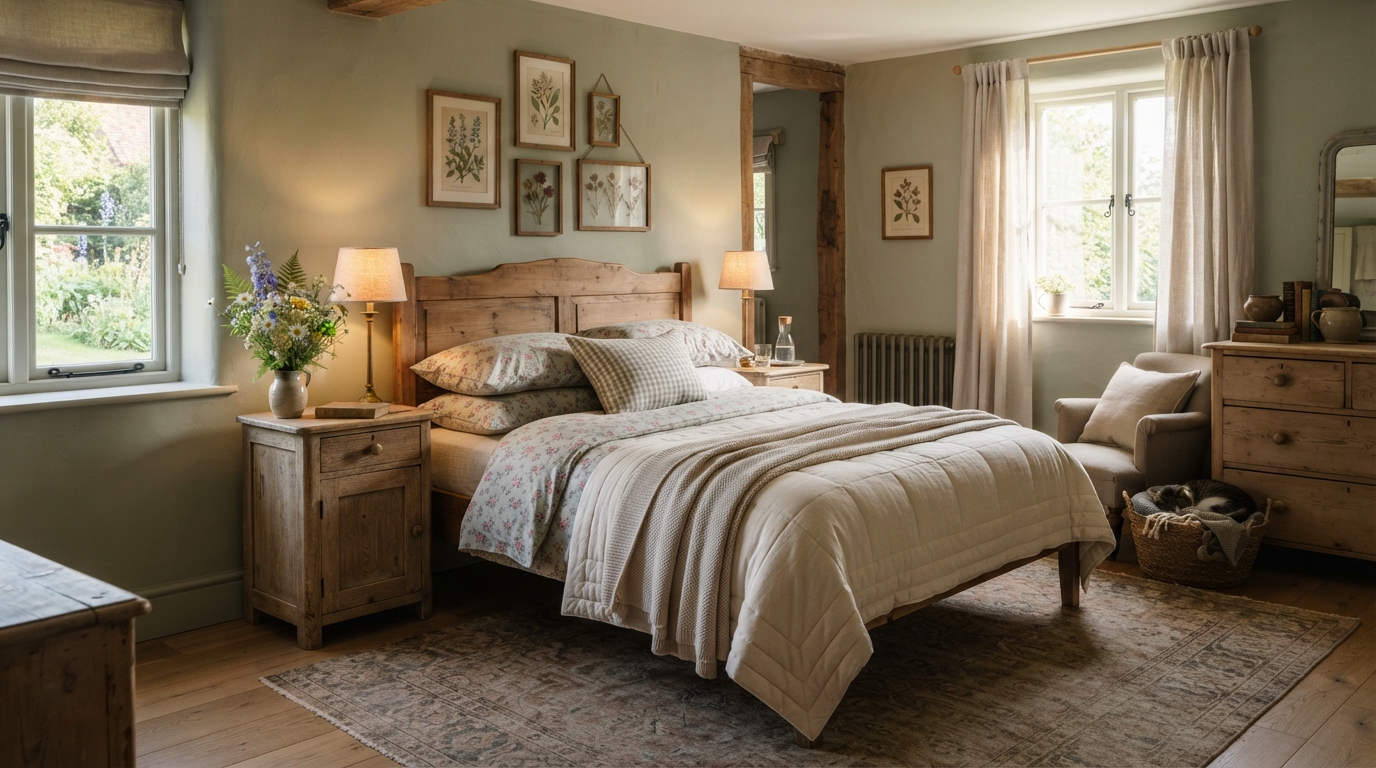
A cottagecore bedroom is less about buying a matching set of “cottage” decorations and more about creating a room that feels warm, personal, nature-connected and comfortably imperfect. Floral bedding, old-looking wood, linen, quilts, botanical artwork, soft colours and warm lamps are common ingredients, but the real character comes from how these pieces are layered together.
Current design coverage is also pushing the aesthetic beyond a simple social-media trend, with cottagecore bedding appearing through florals, gingham, heirloom-style linens and vintage-inspired textiles.
The appeal is easy to understand. A bedroom filled with natural textures and familiar-looking objects can feel completely different from a room dominated by glossy finishes and matching furniture. Cottagecore creates the impression that the space has developed over time. One piece might look inherited, another handmade, another picked up from a local shop, while the overall room still feels intentional.
You do not need to live in a countryside cottage to achieve the look. A modern apartment, small bedroom, rented room or newly built house can all take inspiration from the aesthetic. The trick is knowing which elements create the atmosphere and which details simply make a room look themed.
What Is a Cottagecore Bedroom?
The cottagecore aesthetic romanticizes a slower, simpler relationship with home and nature. In a bedroom, that idea usually appears through natural materials, vintage references, garden-inspired patterns, soft colours, comfortable textiles and objects that feel personal rather than mass-produced.
Think of a room where the bed looks inviting rather than perfectly styled, curtains move gently with daylight, flowers sit in an old ceramic pitcher and a wooden bedside table has visible grain and signs of age.
That feeling is more important than any individual item.
A genuine-looking space should not appear as though every accessory was purchased on the same afternoon.
Recent cottagecore bedroom guides repeatedly emphasize the same underlying ingredients: linen or cotton bedding, botanical patterns, warm lighting, vintage or vintage-inspired furniture, natural wood and collected decorative pieces.
What Makes a Bedroom Look Cottagecore?
There are five elements that do most of the visual work.
Natural Materials
Wood, linen, cotton, rattan, cane, wool and ceramics immediately make a bedroom feel less synthetic.
Botanical Influence
Flowers, leaves, pressed plants, botanical illustrations and garden-inspired patterns bring the outdoors into the room.
Vintage Character
The furniture does not have to be genuinely antique. It simply needs some visual history, whether that comes from an older piece, traditional construction, distressed finish or vintage-inspired shape.
Layered Comfort
Quilts, throws, cushions and rugs make the room feel lived in.
Warm Lighting
Soft lamps and warm bulbs are much more suitable than harsh, cool overhead illumination when you are trying to create a relaxed atmosphere. Some current cottagecore design guidance recommends especially warm light around the sleeping area.
When these elements work together, the room begins to feel like a retreat rather than a collection of decorative objects.
21 Cottagecore Bedroom Ideas to Try
1. Start With a Floral Quilt
If you only change one thing, consider the bed.
The bed is usually the largest visual element in a bedroom, so changing the bedding can establish the entire aesthetic.
A floral quilt in muted colours instantly introduces a countryside reference without requiring a complete renovation.
Look for small-scale flowers if you want a traditional English cottage feeling. Larger botanical patterns create a more dramatic result.
Keep the rest of the bedding relatively simple.
For example, combine a floral quilt with plain cream sheets and a neutral linen pillowcase.
The contrast prevents the pattern from becoming overwhelming.
2. Choose a Vintage Wooden Bed
A wooden bed frame can become the foundation of the room.
Pine, oak, painted wood and darker timber can all work, depending on the colour palette.
You do not necessarily need a genuine antique bed.
A new frame with traditional proportions can provide a similar visual effect, particularly when combined with vintage-looking bedding.
If you already own a modern bed, do not replace it simply for the aesthetic. A wooden bedside table, vintage mirror or antique-style bench can introduce enough character to shift the overall mood.
3. Use Soft, Nature-Inspired Colours
Cottagecore colours tend to work best when they feel slightly softened.
Instead of extremely saturated shades, consider:
- Sage green
- Cream
- Warm white
- Dusty rose
- Muted blue
- Butter yellow
- Soft beige
- Terracotta
- Mushroom brown
- Faded olive
These colours reflect gardens, old cottages, dried flowers, natural timber and weathered materials.
A room does not need to contain all of them.
Choose two or three as your main palette and allow natural wood and textiles to provide additional variation.
4. Bring in Botanical Prints
Botanical artwork is one of the easiest ways to strengthen the connection with nature.
You could hang:
- Pressed flower frames
- Vintage botanical illustrations
- Fern prints
- Wildflower artwork
- Old gardening diagrams
- Herb illustrations
- Landscape paintings
The best arrangements often look slightly collected rather than perfectly coordinated.
Use different frame styles if they share a similar colour family.
An old wooden frame beside a simple cream frame can look more natural than six identical frames.
5. Layer Linen and Cotton Bedding
Texture matters as much as colour.
Linen bedding has a relaxed appearance because its natural creasing adds character rather than making the bed look untidy.
Cotton quilts, knitted throws and lightweight blankets can be layered on top.
Avoid trying to make every layer perfectly flat.
A cottage-inspired bedroom should look comfortable enough to use.
Architectural Digest’s recent cottagecore bedding coverage similarly focuses on linen, gingham, florals and heirloom-like textiles as central parts of the aesthetic.
6. Add a Vintage Nightstand
A matching bedside table on each side of the bed is not essential.
In fact, mismatched pieces can make the room feel more authentic.
One side might have a small wooden table.
The other could use a painted cabinet or stool.
Keep the height reasonably compatible with the bed so the arrangement remains practical.
A ceramic lamp, small vase and book can finish the surface without turning it into a display shelf.
7. Create a Canopy or Fabric-Draped Bed
If you want a more romantic interpretation, use fabric around the bed.
A simple canopy frame can support lightweight curtains.
You can also create a softer effect by hanging fabric above or behind the headboard.
Choose breathable, lightweight materials and make sure the installation is secure.
The goal is not to create a theatrical four-poster scene.
A subtle canopy can be enough to give the bed a dreamy focal point.
8. Use Gingham in Small Doses
Gingham fits naturally into cottage-inspired interiors.
It can appear on:
- Pillowcases
- A quilt
- Curtains
- A bench cushion
- A small upholstered chair
- A throw
- If the room already contains floral patterns, use gingham as a supporting pattern rather than adding another large print.
- Cream and sage gingham is gentle.
- Cream and muted blue feels fresh.
- Cream and dusty rose feels romantic.
9. Add a Woven Basket
A woven basket is both decorative and useful.
Use one for blankets, laundry, books or extra pillows.
Natural fibres such as rattan, seagrass or water hyacinth support the organic character of the room.
This is also one of the practical differences between an attractive cottagecore room and a cluttered one.
Storage should help maintain the relaxed atmosphere rather than introduce visible plastic containers everywhere.
Homes & Gardens specifically recommends natural and woven storage materials when organizing a cottagecore bedroom and suggests reducing the presence of sleek plastic organizers.
10. Hang Curtains Instead of Heavy Blinds
Window treatments have a major effect on the bedroom atmosphere.
Light linen or cotton curtains can soften daylight while maintaining an airy feeling.
If privacy requires additional coverage, layer curtains with a blind or another practical window treatment.
For a more traditional appearance, choose a small-scale floral curtain.
For a quieter room, cream or natural linen works beautifully.
Hang curtains high enough and wide enough to frame the window without making it appear cramped.
11. Introduce an Old-Fashioned Mirror
A vintage-style mirror can add both character and practical value.
Look for:
- Wood frames
- Aged brass
- Softly distressed finishes
- Traditional carved details
- Irregular antique-inspired shapes
- A mirror can also help reflect daylight in a small or darker bedroom.
- Avoid using too many distressed objects, though.
- One convincing vintage element usually feels more authentic than a room full of artificial “antique” finishes.
12. Create a Reading Corner
A cottage-inspired bedroom should encourage slower activities.
- If you have enough space, create a small reading corner.
- You need only:
- A comfortable chair
- A small side table
- A warm lamp
- A basket for books or blankets
- Position it near a window if possible.
- The chair does not need to be floral.
- A simple linen, cream, brown or muted green chair can balance a heavily patterned bedroom.
13. Use a Cottagecore Accent Wall
Wallpaper can dramatically change a bedroom.
For a classic approach, consider small florals or botanical prints.
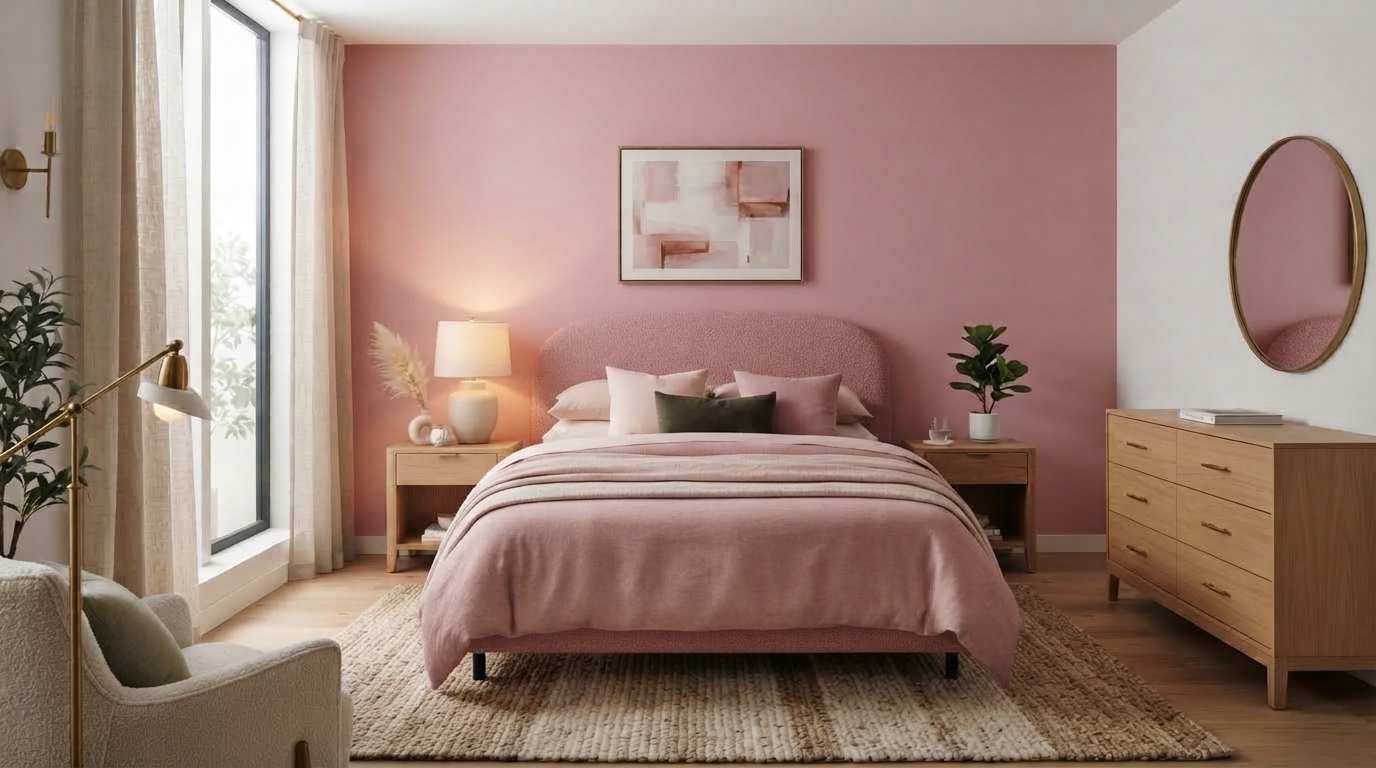
For something quieter, use a faded sage, warm cream or muted blue paint.
You can also use wall moulding or simple panelling and paint it in a soft historical-looking colour.
Do not assume every wall needs wallpaper.
A single wall behind the bed can establish the aesthetic while keeping the room visually balanced.
14. Bring Flowers Into the Bedroom
Fresh flowers are an easy way to reinforce the garden-inspired character.
They do not need to be expensive.
A small arrangement of seasonal flowers in a ceramic jug can be more convincing than a large formal bouquet.
Dried flowers can work too, particularly grasses, lavender and delicate seed heads.
The most important thing is to keep arrangements relaxed.
Perfectly symmetrical bouquets can feel less natural than loose stems gathered in a simple container.
15. Choose Warm Wood Flooring or Furniture
Wood immediately introduces a natural element.
If you have existing wood floors, let them remain visible.
If the flooring is neutral, bring wood into the room through:
- Bed frames
- Nightstands
- Shelves
- Stools
- Benches
- Picture frames
- Storage trunks
- Aged timber with visible grain generally works better than highly glossy furniture.
- The goal is warmth, not perfection.
16. Add a Small Vintage Rug
A rug can visually anchor the bed and add softness underfoot.
Look for muted patterns rather than extremely bright contemporary designs.
Traditional floral, faded Persian-inspired, geometric or worn-looking patterns can work well.
The rug does not have to match the bedding exactly.
In fact, slight variation often makes the room feel more collected.
Current bedroom trend reporting is also placing greater emphasis on textured and characterful rugs rather than sterile, purely functional flooring treatments.
17. Use Warm Bedside Lighting
Lighting is one of the easiest ways to change the mood of a bedroom.
Instead of depending entirely on a central ceiling fixture, use multiple light sources.
Try:
- Bedside lamps
- Wall sconces
- A small table lamp
- A reading light
- Soft accent lighting
- Warm bulbs
- Dimmers where possible
A warm lamp beside the bed can make wood, linen and floral patterns look significantly softer in the evening.
18. Make Storage Look Part of the Room
Cottage bedrooms can be small, and traditional-style rooms often have limited storage.
That does not mean everything needs to be visible.
Use:
- Curtain-covered wardrobes
- Wooden chests
- Woven baskets
- Vintage trunks
- Under-bed storage
- Built-in cupboards painted to blend with the walls
Homes & Gardens’ cottage bedroom guidance also points out that storage can be particularly challenging in smaller or attic-style bedrooms, where built-in solutions can make better use of awkward spaces.
The key is to hide practical clutter while leaving a few beautiful objects visible.
19. Display Books and Personal Objects
A cottagecore bedroom should feel personal.
Instead of filling shelves with generic decorations, display objects you actually enjoy.
A small collection of books, an inherited vase, framed family photograph, handmade ceramic or old jewellery box can make the room feel more individual.
This is where the aesthetic becomes more than a shopping list.
The room starts telling a story.
20. Let Some Imperfection Show
This may be the most important idea.
Do not try to make everything look brand new.
A slightly worn wooden surface, naturally wrinkled linen, faded artwork or imperfect ceramic can add more charm than perfectly matched accessories.
Several recent cottagecore guides use the idea of a “collected” rather than “decorated” room as a defining characteristic.
That does not mean the bedroom should look messy.
There is a difference between relaxed imperfection and clutter.
21. Mix Cottagecore With Modern Comfort
You do not have to recreate an old cottage literally.
A modern mattress, concealed charging point, good curtains, efficient wardrobe and comfortable lighting can coexist with vintage furniture and floral bedding.
This is often the best approach for everyday life.
Keep the technology practical but visually discreet.
Hide chargers where possible.
Use modern lighting in traditional-looking fixtures.
Choose a comfortable contemporary mattress with vintage-style bedding.
The result feels nostalgic without sacrificing comfort.
Best Cottagecore Bedroom Colour Combinations
| Main Colour | Supporting Colours | Overall Feel |
| Sage green | Cream, oak, dusty rose | Botanical and calm |
| Dusty rose | Cream, beige, natural wood | Romantic and soft |
| Muted blue | White, tan, warm wood | Fresh and traditional |
| Butter yellow | Cream, sage, brown | Sunny and cheerful |
| Warm cream | Green, rose, wood | Timeless and understated |
| Terracotta | Beige, olive, cream | Earthy and cozy |
| Soft beige | Sage, faded blue, brown | Neutral and natural |
The important thing is to avoid treating the palette as a rigid formula.
Natural materials will introduce additional colours automatically.
Wood has its own variation.
Linen has subtle tonal differences.
Flowers introduce small accents.
That variation is part of what makes the style feel authentic.
Cottagecore Bedroom vs Farmhouse Bedroom
The two styles overlap, but they are not identical.
Farmhouse interiors often emphasize practical simplicity, stronger rustic structure, neutral palettes and traditional rural architecture.
Cottagecore tends to be softer, more romantic and more botanical.
A farmhouse room might feature a substantial wooden bed, neutral walls and black metal accents.
A cottagecore version might use a painted wooden bed, floral quilt, botanical artwork, linen curtains and a vintage lamp.
There is room for overlap.
You can borrow the best elements of both without forcing your room into a strict category.
Cottagecore vs Grandmillennial Style
Grandmillennial interiors also embrace traditional patterns, florals, vintage furniture and nostalgic references.
The difference is often in emphasis.
Grandmillennial style can lean more heavily into traditional textiles, chintz, ruffles, antiques and classic decorating details.
Cottagecore usually feels more rural, natural and garden-inspired.
They can overlap beautifully.
For example, a floral quilt and antique bedside table can work in both styles, while dried wildflowers and raw wood push the room more firmly toward cottagecore.
How to Make a Cottagecore Bedroom Look Expensive
You do not need expensive furniture.
- Focus on composition.
- Use one or two strong statement pieces.
- Choose natural-looking fabrics.
- Layer the bed thoughtfully.
- Keep the colour palette controlled.
- Use good-quality-looking lamps.
- Frame artwork instead of taping prints directly to walls.
- Hide unnecessary cables.
- Avoid filling every surface.
A small room with excellent proportions and thoughtful textures can look far more sophisticated than a large room packed with themed objects.
How to Create the Look on a Budget
Start with the bed.
You can transform an existing bedroom without replacing furniture.
Try:
- A floral duvet cover
- A vintage-style quilt
- Linen-look curtains
- Second-hand wooden furniture
- Thrifted frames
- A woven basket
- A ceramic vase
- Dried flowers
- A small bedside lamp
- A second-hand rug
- Paint
Second-hand marketplaces and charity shops can be especially useful because cottagecore naturally benefits from objects that have some age or individuality.
You do not have to buy everything new.
In fact, buying everything new can work against the collected feeling you are trying to create.
How to Style a Small Cottagecore Bedroom
Small rooms can be excellent for this aesthetic because the cozy feeling comes naturally.
- Choose a light base colour.
- Keep large furniture simple.
- Use one strong floral element.
- Choose furniture with visible legs to preserve floor space.
- Use wall-mounted shelves where appropriate.
- Keep baskets underneath furniture for storage.
- Use mirrors to reflect daylight.
- Avoid covering every wall with a pattern.
- A small bedroom does not need fewer personality-filled details.
- It simply needs better editing.
Cottagecore Bedroom Ideas for Renters
You can create the look without permanent renovations.
Use:
- Removable wallpaper
- Temporary wall hooks
- Vintage mirrors
- Freestanding furniture
- Floral bedding
- Linen curtains
- Area rugs
- Table lamps
- Woven baskets
- Framed botanical prints
- Textiles do much of the work.
If you cannot paint the walls, use a large textile headboard or botanical artwork as the visual anchor.
Cottagecore Bedroom Ideas for a Modern Apartment
The contrast between modern architecture and cottage-inspired furniture can actually make the aesthetic more interesting.
If your apartment has white walls and contemporary flooring, add:
- A vintage wooden bed
- Floral bedding
- A woven rug
- A ceramic lamp
- Botanical artwork
- Natural curtains
- One antique-style chair
- Do not try to make the entire apartment look old.
- Allow the architecture to remain modern.
- The furniture and textiles provide the softer layer.
What Bedding Works Best?
A strong bedding combination might include:
- Plain cotton sheets
- A floral quilt
- One textured blanket
- Two or three pillows
- A neutral throw
- You do not need ten decorative pillows.
- The bed should look comfortable enough to sleep in.
If you prefer a quieter look, choose plain linen bedding and introduce flowers through one quilt or cushion.
If you love patterns, allow the quilt to become the statement and keep the rest simple.
What Curtains Work Best?
For a classic cottage atmosphere, choose natural-looking fabrics.
- Cream linen is versatile.
- Small floral prints are romantic.
- Gingham adds country character.
- Muted stripes can provide a subtle traditional reference.
If the bedroom receives strong sunlight, use a practical lining or secondary window covering while keeping the visible fabric soft and decorative.
What Kind of Artwork Fits the Style?
The possibilities are wide.
Botanical drawings are obvious choices, but you can also use:
- Landscape paintings
- Bird illustrations
- Old maps
- Pressed flowers
- Still-life paintings
- Vintage photographs
- Handmade artwork
- Nature sketches
- Small mirrors
The artwork should look like something you might genuinely keep rather than something purchased solely because it says “cottagecore.”
How to Avoid Making the Room Look Too Themed
This is where restraint becomes important.
Do not use mushrooms, flowers, baskets, lace, gingham, butterflies, birds, dried flowers and rustic signs everywhere at once.
Choose a few.
- For example:
- Floral bedding
- Vintage wood
- Botanical artwork
- That may be enough.
Or:
- Sage walls
- Linen bedding
- Woven storage
The room will communicate the aesthetic without announcing it.
Common Cottagecore Bedroom Mistakes
Buying Everything as a Matching Set
The aesthetic works better when pieces have slight variation.
Using Too Many Floral Prints
One dominant floral pattern is often easier to style than several competing ones.
Making Everything Artificially Distressed
Not every item needs to look old.
Ignoring Practical Storage
A beautiful room becomes difficult to live in when clutter has nowhere to go.
Using Harsh Lighting
Cool, bright lighting can undermine the cozy atmosphere.
Choosing Style Over Comfort
Your mattress, pillows and seating still need to work for real life.
Overloading the Room
Cottagecore is layered, but layered does not mean chaotic.
Making the Room Too Perfect
A little natural imperfection is part of the charm.
Is Cottagecore Still Popular in 2026?
The aesthetic continues to influence bedroom design, particularly through floral bedding, nostalgic textiles, natural materials and vintage-inspired interiors. Recent 2026 coverage also shows a broader movement away from stark minimalism toward rooms with more warmth, texture and personality.
Homes & Gardens’ current bedding coverage, for example, describes a return toward nostalgic “grandma chic” details such as ruffles, botanical embroidery, layered textiles and vintage-inspired patterns.
That does not mean you need to follow every cottagecore trend.
The more durable approach is to borrow the underlying principles: natural materials, comfortable textiles, personal objects, botanical references and a room that feels lived in.
Can Cottagecore Work With Dark Colours?
Absolutely.
A dark green wall can make floral bedding look richer.
Deep brown furniture can ground pale textiles.
A muted navy can create a romantic, old-world atmosphere.
The trick is to balance dark colours with enough lighter fabric and natural texture.
For example, forest green walls can work beautifully with cream bedding, oak furniture and brass lighting.
This creates depth without making the room gloomy.
Can Cottagecore Be Minimalist?
Yes, although it will look different from a maximalist version.
A minimalist interpretation might include:
- Cream walls
- Natural wood bed
- Plain linen bedding
- One floral cushion
- One botanical print
- A woven basket
- A warm bedside lamp
The aesthetic comes from material and atmosphere rather than quantity.
This is a particularly good option if you like cottagecore but dislike visual clutter.
What Plants Work in a Cottagecore Bedroom?
Choose plants that suit the actual light and humidity conditions of the room.
Depending on your environment, options may include:
- Ferns
- Pothos
- Spider plants
- Peace lilies
- Small herbs near a suitable bright window
- Trailing plants
Even one healthy plant can introduce a natural element.
Do not choose a plant simply because it looks good in a photograph.
The right plant is one you can realistically care for.
How to Make the Room Feel More Authentic
Ask yourself whether every item has a reason to be there.
Maybe the ceramic jug came from a family member.
Maybe the wooden chair was found second-hand.
Maybe the quilt is handmade.
Maybe the botanical print reminds you of a garden.
Those personal connections create authenticity.
You cannot purchase that feeling directly.
You can only create the conditions for it.
A Simple Cottagecore Bedroom Formula
If you are starting from an empty room, use this formula:
Soft wall colour + natural bed + layered bedding + one floral pattern + vintage accent + warm lighting + botanical detail + practical storage.
For example:
- Sage walls
- Oak bed
- Cream linen sheets
- Floral quilt
- Vintage bedside table
- Warm brass lamp
- Wildflowers
- Woven basket
That is enough to establish the aesthetic without making the room feel like a themed set.
Final Thoughts
The best cottagecore bedroom does not look as though it came directly from a catalogue.
- It looks as though someone has slowly built it.
- A quilt found and loved for years.
- A wooden table with visible grain.
- A vase holding flowers from the garden.
- A stack of books beside the bed.
- Curtains that soften the morning light.
- A rug that is slightly faded.
- A lamp that creates a warm pool of light at night.
Those small details create the emotional quality that makes cottagecore so appealing.
You can achieve the look in a modern apartment, a small bedroom or a rented home. Start with textiles if you want the easiest transformation. Add vintage or vintage-inspired furniture if you want more character. Use botanical patterns carefully, bring in natural materials and make storage part of the design rather than an afterthought.
Most importantly, do not confuse cottagecore with filling a room with every rural-looking object you can find.
The style works because it feels personal, relaxed and connected to nature.
- Choose the pieces you genuinely love.
- Let some imperfections remain.
- Keep the room comfortable.
- And give yourself enough empty space for the beautiful details to actually be noticed.
That is what turns a collection of floral bedding, wooden furniture and vintage accessories into a bedroom that genuinely feels like home. Also read this blog Pink Room Ideas That Look Stylish, Cozy and Modern for 2026!
Frequently Asked Questions About Cottagecore Bedrooms
What is a cottagecore bedroom?
It is a bedroom inspired by a romanticized rural lifestyle, usually combining natural materials, floral or botanical patterns, vintage-style furniture, soft colours, layered textiles and warm lighting.
What colours are best for cottagecore bedrooms?
Sage green, cream, warm white, dusty rose, muted blue, soft yellow, beige, olive and earthy brown are all strong choices.
What bedding is best for a cottagecore bedroom?
Floral quilts, linen sheets, cotton bedding, gingham accents and textured blankets work particularly well. The goal is softness and layering rather than a perfectly coordinated set.
Does cottagecore have to include flowers?
No. Flowers are common, but you can create the aesthetic with natural wood, linen, vintage furniture, muted colours, botanical artwork and warm lighting.
How do I make my bedroom cottagecore on a budget?
Start with bedding, lighting and second-hand furniture. Thrifted frames, woven baskets, ceramic vases and vintage-style textiles can create significant visual impact without a complete renovation.
Can a modern bedroom be cottagecore?
Yes. Keep the modern architecture and introduce cottage character through wood furniture, floral textiles, natural fabrics, vintage accessories and warm lighting.
Can I create cottagecore in a small bedroom?
Absolutely. Use light colours, layered bedding, vertical storage, baskets and one strong pattern. Avoid overcrowding the room with decorative objects.
What furniture works best?
Wooden beds, vintage nightstands, painted cabinets, antique-style mirrors, small upholstered chairs, wooden benches and trunks all work well.
What kind of curtains suit cottagecore?
Linen, cotton, small florals, gingham and soft neutral curtains are strong options. Choose the fabric according to your privacy and light-control requirements.
What lighting should I use?
Use warm, soft lighting from bedside lamps, wall sconces and other smaller fixtures rather than relying entirely on a bright central ceiling light.
Is cottagecore the same as farmhouse style?
No. They overlap, but farmhouses tend to be more rustic and practical, while cottagecore often has a softer, more romantic and botanical character.
Is cottagecore the same as vintage style?
Not exactly. Vintage furniture is one component of cottagecore, but the aesthetic also depends on nature-inspired colours, textiles, comfort and a slower, collected feeling.
How do I stop a cottagecore bedroom from looking childish?
Use muted colours, natural wood, linen, traditional furniture, restrained patterns and sophisticated lighting. Avoid overly literal themed accessories.
Can I use dark green in a cottagecore bedroom?
Yes. Forest or deep green can create a rich, botanical backdrop, especially when balanced with cream textiles, natural wood and warm lighting.
Can cottagecore look luxurious?
Yes. High-quality-looking linen, layered textiles, antique-style furniture, brass lighting, large rugs and carefully selected artwork can create an elegant version of the aesthetic.
How many floral patterns should I use?
There is no fixed number, but one dominant floral pattern is often easier to balance than several large competing prints.
Do I need antique furniture?
No. Vintage-inspired furniture can provide the same visual direction. Mixing one older piece with newer practical furniture can actually make the room easier to live with.
Can renters create a cottagecore bedroom?
Yes. Focus on removable wallpaper, bedding, curtains, rugs, lamps, freestanding furniture, artwork and decorative objects that do not require permanent alterations.
What makes cottagecore feel authentic?
The room should feel collected rather than purchased all at once. Personal objects, natural materials, slight imperfections and practical comfort help create that impression.
Is cottagecore still relevant in 2026?
Yes. Its influence is visible in the continuing popularity of floral bedding, nostalgic textiles, vintage-inspired rooms, natural materials and warmer, more characterful bedrooms.