
Wry Neck in Chickens :A chicken with its head twisted sideways or thrown back, unable to walk a straight line, is a sight that stops any backyard keeper in their tracks. This is wry neck, and while it looks alarming, most affected birds recover with the right care started early. Here is what it is, why it happens, and how to help.
Recognizing Wry Neck
Wry neck, also called torticollis, stargazing, or crook neck, is a symptom rather than a disease on its own. It shows up when a chicken’s nerves or neck muscles stop functioning normally, disrupting the vestibular system that controls balance.
Mild cases involve a slight head tilt or occasional stumbling, while more severe cases show the head twisted sharply to one side, bent backward toward the spine, or even dragging along the ground.
Affected birds often lose their balance, walk in circles, or fall onto their backs and struggle to get back up. Eating and drinking become genuinely difficult once the twist is significant, since the beak can no longer align properly with food or water. Stress and excitement tend to make symptoms noticeably worse in the short term, so a calm environment matters during recovery.
Symptoms can also come and go in intensity depending on the bird’s stress level and time of day, which sometimes makes early cases easy to miss during a quick glance at the coop. Watching your flock for a few extra minutes each day, particularly if you keep breeds known to be more susceptible, gives you a much better chance of catching a wry neck in its early, more treatable stages.
Common Causes
Wry Neck in Chickens can stem from several very different underlying issues, which is part of what makes it tricky to pin down at home. Nutritional deficiency, particularly a lack of vitamin E, selenium, or thiamine, is one of the most frequent causes and typically develops gradually.
All three nutrients play essential roles in normal nerve and muscle function, and deficiency often traces back to old or improperly stored feed that has lost potency.
Head trauma is another common trigger, especially in breeds with domed or vaulted skulls, which offer less natural cushioning around the brain. Infections, including inner ear infections, bacterial illness, and viral diseases such as Marek’s disease, can also cause wry neck like symptoms, and in rarer cases genetics, tumors, or toxin exposure play a role.
Because the list of possible causes is so broad, it helps to think through recent changes first, such as a new feed batch, a recent fall or scuffle in the coop, or any other birds in the flock showing similar or related symptoms, since these details can point toward the most likely cause before treatment even begins.
Wry Neck at a Glance
| Symptom or Cause | What It Means |
| Slight head tilt | Early or mild case |
| Head twisted or dragging | More advanced case |
| Vitamin E or selenium deficiency | Most common treatable cause |
| Head trauma | Common in vaulted skull breeds |
| Marek’s disease or infection | Requires vet involvement |
| Silkies and Polish breeds | Higher overall risk |
Home Treatment Steps
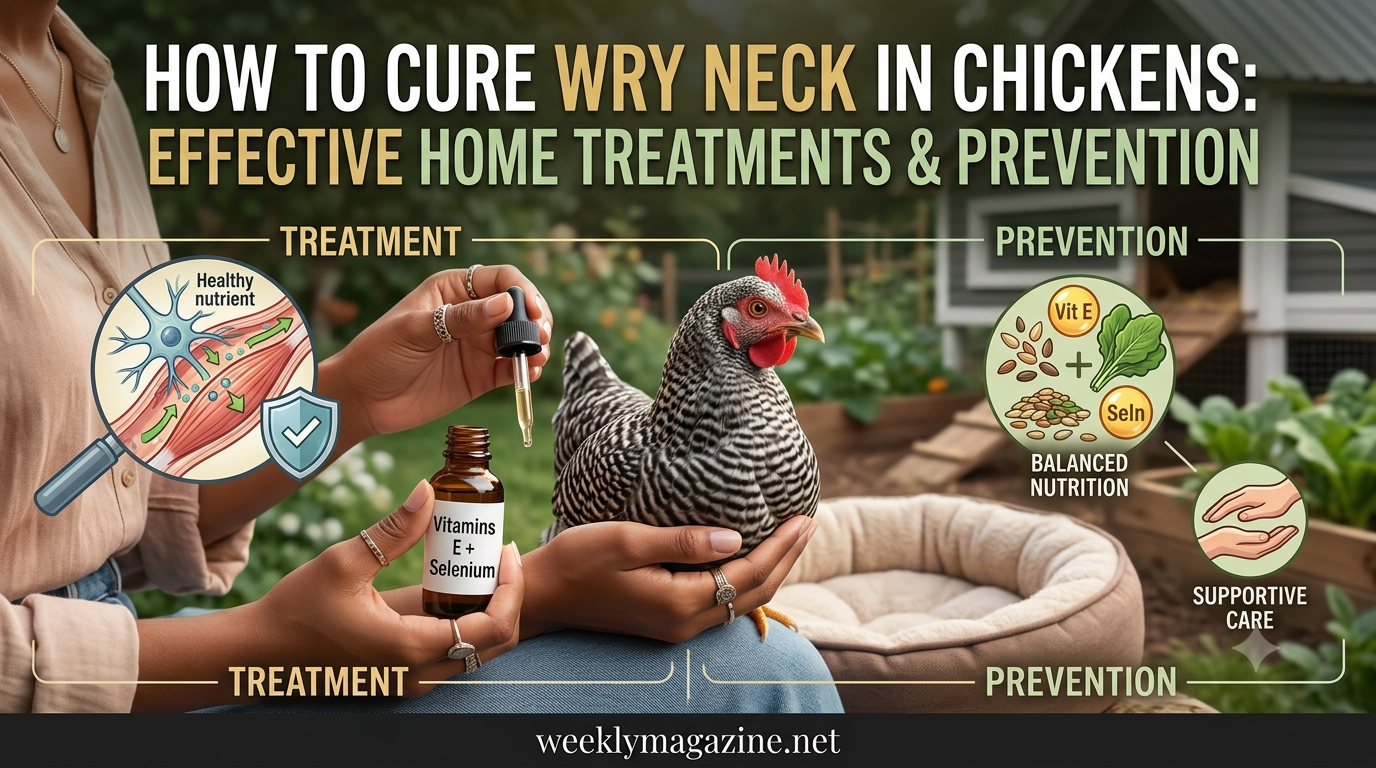
For cases believed to be nutritional, treatment centers on restoring vitamin E and selenium, which are typically given together since selenium helps the body absorb vitamin E properly. A common approach involves an over the counter vitamin E capsule mixed with a small amount of raw or cooked egg, a natural source of selenium, combined into feed the bird can eat comfortably.
General guidance many keepers follow suggests roughly 200 to 400 IU of vitamin E daily for young or smaller birds and 400 to 800 IU for adults, paired with a modest amount of selenium, since too much selenium can become toxic. Checking product labeling and getting guidance from a vet or experienced keeper before starting is a sensible precaution, particularly with selenium dosing.
Isolating the affected bird from the rest of the flock makes hand feeding easier and prevents bullying from flock mates while coordination is impaired. Offering soft foods like mashed egg or moistened feed, supporting the neck gently during feeding, and providing smaller meals more frequently throughout the day all help ensure the bird gets enough nutrition. A gentle neck massage can support blood flow and reduce stiffness, though this should always be done carefully rather than forcing the head into any particular position.
Recovery Timeline
Recovery speed depends heavily on the underlying cause. Nutritional cases often show visible improvement within forty eight to seventy two hours of starting supplementation, with full recovery typically reached within two to four weeks.
Cases caused by head trauma tend to take longer, and recovery may only be partial depending on the severity of the injury. Wry Neck in Chickens linked to a genetic predisposition or an underlying viral illness may improve with supportive care but not resolve entirely.
It is best to continue supplementation until symptoms have fully cleared rather than stopping the moment improvement appears, since discontinuing too early can allow symptoms to return. That said, supplements should not be continued indefinitely once a bird has clearly recovered, since excess vitamin and mineral intake carries its own risks over time.
Preventing Future Cases

A nutritionally wry neck is largely preventable with good feed management. Storing feed in a cool, dry place and buying smaller quantities more often helps preserve vitamin E, which degrades over time, especially in warm conditions.
Feeding a complete, high quality layer or grower feed appropriate for your flock’s age, rather than leaning heavily on scratch grains or table scraps, helps ensure consistent nutrition across the flock. If you keep breeds prone to head injury because of their skull shape, such as Silkies or Polish chickens, reducing fall hazards and handling them gently can lower the risk of trauma related cases.
When to Seek Vet Help
If a bird shows no improvement after several days of consistent home treatment, or if symptoms are severe from the outset, such as an inability to eat, drink, or stand at all, veterinary evaluation is worth pursuing rather than delaying.
According to PoultryDVM’s overview of wry neck, the range of possible causes includes bacterial and viral infections, tumors, and toxin exposure, several of which need diagnostics or treatment beyond what home care can provide. A vet visit can also help clarify whether other birds in the flock might be at risk if an infectious cause turns out to be responsible.
Final Thoughts
Wry Neck in Chickens Although it looks horrendous, a wry neck is quite simple to treat in most situations, in particular those secondary to vitamin E/selenium deficiency, with immediate supplementation and often, hand rearing. Isolation of the afflicted bird, correction of the diet and then rest with vigilant observation over the following weeks give most chickens a good chance of complete recovery.
If no improvement is seen after a few days, or if the condition appears severe at presentation, the next step should be seeking a poultry expert veterinarian. It‘s also worth noting that some birds have a longer recovery time than others even if all is going well, and discontinuning the supplementation too soon accounts for many failed recoveries. Read this blog CAN CHICKENS EAT NECTARINES?
FAQs
What causes Wry Neck in Chickens?
The most common reason wry neck occurs in chickens is deficiency of Vitamin E, selenium or thiamine, whereas head injuries, infections and in some cases genetic reasons or tumors can also cause wry neck symptoms.
How long does the wry neck take to heal?
Nutritional cases often improve within forty eight to seventy two hours and fully resolve within two to four weeks. Cases involving injury or underlying illness may take longer or only partially improve.
Can a wry neck kill a chicken?
It’s not common for theWry Neck in Chickens itself to be life threatening, but the bird will die of starvation or dehydration if a serious twist in the neck prevents it from being able to eat or drink.
Do I need to separate a chicken with a wry neck?
Yes, by isolating it you will reduce the chance of the other birds bullying theWry Neck in Chickens bird, and it will make hand feeding and close monitoring much simpler during treatment.
Which chicken breeds are most prone to a wry neck?
Breeds such as silkies and Polish (where the skull is often vaulted or dome-shaped) are more susceptible, as they have less inherent protection around the brain and inner ear.