
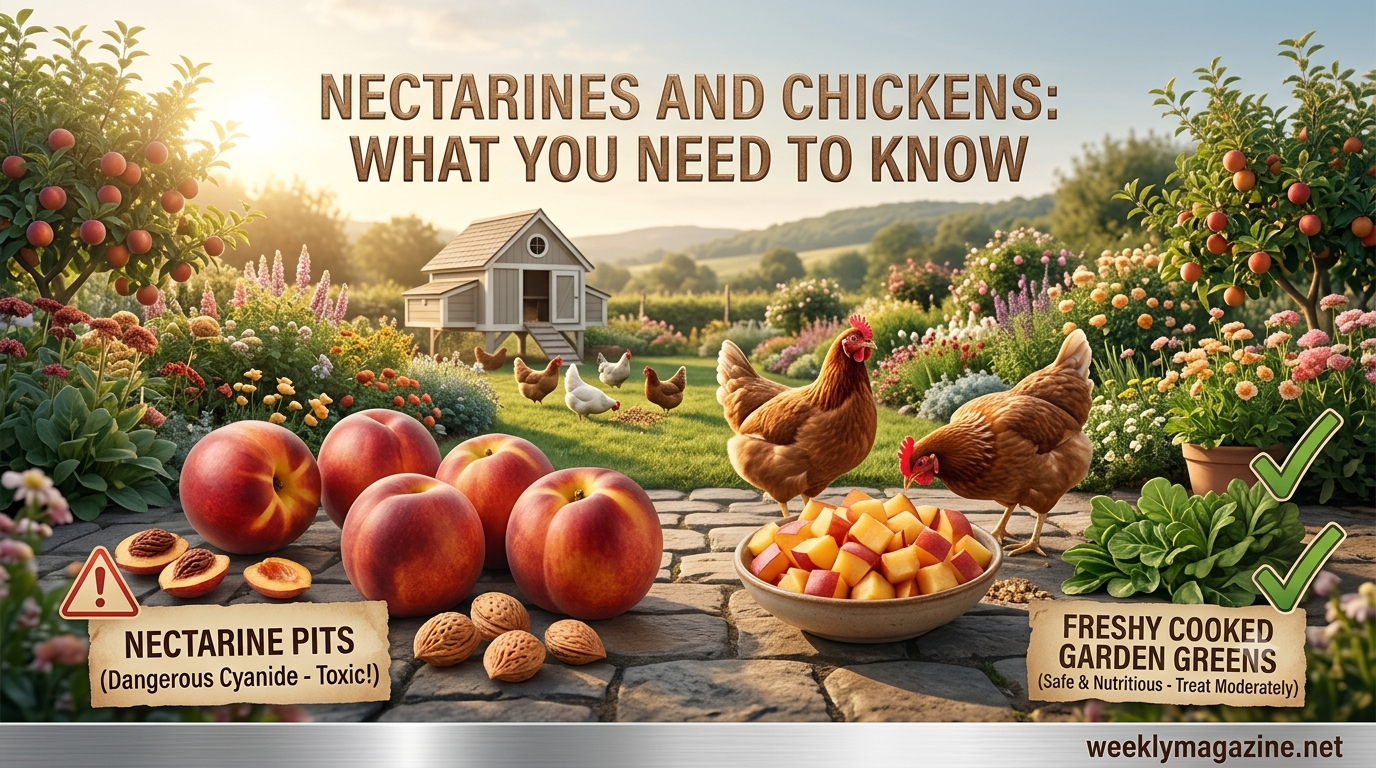
Summer fruit baskets are often overflowing with nectarines, and backyard chicken keepers naturally want to share the extras with their flock. The good news is that nectarines are one of the safer fruit treats available, though a few important details separate a safe snack from a risky one. Here is a clear breakdown of what to know before feeding nectarines to your chickens.
The Quick Answer
CAN CHICKENS EAT NECTARINES?, and most will enjoy them enthusiastically. The flesh and skin are both safe. The only part that needs to be removed before feeding is the pit, which contains a compound that turns toxic once digested.
What Makes The Pit Risky?
Nectarine pits contain amygdalin, a naturally occurring compound that converts into hydrogen cyanide during digestion. This is not unique to nectarines. The same compound appears in the pits of peaches, plums, apricots, and cherries, since all of these fruits belong to the same botanical family known as Prunus.
Chickens are unlikely to peck at a whole pit given how hard and unappealing it is compared to the juicy flesh, but removing it before feeding removes any doubt entirely and only takes a few extra seconds during preparation.
Are The Leaves And Tree Also A Concern?
The leaves, bark, and stems of the nectarine tree carry trace amounts of the same toxic compound found in the pit. This mostly matters for keepers who grow their own nectarine trees at home. Chickens allowed to free range near a nectarine tree are unlikely to seek out leaves or bark on purpose, but it is worth keeping in mind if you are ever tempted to offer tree trimmings as forage material.
What Do Nectarines Offer Nutritionally?
Nectarines bring more to the table than just sweetness. They are a solid source of vitamin C, vitamin A, potassium, and fiber, along with a very high water content that makes them especially useful during hot weather when flocks need extra help staying cool and hydrated.
| Nectarine Nutrient | Benefit For Chickens |
| Vitamin C | Immune support |
| Vitamin A | Feather and skin health |
| Potassium | Nerve and egg formation support |
| Water content | Hydration in hot weather |
A medium nectarine is close to eighty eight percent water, which is one reason many keepers consider it a smart hot weather treat rather than just a sugary snack.
How Much Sugar Should You Worry About?
A medium nectarine contains roughly eleven grams of natural sugar. That sugar comes with fiber attached, which slows down how quickly it affects a chicken’s system, but it is still enough to cause issues if fruit becomes a daily habit rather than an occasional treat.
Overfeeding sugary fruit can lead to loose droppings and, in more serious cases, a drop in blood sugar that leaves birds weak or lethargic. This is the main reason nectarines, like most fruit treats, work best in moderation rather than as a regular part of the daily feeding routine.
How Often Can Chickens Have Nectarines?
CAN CHICKENS EAT NECTARINES? yes A commonly recommended guideline is one to three times per week, with a single nectarine, diced small, being enough to share across four or five birds. Feeding fruit daily or in large quantities increases the risk of digestive upset. As with any treat, nectarines should stay a small part of the diet, with a complete commercial feed making up the bulk of what your flock eats day to day.
How Should You Prepare Nectarines For Your Flock?
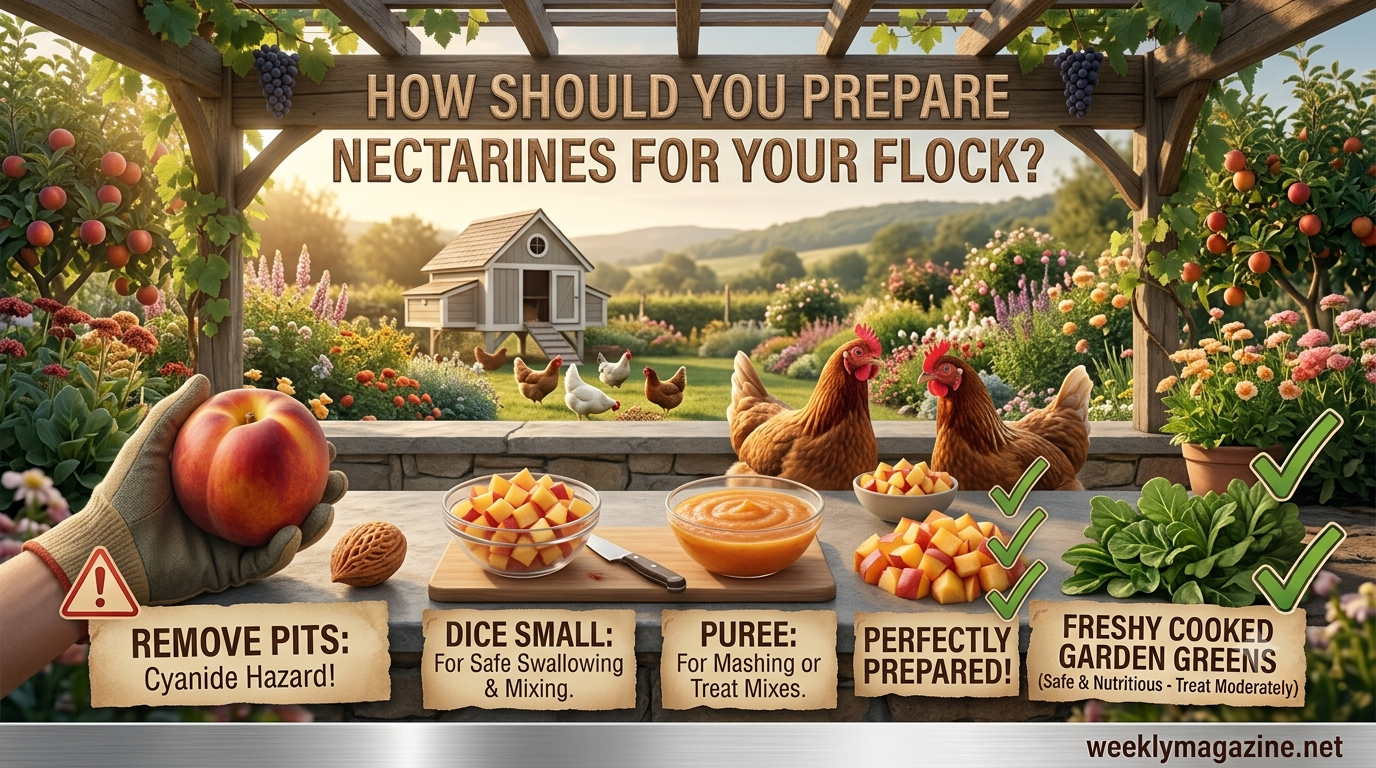
Wash the nectarine thoroughly before feeding to remove dirt or pesticide residue. Slice the fruit in half and take out the pit completely. Dice the flesh into small pieces rather than offering it whole, which makes it easier for multiple chickens to share and reduces the chance of one dominant bird claiming the entire treat.
Scattering the diced pieces across the run rather than piling them in one spot also encourages natural foraging and cuts down on squabbling, giving quieter or lower ranking birds a fair chance to get their share too.
Can Chickens Eat Their Skin?
CAN CHICKENS EAT NECTARINES? Yes, nectarine skin is completely safe for chickens and does not need to be peeled off before serving. The skin contains none of the toxic compounds found in the pit or the tree itself, and leaving it on adds a small amount of extra fiber to the treat.
Fresh, Dried, Or Canned: Does It Matter?
Fresh nectarines are always the best option. CAN CHICKENS EAT NECTARINES? Dried nectarines pack a much higher concentration of sugar per bite than the fresh fruit, so they should only be offered rarely and in very small amounts if at all. Canned nectarines are usually preserved in sugary syrup, which adds unnecessary sugar with no nutritional upside, and are best skipped entirely in favor of fresh fruit whenever it is available.
Should Baby Chicks Get Nectarines Too?
It is best to hold off on fruit treats, including nectarines, until chicks are past the earliest growth stage. Young chicks are more sensitive to sugar than mature birds, and their diet should focus on a properly balanced starter feed designed to support rapid early growth.
Once chicks are transitioning to grower feed, small diced pieces of nectarine can be introduced occasionally in very limited quantities, giving them time to adjust gradually.
What Pairs Well With Nectarines?
CAN CHICKENS EAT NECTARINES? Yes nectarines rotate nicely with other safe stone fruits and summer produce such as peaches, watermelon, and berries. Offering a variety of treats rather than relying on one fruit repeatedly helps keep meals interesting for your flock while spreading nutritional benefits across a broader range of vitamins and antioxidants throughout the season.
Why Do Chickens Enjoy Nectarines So Much?
Chickens are naturally attracted to bright colors and sweet flavors, and nectarines deliver both with their vivid orange red skin and juicy interior. Many keepers find that nectarine pieces disappear faster than almost any other treat once scattered in the run, with birds often rushing over the moment fruit hits the ground.
This strong appeal can be useful for keepers who need to mix in supplements like probiotics, since a small amount of diced nectarine can encourage even picky eaters to finish a treat.
Are Nectarines Good For Hot Weather?
CAN CHICKENS EAT NECTARINES? Because nectarines are so high in water content, they make an especially practical treat during periods of intense summer heat. Offering chilled, diced nectarine on a hot afternoon can help support hydration in birds that may not be drinking enough water on their own.
Pairing nectarine with other water rich treats such as watermelon or cucumber during peak summer heat is a simple way to give your flock an extra hydration boost alongside their regular water supply.
What Are Signs Of Feeding Too Much Fruit?
Even a healthy treat like nectarine can cause trouble if it starts replacing too much of a chicken’s regular diet. Watch for loose or watery droppings, reduced interest in regular feed, or unusual lethargy after a large fruit feeding, and scale back portions if any of these signs appear.
A flock that eats mostly balanced feed with fruit offered occasionally will almost always stay healthier than one where treats make up a large share of daily intake.Also read this Sweet Potatoes For Chickens ?
FAQs
Is it safe to let chickens eat a whole nectarine?
Yes, as long as the pit has been removed first. The flesh and skin are both safe to eat whole or diced.
Do nectarine pits definitely harm chickens if eaten?
The pit contains a compound that becomes toxic when digested, so it should always be removed even though chickens rarely attempt to eat it on their own.
Can chickens eat nectarines every day?
Daily feeding is not recommended due to the natural sugar content. One to three times weekly in small portions is a safer routine.
Is nectarine skin safe, or should it be removed?
Nectarine skin is safe and does not need to be peeled before serving to your flock.
What is the biggest risk of feeding too many nectarines?
The main risks are loose droppings and, in more serious cases, low blood sugar caused by excessive natural sugar intake.
Final Thoughts
CAN CHICKENS EAT NECTARINES? Yes nectarines make a safe, hydrating, and nutrient rich treat for backyard chickens as long as the pit is removed and portions stay reasonable. With a bit of simple preparation, this juicy summer fruit can become a regular part of your flock’s warm weather treat rotation without any unnecessary risk, giving your birds both a tasty snack and a genuine nutritional boost during the hottest months of the year.