
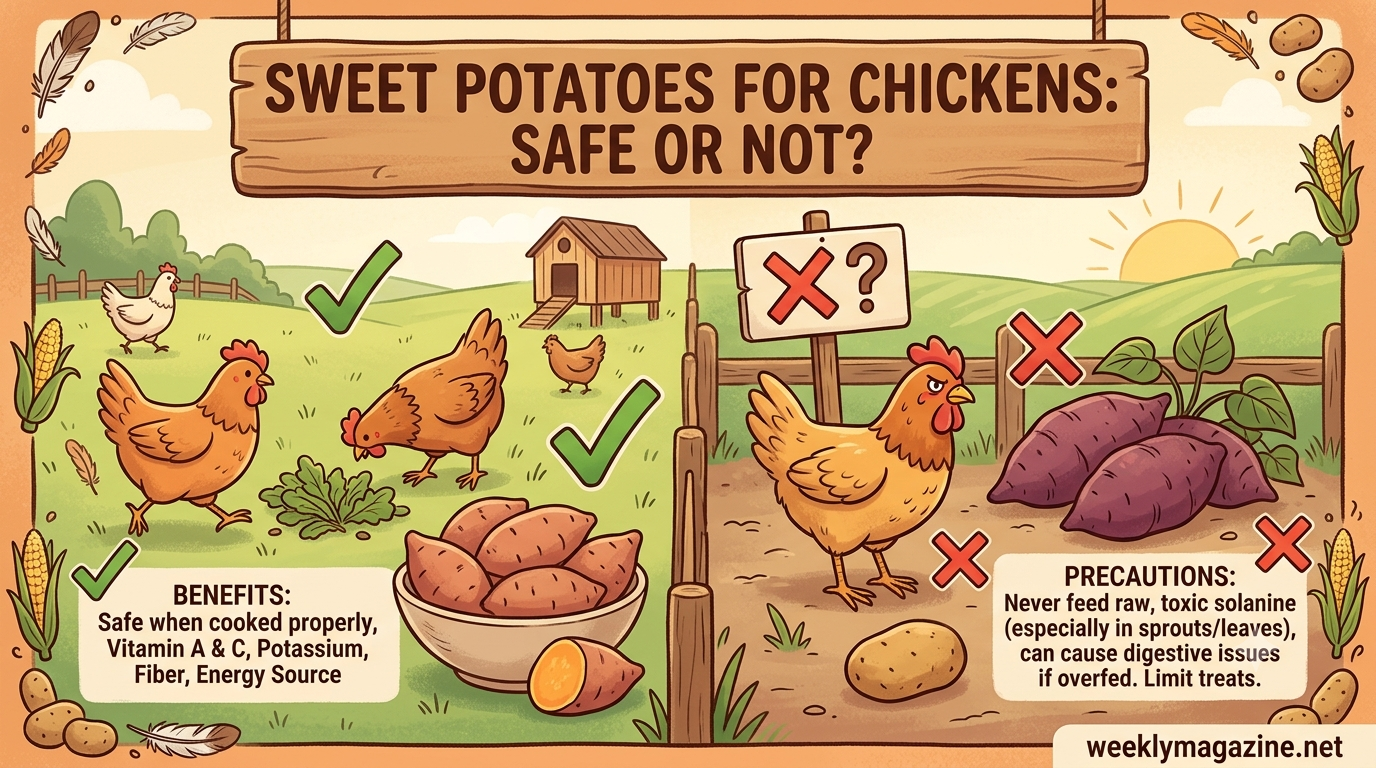
Backyard chicken keepers are always looking for treats that are both safe and genuinely good for their flock. Sweet potatoes come up often in this conversation, partly because their name sounds so close to the white potato, which many keepers already know to be risky. So where does the sweet potato actually stand? Here is a clear, practical breakdown of everything you need to know before tossing one into the coop.
The Quick Answer
Can Chickens Eat Sweet Potatoes, and they can do so safely in both raw and cooked form. Despite the shared name, sweet potatoes are a completely different plant from white potatoes, which removes the main safety concern that usually comes up with potato based treats.
Are Sweet Potatoes Related To White Potatoes?
Not botanically. White potatoes belong to the nightshade family, the same group that includes tomatoes and eggplants. Sweet potatoes belong to the morning glory family instead. This distinction is the reason sweet potatoes do not carry solanine, the natural toxin found in green or sprouted white potatoes that can make chickens ill.
Because of this difference, sweet potatoes are widely considered one of the more forgiving vegetable treats available to backyard flocks.
What Happens Nutritionally When Chickens Eat Sweet Potatoes
Sweet potatoes bring real nutritional value rather than just empty calories. They contain vitamin A in the form of beta-carotene, along with vitamin C, vitamin B6, potassium, and dietary fiber. Vitamin A supports eye health, skin condition, and respiratory function, while the fiber content supports healthy digestion when fed in reasonable amounts.
Many keepers also notice a gradual deepening of egg yolk color after regularly feeding orange fleshed sweet potatoes, since beta-carotene is a known contributor to yolk pigmentation.
| Sweet Potato Nutrient | What It Does For Chickens |
| Beta-carotene (Vitamin A) | Immune support, yolk color, eye health |
| Vitamin C | Antioxidant support |
| Fiber | Digestive health |
| Potassium | Muscle and hydration support |
Why Do Chickens Enjoy Sweet Potatoes So Much?
Chickens are naturally drawn to sweet, starchy foods, and sweet potatoes deliver exactly that combination in a soft, easy to peck texture once cooked. Many keepers notice their flock rushing over the moment a sweet potato treat hits the ground, often finishing it faster than leafy greens or other vegetables.
This natural appeal makes sweet potato a useful option for keepers who want to offer supplements like grit, calcium, or medication mixed into a treat their chickens will actually eat without hesitation.
How Should You Feed Sweet Potatoes To Your Flock?
The easiest approach is boiling, baking, or steaming the sweet potato until it softens, then letting it cool completely before serving. Cooking is not required for safety, but it does make the treat far easier for chickens to break apart with their beaks.
Cut or mash the cooled sweet potato into bite sized pieces and scatter them around the run so multiple birds can access the treat at once instead of one bird monopolizing it. Keep the preparation plain. Butter, salt, sugar, and spices used in human sweet potato recipes offer no benefit to chickens and should always be left out.
Can Chickens Eat The Peels, Vines, And Leaves Too?
Yes. Unlike white potato skins, which can carry solanine if the potato has become green, sweet potato skin is completely safe raw or cooked. The same goes for the rest of the plant. Leaves, vines, stems, and flowers are all edible for chickens, which is especially useful for anyone growing sweet potatoes at home.
Instead of discarding the vines after harvest, many keepers toss them straight into the coop or run, where the flock happily scratches and forages through them.
Is Raw Sweet Potato Safe, Or Should You Cook It First?
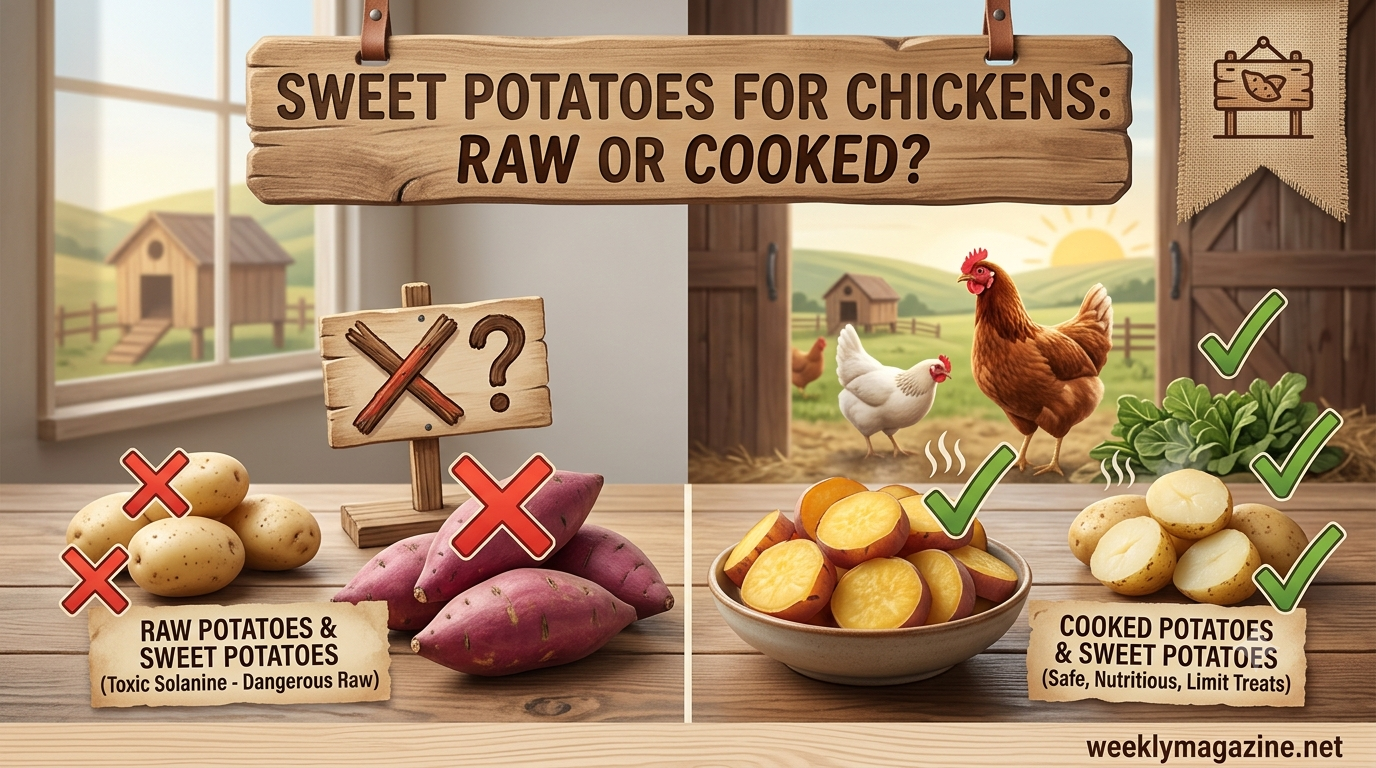
Raw sweet potato is not dangerous to chickens, but the dense, firm texture can make it difficult for them to peck apart, especially whole. If offering it raw, cut it into small pieces or grate it to reduce the risk of choking and make eating easier. Cooked sweet potato is generally the more practical choice simply because chickens eat it faster and with less struggle, though raw is a perfectly acceptable option when prepared properly.
How Often Should Chickens Get Sweet Potatoes?
Sweet potatoes should stay in treat territory rather than becoming a diet staple. A common guideline among poultry keepers is to keep all treats combined under about ten percent of a chicken’s total daily food intake, with the remaining ninety percent coming from a complete, age appropriate commercial feed.
Offering sweet potato once or twice a week in small portions fits comfortably within that guideline. Overdoing any starchy treat, sweet potato included, can lead to loose droppings or an unbalanced diet over time.
Does It Matter What Age The Chicken Is?
Very young chicks should stick to a proper starter feed rather than treats of any kind, including sweet potato, since their nutritional needs at that stage are precise and easily thrown off balance. Once chicks mature into the grower stage, small amounts of soft, cooked treats can be introduced gradually and monitored closely for any digestive changes.
Adult laying hens and mature birds can enjoy sweet potato regularly as part of a well rounded treat rotation without any special precautions beyond the usual moderation.
What Other Treats Pair Well With Sweet Potatoes?
Sweet potatoes pair naturally with other safe garden vegetables such as pumpkin, squash, carrots, and leafy greens like kale or spinach. Rotating between several safe treats rather than relying on one single item helps keep your flock’s diet varied and interesting, while also spreading out the nutritional benefits across different vitamins and antioxidants.
Mixing a small amount of mashed sweet potato with cooked pumpkin or squash also creates an easy warm mash that most flocks will eat readily, especially useful for keepers looking to add variety without much extra preparation time.
What Should You Avoid?
Steer clear of canned sweet potatoes packed in syrup, since the added sugar offers no benefit and can contribute to unhealthy weight gain. Avoid dishes made with butter, marshmallows, cinnamon, or salt, as these are prepared for human taste rather than chicken health.
Never feed moldy or spoiled sweet potatoes, since mold can produce toxins that are genuinely harmful to poultry, unlike the flesh of a fresh sweet potato itself.
Signs Of Too Many Treats
Even a safe treat like sweet potato can cause trouble if it starts replacing too much of a chicken’s regular feed. Watch for loose droppings, reduced appetite for regular feed, or a noticeable dip in egg production, and scale back portions if any of these appear.
A flock that eats mostly balanced feed with treats offered occasionally will almost always stay healthier than one where treats make up a large share of daily intake.
Does Sweet Potato Help During Winter Months?
Many keepers offer warm, cooked sweet potato during colder weather as a comforting, energy dense treat that helps birds stay active on chilly days. The natural carbohydrates provide a quick source of energy, which some flock owners find useful during winter when foraging options are limited.
During hot summer weather, lighter treats like watermelon or leafy greens are usually a better fit, since heavy, starchy foods can add unwanted metabolic heat when temperatures are already high.Also read this Nectarines And Chickens.
FAQs
Do sweet potatoes carry the same risk as white potatoes?
No. Sweet potatoes belong to a different plant family and do not contain solanine, so the main risk associated with white potatoes does not apply here.
Can chickens eat sweet potato skin without cooking it?
Yes, raw sweet potato skin is safe, though washing it first is a good habit to remove any dirt or residue.
Will sweet potatoes change egg yolk color?
Regular feeding of orange fleshed varieties often deepens yolk color over time due to their beta-carotene content.
Is it safe to feed sweet potato vines from the garden?
Yes, the leaves, vines, stems, and flowers of the sweet potato plant are all safe for chickens to eat.
How much sweet potato is too much?
Anything beyond an occasional treat, roughly once or twice weekly in small portions, risks unbalancing a chicken’s overall diet.
Final Thoughts
Sweet potatoes earn their reputation as one of the safest and most useful treats for backyard chickens. With no solanine risk, a solid nutritional profile, and almost every part of the plant being edible, they are an easy addition to a flock’s treat rotation. Keep portions moderate, preparation simple, and your chickens will have a nutritious snack they genuinely enjoy, whether it comes fresh from the kitchen or straight out of your own garden bed.
Backyard chicken keepers are always looking for treats that are both safe and genuinely good for their flock. Sweet potatoes come up often in this conversation, partly because their name sounds so close to the white potato, which many keepers already know to be risky. So where does the sweet potato actually stand? Here is a clear, practical breakdown of everything you need to know before tossing one into the coop.