
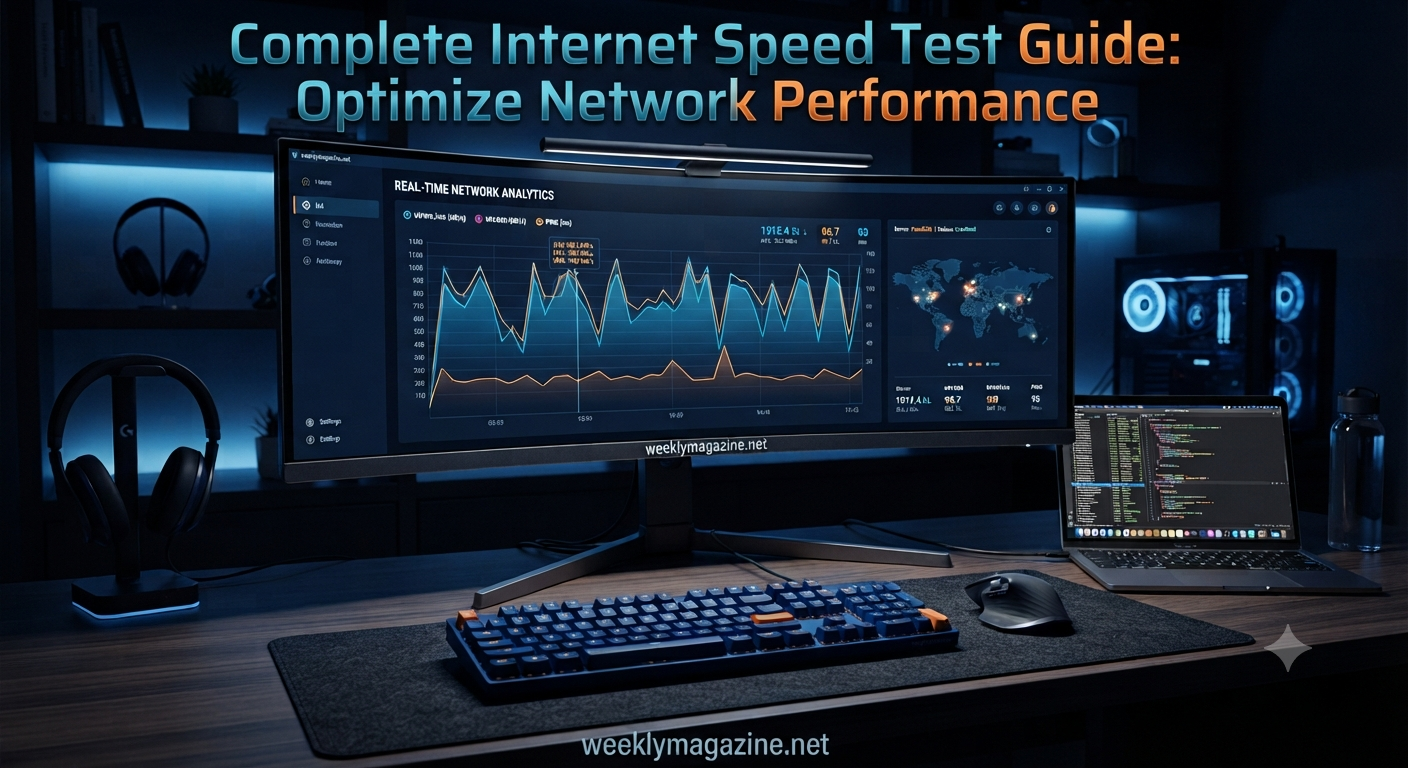
The Complete Internet Speed Test Guide: Master Your Network, Fix Lag, and Optimize Connectivity
In an era where our homes have transformed into smart hubs, remote offices, and digital entertainment theaters, network reliability dictates daily life. When a video freezes or a work call drops, running a professional speed test becomes your immediate solution. This diagnostic process unveils hidden broadband dynamics, turning network frustration into actionable data.
Merely running a speed test once and staring at numbers is rarely enough to fix deep connectivity flaws. To truly master your network, you must understand broadband metrics, evaluate testing tools, troubleshoot connection errors, and apply expert-level optimization techniques.
1. The Critical Importance of Broadband Diagnostics
Data consumption is accelerating rapidly. Modern households support smart devices, 4K security feeds, and multiple remote workers simultaneously. This immense load strains traditional infrastructure.
Routinely running a speed test is a vital habit. For global networking frameworks, industry benchmarks published by the International Telecommunication Union offer precise insights. A baseline diagnostic alerts you the moment your connection drops below acceptable thresholds.
2.1 Download Metrics and Network Intake
Download throughput represents the velocity at which your network pulls data from the web. When you perform any speed test, download speed is the primary metric for streaming and media consumption. Fiber-optic connections have revolutionized this space by delivering robust gigabit data channels.
2.2 Upload Capacity for the Creator Economy
Technical guidelines regarding data transmission standards outlined by IEEE demonstrate why symmetrical connectivity matters. Every accurate speed test measures upload capacity, which dictates how fast you transmit data for cloud backups and video conferencing.
2.3 Latency and Ping Analysis
Latency measures response time in milliseconds. A standard speed test evaluates ping alongside jitter to ensure your online gaming and VoIP calls remain smooth and free of frustrating delays.
3. Wi-Fi vs. Ethernet Diagnostics
Testing over a weak wireless signal often yields misleading metrics. To verify your ISP’s true capability during any speed test, plug a physical Ethernet cable directly into your modem.
For those looking to expand their knowledge on hardware integrations, browse our latest technology and networking articles.
“Isolating your testing environment ensures that your broadband diagnostic metrics reflect true line performance.”
4. Troubleshooting Connection Errors
When network drops occur, running a recurring speed test helps isolate whether the fault lies in your local hardware or upstream ISP routing. Power-cycling your modem and router typically resolves temporary packet loss.
5. Frequently Asked Questions
Q: Why does my speed test result fluctuate throughout the day?
A: Neighborhood network congestion during peak evening hours often causes temporary throughput drops.
Q: How often should I run a speed test?
A: Running a check monthly or whenever you experience lag ensures your broadband remains optimal.
About the Author
Syeda — Global Link Building & SEO Specialist at The Better Readers. Syeda specializes in high-authority digital outreach, content optimization strategies, and educational research publishing, helping IT professionals and learners navigate certification pathways and career development guides across global platforms.