
A portable air conditioner can make a room much more comfortable during hot weather, but it still needs somewhere to send the heat it removes from the room. A window is the most common option, yet not every room has one. Basements, garages, offices, storage rooms, and some apartments may have limited ventilation options.
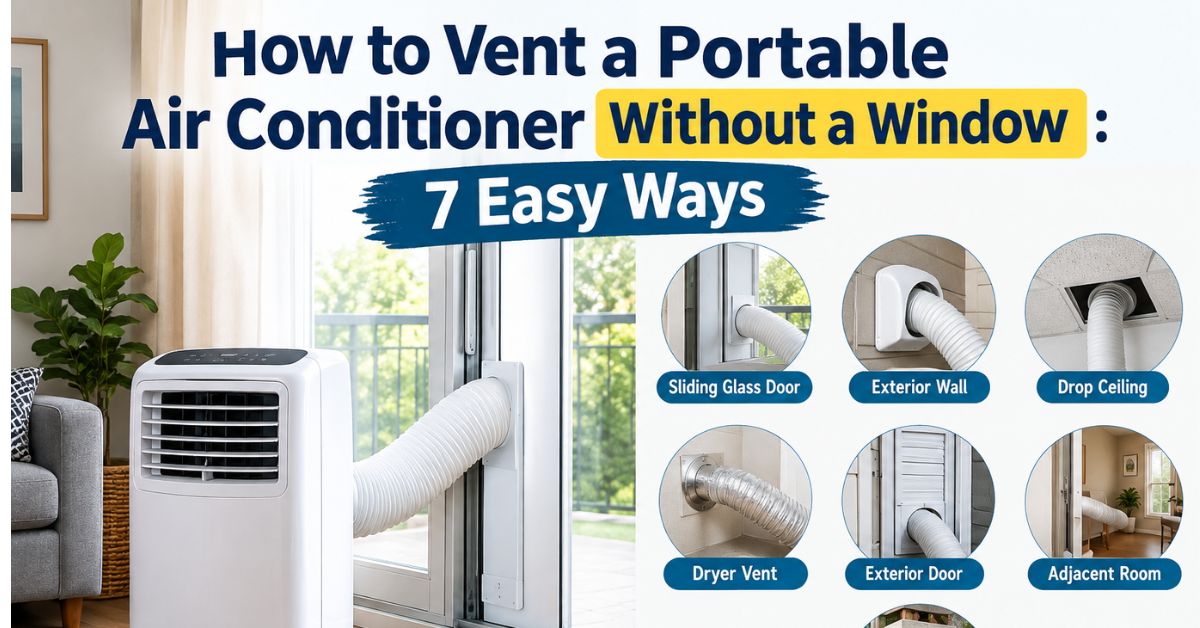
If you are wondering how to vent a portable air conditioner without a window, the good news is that there are several possible solutions. Depending on the layout of your room, you may be able to use a sliding door, exterior wall, drop ceiling, dryer vent, pet door, or another suitable opening.
The important point is that the hot exhaust air needs to leave the space. Simply running the AC without proper exhaust can reduce cooling performance and allow warm air to build up again.
Why Does a Portable Air Conditioner Need Venting?
A portable AC does more than blow cool air. It pulls warm air from the room, removes heat from it, and sends the cooled air back into the room. The heat removed during this process has to go somewhere.
The exhaust hose carries this hot air and moisture away from the room. If the hose is left inside the same space, the heat can return to the room and work against the cooling process.
TCL also explains that portable air conditioners need an opening through which warm exhaust air can be directed outside the conditioned space.
This is why finding a suitable portable AC venting solution is important before using the unit for long periods.
1. Vent a Portable AC Through a Sliding Glass Door
A sliding glass door can be one of the easiest alternatives to a window. You can use a vertical sliding door vent kit or create a fitted panel that fills the open section of the door.
The basic setup is simple. Measure the opening, fit a suitable panel into the gap, connect the portable AC exhaust hose, and seal around the edges.
Use weatherstripping or foam insulation around the panel to reduce air leaks. The tighter the installation, the less chance there is for hot outdoor air to enter the room.
Make sure the door leads directly outdoors. Venting into an enclosed hallway or another room does not remove the heat from your home.
2. Create a Dedicated Wall Vent
If you own the property or have permission to make a permanent change, a through-wall vent can be a practical long-term option.
A suitable opening is created in an exterior wall, and a wall vent or exhaust fitting is installed. The portable AC hose can then connect directly to the opening.
The size of the opening should match the requirements of your specific portable AC model. Avoid guessing the hole size because exhaust connections vary between units.
A wall installation can involve drilling, sealing, insulation, and exterior finishing. If you are unsure about cutting through the wall, it is better to have the installation checked by a qualified professional.
3. Use a Drop Ceiling
A drop ceiling can provide another option in certain offices, basements, and commercial spaces.
The exhaust hose can be routed through a ceiling tile into an appropriate ceiling space. TCL lists a drop ceiling as one possible method for venting a portable AC when a traditional window is unavailable.
However, you should not assume that every ceiling cavity is suitable. The hot air still needs a safe path away from the room. If the ceiling space is enclosed and cannot release the heat, the installation may simply move the problem somewhere else.
Check the building structure and the manufacturer’s instructions before using this method.
4. Use an Existing Dryer Vent
An existing dryer vent that leads outdoors may sometimes provide another exhaust route.
Before using one, make sure the vent is appropriate for your portable AC setup and is not being shared with a dryer at the same time. The connection should be secure and should not restrict the airflow from the air conditioner.
The Spruce also identifies an existing exterior dryer vent as a possible alternative for portable AC exhaust, provided the setup is suitable.
Do not connect the AC hose to a vent simply because the opening looks similar. Check the diameter, airflow requirements, and manufacturer’s instructions first.
5. Vent Through an Exterior Door
If your room has an exterior door but no window, you may be able to create a temporary vent opening.
A fitted panel can be placed in part of the doorway, with an opening made for the portable air conditioner exhaust hose. Foam board, insulation, or weatherstripping can then be used to close the remaining gaps.
This method works best when the door can remain mostly closed while the hose is connected.
A pet door that leads outside can also be useful in some homes, provided the opening and hose connection are suitable. The Spruce lists a suitable exterior pet door among alternative venting options.
6. Vent Into an Adjacent Room With Exterior Ventilation
Sometimes the room where the portable AC is being used has no window, but a nearby room does.
In this situation, the exhaust hose may be routed into the adjacent room if that room has a proper way to release the hot air outdoors. For example, the second room might have a window or another suitable exterior vent.
However, simply moving the hot exhaust into a hallway or another closed room is not a real solution. The heat still remains inside the building.
The final exhaust point should ultimately allow the hot air to escape outside.
7. Use a Chimney or Similar Existing Opening Carefully
Some buildings may have an unused chimney or another suitable exterior opening. In certain situations, this may provide a possible route for hot exhaust.
This is not a simple DIY option, though. The opening needs to be suitable for the temperature, airflow, and installation requirements of the portable AC.
TCL notes that chimney venting may be possible in some situations but recommends professional help to ensure the setup is used safely.
Never connect an AC exhaust hose to an unknown duct, flue, or chimney without confirming that it is safe and appropriate.
How to Set Up the Exhaust Hose Correctly
Choosing an opening is only part of the job. The exhaust hose installation also affects how well the portable AC works.
Keep the hose as short and straight as reasonably possible. Avoid sharp bends, crushing, or unnecessary extensions. A TCL portable AC manual specifically recommends keeping the hose to the minimum required length and avoiding sharp bends or sags.
Also check that the hose is firmly connected at both ends. It should not be loose or partially disconnected while the AC is running.
Seal gaps around the vent opening with suitable weatherstripping, foam insulation, or another appropriate sealing material. This helps prevent hot air from coming back into the room.
Can You Run a Portable AC Without Venting It?
A portable AC should not be operated as a normal cooling system without dealing with its exhaust.
The problem is simple: the machine removes heat from the room, but that heat still has to go somewhere. If the exhaust remains inside the same room, the cooling benefit can be greatly reduced.
TCL states that proper venting is important because poorly ventilated hot air can affect cooling performance and may cause the unit to work harder.
If you cannot create any suitable exhaust route, a different type of cooling system may be more appropriate for the room.
Tips for Better Portable AC Venting
Keep the exhaust path as short as possible.
Avoid sharp bends and crushed sections in the hose.
Seal gaps around doors, panels, and wall openings.
Keep the AC intake and exhaust areas clear of furniture.
Check and clean the air filter regularly.
Monitor the drainage system if your unit collects or produces excess water.
Follow the installation instructions for your exact AC model.
If you are cutting through a wall or making a permanent opening, consider professional installation.
These small details can make a noticeable difference to portable air conditioner efficiency and room comfort.
Frequently Asked Questions
Can I vent a portable AC into a bucket?
A bucket is not a proper replacement for an exhaust route. The portable AC produces hot air that needs to be removed from the room. A container may collect water from some systems, but it does not solve the problem of hot exhaust air.
Can I use a portable air conditioner in a room with no window?
Yes, but the unit still needs a suitable way to exhaust its hot air. Depending on the room, you may be able to use a sliding door, exterior wall, drop ceiling, exterior door, or another suitable opening.
How can I make a DIY window vent for my portable air conditioner?
If you have a window, a suitable window kit or fitted panel can be used to connect the exhaust hose to the opening. Seal the edges and follow the instructions supplied with your AC model.
How can I install a window air conditioner if I don’t have a window?
A traditional window AC is designed around window installation, so it is not the same as a portable AC. If there is no window, a portable AC with an appropriate exhaust route or a through-the-wall or split system may be more suitable.
Do all portable air conditioners need to be vented?
Portable AC models designed for exhaust ventilation generally need to send their hot exhaust outside the cooled space. The exact installation method can vary by model, so always check the manufacturer’s instructions.
What is the easiest way to vent a portable AC without a window?
For many rooms, a sliding door can be one of the simpler temporary options. If you need a permanent setup, a properly installed exterior wall vent may be more practical.
Final Thoughts
Knowing how to vent a portable air conditioner without a window gives you more options when a traditional window kit is not possible. A sliding glass door, exterior wall, drop ceiling, dryer vent, exterior door, or another suitable opening can sometimes provide a workable exhaust route. Also read this Mini Split Guide: Cost, BTU, Sizing, Installation and More.
The most important thing is not simply finding somewhere to put the hose. The hot air needs a proper path out of the cooled space, and the connection should be secure and well sealed.
Before making any permanent changes, check your portable AC manual and consider the structure of the building. A little planning can help your unit cool more effectively while avoiding unnecessary heat buildup inside the room.