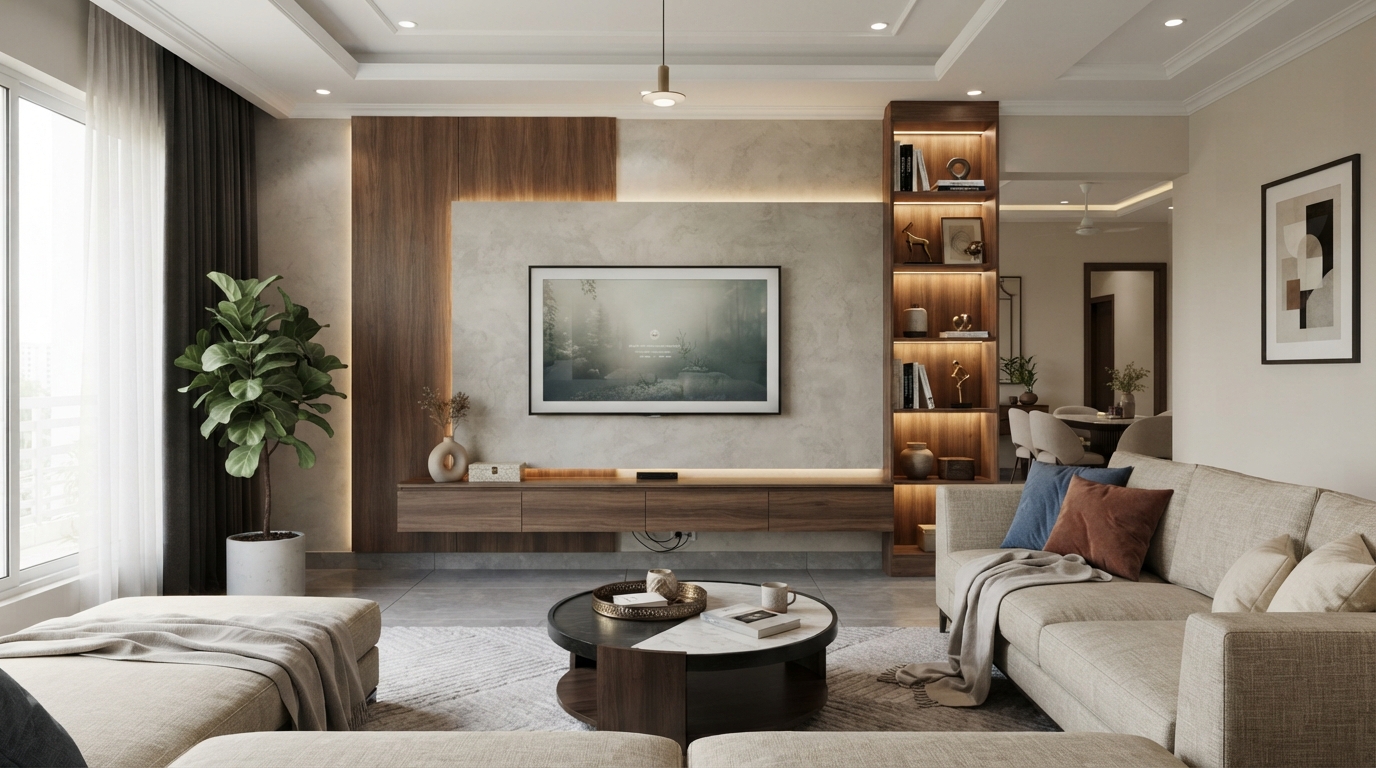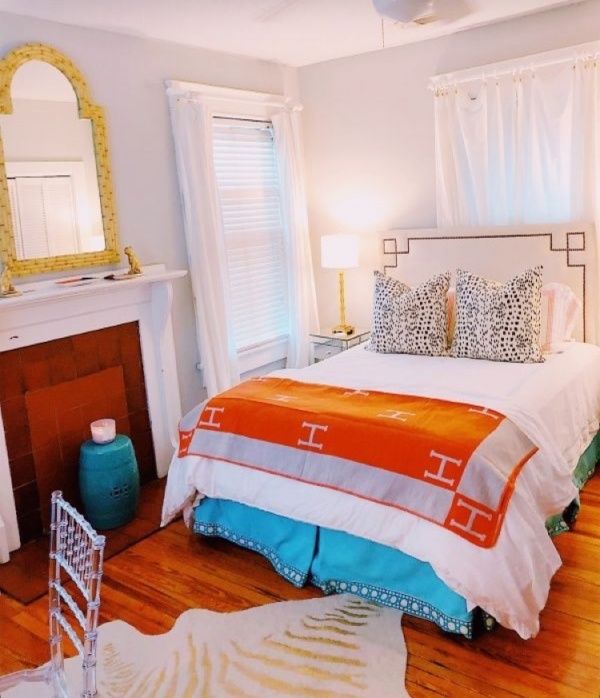

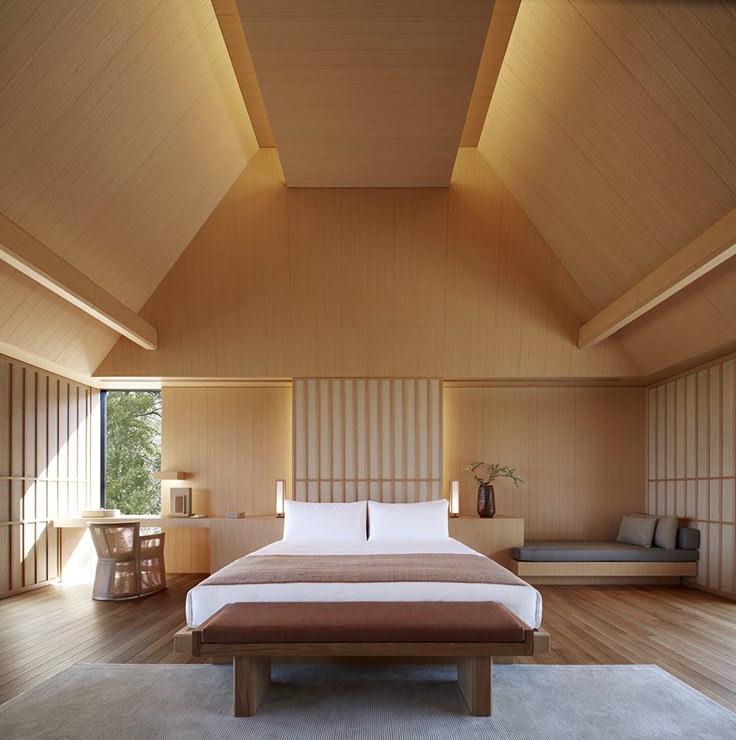
A calm home does not necessarily need more decoration. Sometimes it needs less noise, better proportions, natural materials and a stronger connection with the world outside. That is the central idea behind Japanese interior design, a design approach that brings together simplicity, functionality, craftsmanship and an appreciation for nature.
In 2026, interest in Japanese-inspired interiors continues to grow because the style offers something many modern homes lack: visual breathing room. Contemporary Japanese spaces often avoid unnecessary decoration and instead use wood, stone, paper, linen, natural light, low furniture and carefully selected objects to create a sense of quiet.
Current design coverage also highlights wabi-sabi, ma, natural materials, uncluttered rooms and the relationship between interior and nature as important parts of the aesthetic.
But there is an important distinction to make.
Japanese interior design is not simply an empty room with beige walls and a wooden table. It is not automatically Zen because it contains a plant, and it is not the same thing as Japandi.
The appearance comes from a deeper way of thinking about space.
Once you understand that thinking, it becomes much easier to create a Japanese-inspired home that feels authentic rather than themed.
What Is Japanese Interior Design?
Japanese interior design is an approach to creating living spaces around simplicity, functionality, natural materials, craftsmanship, balance and a close relationship with nature.
Traditional Japanese homes developed around flexible spaces and thoughtful use of limited resources. Sliding partitions, tatami flooring, built-in storage and low furniture allowed rooms to serve different purposes while avoiding unnecessary visual clutter.
Modern Japanese interiors continue many of these ideas while adapting them to contemporary lifestyles.
You might see a clean-lined sofa rather than floor cushions, a modern kitchen rather than a traditional cooking space, or a large window rather than a classic garden-facing opening.
The underlying principles can remain the same.
The objective is not to recreate an old Japanese house.
It is to create a home in which every element feels considered.
Why Does Japanese Interior Design Feel So Calm?
The calmness comes from several decisions working together.
There is less visual clutter.
Furniture tends to have a clear purpose.
Colours are often restrained.
Materials are allowed to show their natural qualities.
Light is treated as part of the design.
Empty space is not automatically regarded as something that needs to be filled.
This last point is particularly important.
A Japanese-inspired room can feel beautifully finished even when part of the room is deliberately empty.
That empty area creates visual breathing room and gives attention to the objects that remain.
This idea is closely associated with ma, a concept often discussed in relation to Japanese aesthetics and the meaningful relationship between occupied and unoccupied space. Recent design guides also emphasize that Japanese minimalism is not about removing everything, but about making space and absence intentional.
The Core Principles of Japanese Interior Design
There is no single checklist that defines every Japanese interior.
Japanese design has developed through different historical, cultural and architectural influences.
However, several principles appear consistently.
1. Simplicity With Purpose
The first principle is simplicity.
But simplicity does not mean owning as little as possible.
It means avoiding things that do not contribute to the function, atmosphere or beauty of the room.
A chair should be comfortable.
A cabinet should provide useful storage.
A ceramic object might be displayed because its shape or craftsmanship adds character.
A piece of decoration that has no relationship with the rest of the room may simply create noise.
This is why Japanese minimalist interior spaces can look simple without feeling unfinished.
The room has been edited rather than emptied.
2. Ma and the Value of Empty Space
One of the most useful concepts to understand is ma.
In practical interior design terms, ma can be understood as the space between things and the pause that allows individual elements to be appreciated.
Consider a living room with one large artwork on a plain wall.
Now imagine covering that wall with several small pictures, shelves and decorative objects.
The first arrangement gives the artwork visual importance.
The second distributes attention across the entire surface.
Japanese-inspired interiors often use this principle deliberately.
The empty wall is doing something.
The gap around the furniture is doing something.
The open floor area is doing something.
Instead of asking, “What should I put here?” ask, “Does this space need anything at all?”
That small change in thinking can dramatically improve an interior.
3. A Connection With Nature
Nature is central to the Japanese aesthetic.
This does not mean filling a room with plants.
The connection can be created through natural light, views, materials, seasonal changes, organic forms and carefully framed outdoor scenery.
Wood is particularly important.
Stone, bamboo, paper, clay and natural textiles can also introduce tactile qualities associated with the natural world.
Where possible, windows should allow daylight and views to become part of the composition.
Even a small apartment can use this principle.
A single plant near a window, natural timber furniture and linen curtains may establish a stronger connection with nature than dozens of artificial decorative objects.
Modern Japanese design coverage repeatedly identifies nature, natural materials and the relationship between indoor and outdoor spaces as defining characteristics.
4. Natural Materials
Materials should look and feel like themselves.
A timber surface can show its grain.
Stone can retain variation.
Ceramics can display handmade irregularities.
Linen can reveal its weave.
Paper can soften light.
This preference creates an interior that feels tactile rather than overly manufactured.
Common materials include:
- natural wood
- bamboo
- stone
- paper
- linen
- cotton
- clay
- ceramic
- rattan
These materials do not all need to appear together.
In fact, using too many can defeat the purpose.
Two or three complementary materials are often enough to establish the atmosphere.
Architectural Digest similarly identifies wood, stone, paper, cotton and rattan among the materials commonly associated with Japanese interiors.
5. Wabi-Sabi
Wabi-sabi interior design is often mentioned whenever Japanese aesthetics are discussed.
The concept is commonly associated with finding beauty in imperfection, impermanence, simplicity and the marks of time.
In a home, that might mean choosing a handmade ceramic cup with slight variation rather than a perfectly identical mass-produced set.
It might mean allowing natural wood to develop character instead of expecting it to remain visually perfect forever.
It can also mean appreciating an aged object instead of immediately replacing it.
However, wabi-sabi should not be reduced to “old and broken things.”
Its application to interiors is more subtle.
The attraction lies in authenticity, simplicity and the acceptance that materials and objects change over time.
A room can therefore feel refined without appearing pristine.
Japanese Interior Design Colour Palette
Colour is usually quieter than in many maximalist interior styles.
Common tones include warm whites, cream, beige, taupe, soft grey, natural brown, muted green and charcoal.
The exact palette can change depending on the architecture.
Traditional interiors may include deeper wood tones and stronger contrasts.
Contemporary homes may use lighter oak, warm white walls and soft neutral fabrics.
The important thing is cohesion.
Instead of selecting colours independently, build a palette from the materials already present.
For example, if your flooring is warm oak, you might pair it with:
warm off-white walls
natural linen curtains
soft beige upholstery
muted green plants
dark brown or charcoal accents
This produces depth without requiring bright accent colours.
A neutral Japanese-inspired interior should not feel flat.
Texture can provide the variation that colour normally supplies.
Why Texture Matters More Than Decoration
A room with five shades of beige can still look boring if every surface is smooth.
Japanese-inspired interiors often create interest through material texture.
Think of rough stone beside smooth timber.
Linen beside polished ceramic.
A woven basket beside a plaster wall.
A handmade vase on a simple wooden shelf.
This is particularly useful in minimalist spaces.
When there are fewer decorative objects, the eye notices surfaces more carefully.
The grain of timber becomes part of the decoration.
The shadow cast by a shelf becomes part of the composition.
The irregular edge of a ceramic bowl becomes a visual detail.
This is one reason authentic Japanese home design can feel rich even when it contains relatively few objects.
Low Furniture and Grounded Proportions
Low-profile furniture is strongly associated with traditional Japanese interiors.
There are practical and cultural reasons behind this.
Tatami-based rooms historically encouraged closer relationships with the floor, and traditional furnishings often had a lower visual profile.
In modern homes, you do not need to replace every chair with a floor cushion.
Instead, consider visual proportion.
A low sofa, simple wooden coffee table and furniture with clean horizontal lines can create a grounded feeling.
Avoid unnecessarily tall furniture if the room already feels crowded.
The aim is not to make every object short.
It is to keep the overall composition visually calm.
Shoji Screens and Flexible Space
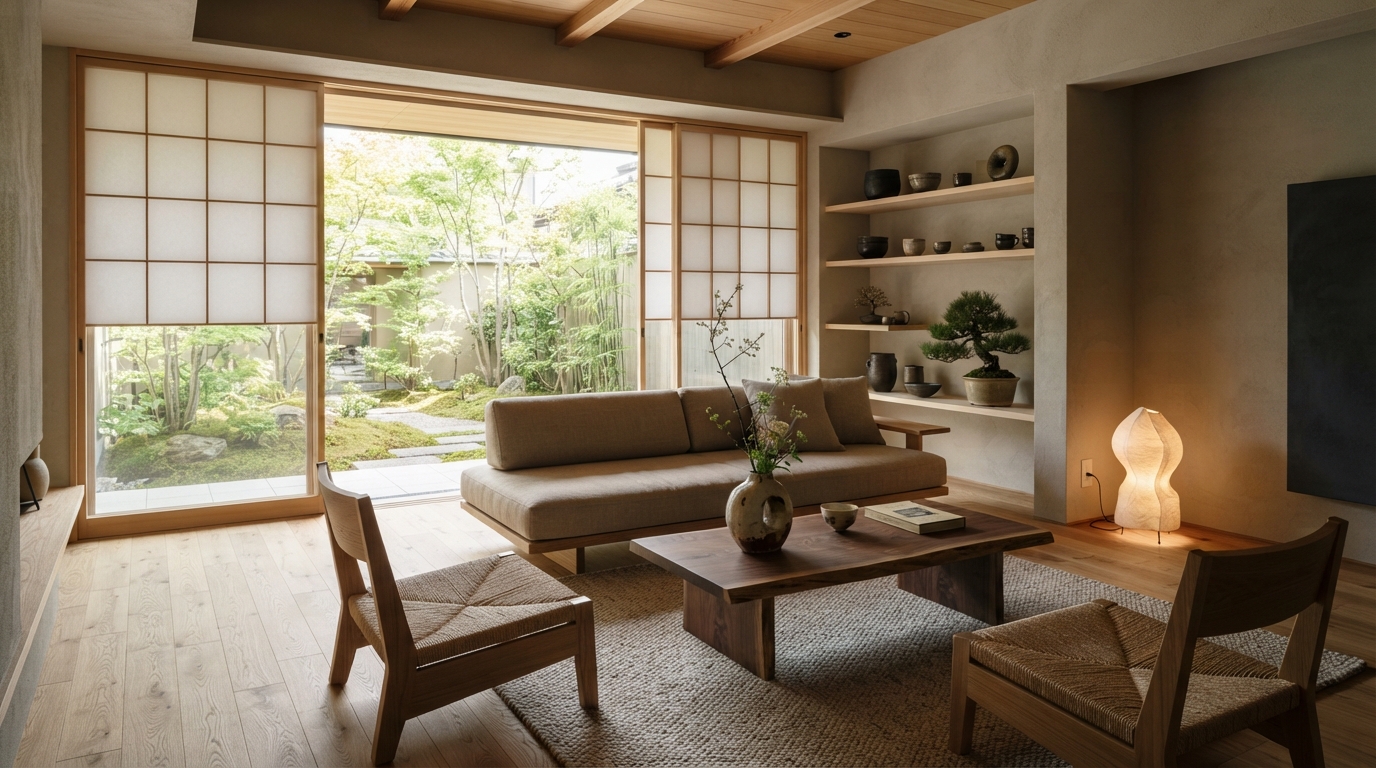
Shoji screens are one of the most recognizable elements of Japanese architecture and interiors.
Traditional shoji use translucent material within a wooden framework to filter light while providing separation.
Their modern interpretation can be highly practical.
A contemporary home might use sliding translucent panels between a bedroom and living area, a timber-framed room divider or a translucent screen to soften daylight.
The broader lesson is flexibility.
Instead of permanently dividing every room, consider whether spaces need to be open at some times and private at others.
Japanese architecture has historically used movable partitions and flexible rooms to make better use of space.
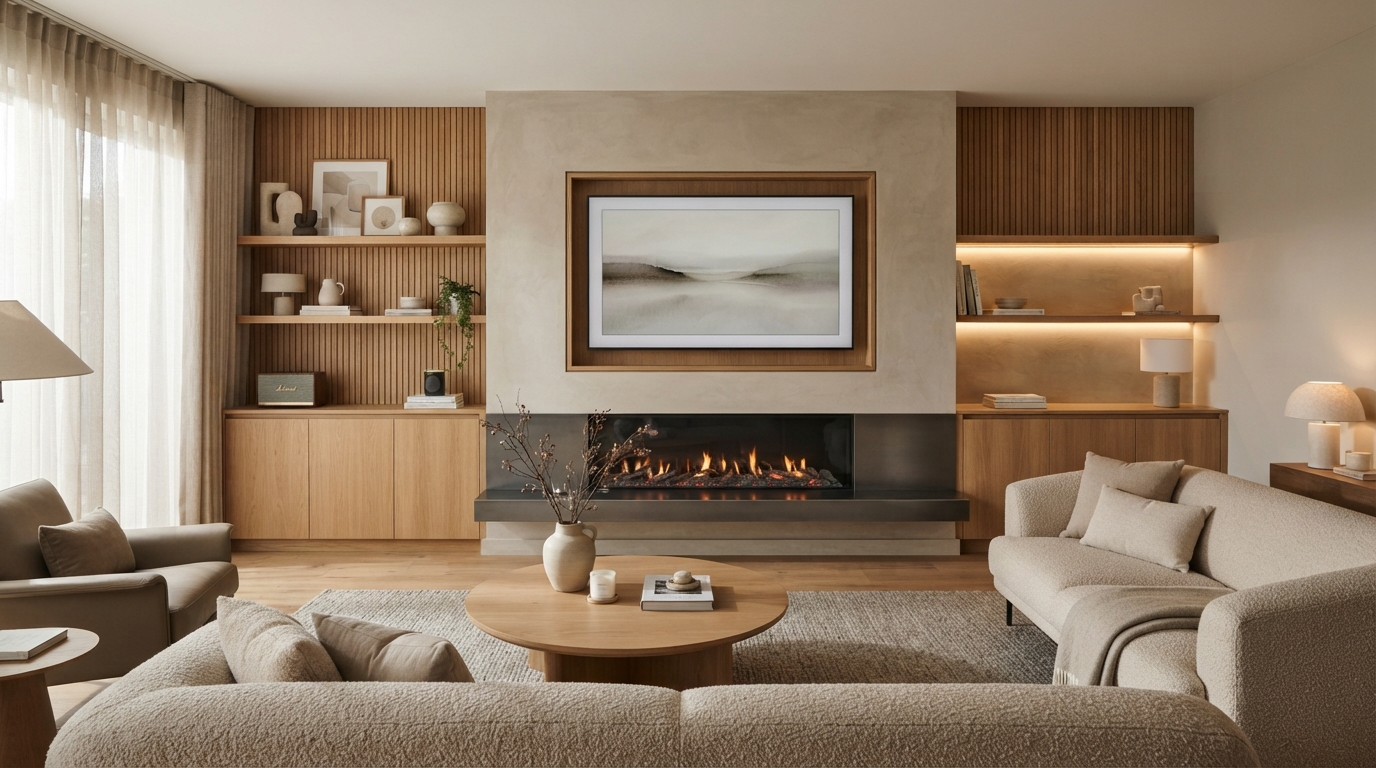
Japanese-Inspired Living Room
The living room is one of the easiest places to introduce Japanese design principles.
Start with the furniture.
Choose a sofa with simple lines.
Add a low coffee table.
Keep the number of additional pieces limited.
Then introduce texture through linen, wool, timber and ceramics.
A large rug is optional.
If used, select one with a subtle texture rather than a complicated pattern.
The walls should remain relatively quiet.
One strong artwork can have more impact than an entire gallery wall.
For decoration, think carefully about scale.
A single substantial ceramic vessel may work better than six small accessories.
This is where ma becomes practical.
Give the objects room to breathe.
Japanese Bedroom Design
A Japanese-inspired bedroom should feel restful before it feels decorative.
Start with the bed.
A low platform bed or simple timber frame can establish the visual foundation.
Use natural bedding in neutral shades.
Linen works particularly well because its slight irregularity introduces texture without adding strong patterns.
Keep bedside furniture simple.
You may not need matching tables on both sides.
A small wooden stool or floating shelf can provide enough space for a lamp and book.
The lighting should be warm and soft.
Avoid turning the bedroom into a display area.
The purpose of the room is rest.
Every element should support that function.
Japanese Kitchen Design
A Japanese-style kitchen is usually defined more by order and material quality than by decorative motifs.
Flat or simple cabinet fronts can create a clean appearance.
Natural wood can soften modern cabinetry.
Stone or understated solid-surface worktops can provide durability without visual excess.
Storage is especially important.
If everyday appliances and utensils remain scattered across every surface, even an expensive kitchen will struggle to achieve the calm associated with Japanese minimalism.
Use concealed storage where practical.
Keep frequently used objects accessible but organized.
The goal is not an empty kitchen.
It is a kitchen where the necessary things have a logical place.
Japanese Bathroom Design
Bathrooms are particularly suited to the Japanese relationship with nature and ritual.
Natural stone, timber details, soft lighting and restrained colours can make the space feel more restorative.
A freestanding timber stool, textured ceramic container or small plant can add warmth.
However, materials must be appropriate for moisture.
Natural wood should be selected and finished according to the environment.
Do not use a material simply because it looks attractive in an inspiration photograph.
Practical performance matters.
This is another important Japanese design lesson: beauty and function should support one another.
Japanese Entryway Design
The entryway deserves more attention than it usually receives.
In traditional Japanese homes, the genkan provides a clear transition between outside and inside.
A modern home does not need to reproduce a traditional genkan exactly.
But the underlying idea is useful.
Create a defined arrival point.
Provide somewhere for shoes and everyday belongings.
Avoid allowing bags, shoes and coats to spread across the entire entrance.
A timber bench, concealed shoe storage and a simple wall hook system can create a cleaner transition.
The entrance should tell you immediately that the home has changed from the outside world.
Lighting in Japanese Interior Design
Lighting is not simply about making a room bright.
Japanese-inspired interiors often benefit from layered illumination.
Natural daylight should be used whenever possible.
During the evening, combine ambient light with smaller sources.
A paper or fabric pendant can create softness.
A table lamp can illuminate a reading area.
A concealed light can highlight a wall texture.
Avoid relying entirely on harsh overhead lighting.
Light and shadow are valuable parts of the visual experience.
A plain wall can become interesting when sunlight moves across it during the day.
A textured surface can look completely different under warm evening light.
This changing quality is one of the reasons simple interiors can remain visually engaging.
Japanese Interior Design and Natural Light
Windows should be treated as architectural elements rather than simply places where curtains are installed.
If a window provides a garden view, avoid blocking it unnecessarily.
If the view is unattractive, translucent screens, planting or carefully positioned furniture can soften the relationship.
Natural light can also make small rooms feel more open.
Sheer curtains or translucent materials can distribute daylight while maintaining privacy.
The objective is not maximum brightness.
It is a useful, comfortable light.
How to Use Plants Without Losing the Minimalist Look
Plants fit naturally into Japanese decor, but more is not always better.
One large plant can become a focal point.
A small branch in a ceramic vessel can create a seasonal accent.
A simple arrangement of greenery near a window can connect the interior with the outdoors.
Avoid turning every shelf into a collection of pots.
Choose plants according to the actual conditions of the room.
Consider natural light, humidity, maintenance and scale.
The plant should feel like part of the room rather than an accessory placed there because “Japanese style” requires greenery.
Japanese Art and Decoration
Japanese-inspired decoration tends to favour intention over accumulation.
Ceramics, calligraphy, natural textiles, wood objects, ikebana-inspired arrangements and carefully chosen artwork can work beautifully.
The key is selection.
Ask why an object belongs in the room.
Does it have craftsmanship?
Does it connect with the colour palette?
Does it introduce an interesting texture?
Does it have personal meaning?
If the answer is no to all four, you may not need it.
This is the difference between minimalism with personality and minimalism that feels sterile.
Japanese Interior Design for Small Spaces
The principles work particularly well in small homes.
Why?
Because Japanese design already pays close attention to efficient use of space.
Choose furniture that performs more than one function.
Use built-in storage where possible.
Keep circulation routes clear.
Avoid unnecessary furniture.
Choose lighter visual masses where the room is very compact.
A small room does not need to be completely white.
Warm timber and soft neutrals can create depth without making the space feel crowded.
Sliding doors or flexible partitions can also help when the architecture allows them.
The biggest improvement often comes from removing furniture that does not genuinely serve the room.
How Japanese Design Uses Storage
Storage is essential to achieving visual calm.
Open shelving is useful, but too much open storage can create clutter.
Use closed cabinets for objects that do not need to be displayed.
Built-in storage can be especially effective because it reduces the number of independent visual objects in the room.
Think vertically when floor space is limited.
At the same time, avoid covering every wall with cupboards.
Remember ma.
Some empty wall area is valuable.
The best storage solution is therefore not the one that provides the maximum number of shelves.
It is the one that provides enough storage while maintaining visual balance.
What Is Modern Japanese Interior Design?
Modern Japanese interior design combines traditional principles with contemporary materials, technology and lifestyles.
A modern Japanese home may have smart lighting, a modern kitchen, large glazing, contemporary furniture and sophisticated heating systems.
None of these automatically contradict Japanese aesthetics.
The question is how they are integrated.
Technology should not create unnecessary visual clutter.
Storage should conceal equipment where appropriate.
Materials should remain cohesive.
Furniture should be selected for comfort and function.
This is why the style remains adaptable.
You can live in a contemporary apartment while borrowing Japanese principles without pretending that your home is a traditional Japanese house.
Japanese Interior Design vs Japandi
Japanese design and Japandi are related, but they are not identical.
Japandi style combines Japanese restraint with Scandinavian design’s emphasis on comfort, warmth and simplicity.
The two styles share several characteristics.
Both can use:
- natural wood
- neutral colours
- clean lines
- simple furniture
- natural light
- minimal clutter
- craftsmanship
- The difference is in emphasis.
Japanese interiors are more directly connected with Japanese architectural and aesthetic traditions.
Japandi adds Scandinavian influences and often introduces softer textiles, warmer styling and a stronger sense of Nordic coziness.
Architectural Digest describes Japandi as a blend of Japanese and Scandinavian characteristics, with Japanese elements including natural materials, neutral colours, uncluttered spaces and natural light.
So if you want a more distinctly Japanese environment, focus on Japanese spatial principles rather than simply buying products marketed as Japandi.
Is Japanese Minimalism the Same as Wabi-Sabi?
No.
They overlap, but they describe different ideas.
Japanese minimalism focuses strongly on simplicity, functionality, reduction and visual calm.
Wabi-sabi places greater emphasis on imperfection, impermanence, age and natural change.
A room can be minimalist without being wabi-sabi.
For example, a perfectly engineered white room with seamless surfaces may be minimalist but not particularly wabi-sabi.
Conversely, a simple room containing aged timber and handmade ceramics may express wabi-sabi even if the furniture is not extremely minimalist.
Understanding the distinction helps prevent Japanese design from becoming a collection of internet trends.
How to Make a Home Feel Japanese Without Making It Themed
This is one of the most important questions.
Do not begin by buying Japanese-looking decorations.
Begin with space.
Remove unnecessary visual clutter.
Improve storage.
Introducing natural materials.
Adjust the colour palette.
Lower the visual weight of furniture.
Use warm, layered lighting.
Then add a few carefully chosen objects.
A single handmade ceramic bowl can communicate more than a room full of decorative Japanese symbols.
Likewise, natural timber and good proportions can create a stronger impression than obvious themed artwork.
Authenticity comes from the underlying design decisions.
Common Japanese Interior Design Mistakes
Mistake 1: Making the Room Too Empty
Minimalism is not deprivation.
If a room contains almost nothing and feels uncomfortable, the problem is not that you need more decoration.
You may need better furniture, warmer materials or more texture.
Mistake 2: Using Only Beige
A neutral palette does not have to mean endless beige.
Wood grain, stone, charcoal, muted greens and natural textures can create variation.
Mistake 3: Buying Too Many “Japanese” Accessories
Decorative fans, fake bamboo, random lanterns and excessive calligraphy can quickly make a room look themed rather than thoughtfully designed.
Mistake 4: Ignoring Comfort
A beautiful chair that nobody wants to sit in has failed its purpose.
Function remains central.
Mistake 5: Confusing Wabi-Sabi With Neglect
Wabi-sabi is not an excuse for poor maintenance or unfinished work.
There is a difference between authentic material character and damage that needs repair.
Mistake 6: Filling Every Empty Area
Empty space is part of the composition.
Do not automatically decorate every wall, corner and shelf.
Mistake 7: Copying a Traditional Japanese Room Literally
A modern Western home has different architecture, climate, lifestyle and furniture requirements.
Borrow principles rather than copying an entire historical room.
A Practical Japanese Interior Design Checklist
Before changing your home, consider the following:
| Area | Question to Ask |
| Furniture | Does every major piece serve a useful purpose? |
| Layout | Is there enough open space to move comfortably? |
| Materials | Can natural wood, stone, linen or ceramics improve the room? |
| Colour | Does the palette feel connected to nature? |
| Lighting | Do you have soft light as well as overhead illumination? |
| Storage | Can everyday clutter be hidden? |
| Decoration | Does every visible object have a reason to be there? |
| Nature | Is there a meaningful connection to daylight, plants or outdoor views? |
| Texture | Are the surfaces visually and physically varied? |
| Proportion | Do furniture sizes relate properly to the room? |
Use the checklist as a filter rather than a rigid rulebook.
Japanese design works best when the principles are adapted intelligently.
12 Simple Ways to Introduce Japanese Interior Design at Home
If you want to change your home without a complete renovation, start small.
1. Remove unnecessary objects
Begin with the easiest change.
Clear surfaces that have become storage areas for random belongings.
2. Introduce natural wood
A timber stool, coffee table or cabinet can immediately warm a room.
3. Switch to natural textiles
Try linen curtains, cotton bedding or textured upholstery.
4. Create one clear focal point
Choose one artwork, plant, view or architectural feature.
5. Improve storage
Hide items that currently create visual noise.
6. Use warm lighting
Add lamps or dimmable sources instead of depending entirely on bright ceiling lights.
7. Add one handmade object
A ceramic bowl or vase can introduce craftsmanship.
8. Create more empty space
Move furniture away from unnecessary congestion.
9. Choose restrained colours
Use warm neutrals and natural tones rather than multiple competing accent colours.
10. Bring nature inside
Use a plant, natural stone, wood or a view toward greenery.
11. Reduce patterns
Keep patterns subtle and let texture provide interest.
12. Buy more slowly
Before purchasing something new, ask whether the room actually needs it.
This last step may be the most Japanese-inspired decision of all.
Why Japanese Interior Design Still Works in 2026
Interior trends can change quickly.
One year it is maximalism.
Another year it is a particular colour, material or furniture shape.
Japanese design has greater longevity because its foundation is not dependent on one visual trend.
Simplicity, natural materials, useful furniture, good craftsmanship and thoughtful space planning do not become irrelevant simply because a new trend appears.
Current 2026 coverage continues to describe Japanese-inspired design as a strong approach to calm, functional and nature-connected interiors, while newer discussions increasingly focus on intentional emptiness, material honesty and avoiding superficial imitation.
That makes the style particularly relevant to homeowners who want an interior that will not look dated after a single decorating cycle.
Frequently Asked Questions
What are the main features of Japanese interior design?
The main features include simplicity, natural materials, uncluttered spaces, thoughtful proportions, restrained colours, low-profile furniture, natural light, craftsmanship and a strong relationship with nature.
What colours are used in Japanese interior design?
Warm whites, cream, beige, taupe, soft grey, brown, muted green and charcoal are common. The exact palette depends on the materials and architecture.
Is Japanese interior design minimalist?
It often has minimalist qualities, but Japanese design is broader than minimalism. It also involves nature, craftsmanship, spatial relationships, material character and concepts such as ma and wabi-sabi.
What is ma in Japanese interior design?
Ma is commonly discussed as the meaningful space or interval between things. In interior design, it can be expressed through intentional empty areas, balanced layouts and visual breathing room.
What is wabi-sabi in interior design?
Wabi-sabi is an aesthetic associated with imperfection, impermanence, simplicity and the natural ageing of things. In interiors, it can appear through handmade objects, natural materials and surfaces that show authentic variation.
Is Japandi the same as Japanese interior design?
No. Japandi combines Japanese design influences with Scandinavian design. It shares minimalism, natural materials and neutral colours with Japanese interiors but usually introduces a stronger Nordic sense of warmth and coziness.
What furniture works best in a Japanese-style home?
Low-profile, simple and functional furniture works particularly well. Natural timber, clean lines and restrained forms are common choices.
Can Japanese interior design work in a small apartment?
Yes. Its emphasis on efficient storage, open space, multifunctional areas and restrained furniture makes many of its principles especially useful for small homes.
How do I make my living room look Japanese?
Start with the layout rather than decorations. Reduce clutter, introduce natural materials, use simple furniture, create open space, choose a restrained palette and add subtle natural textures.
Can I use modern furniture in Japanese interior design?
Absolutely. Modern Japanese interiors often combine contemporary furniture and technology with traditional principles such as simplicity, functionality, natural materials and careful spatial planning.
Does Japanese interior design have to be expensive?
No. The approach is more about selection than price. A simple timber piece, second-hand ceramic or linen textile can contribute more effectively than expensive decorative products that do not suit the room.
How can I add Japanese style without renovating?
Declutter first. Then adjust lighting, introduce natural materials, simplify the colour palette and add one or two carefully selected objects. You do not need to remodel the entire room.
Are plants important in Japanese interiors?
Plants are useful because they strengthen the relationship with nature, but you do not need many. One well-positioned plant can have more impact than numerous small pots.
What makes Japanese interiors feel peaceful?
The combination of visual restraint, natural materials, thoughtful proportions, controlled lighting, functional furniture and intentional empty space creates much of the calm associated with the style.
Final Thoughts
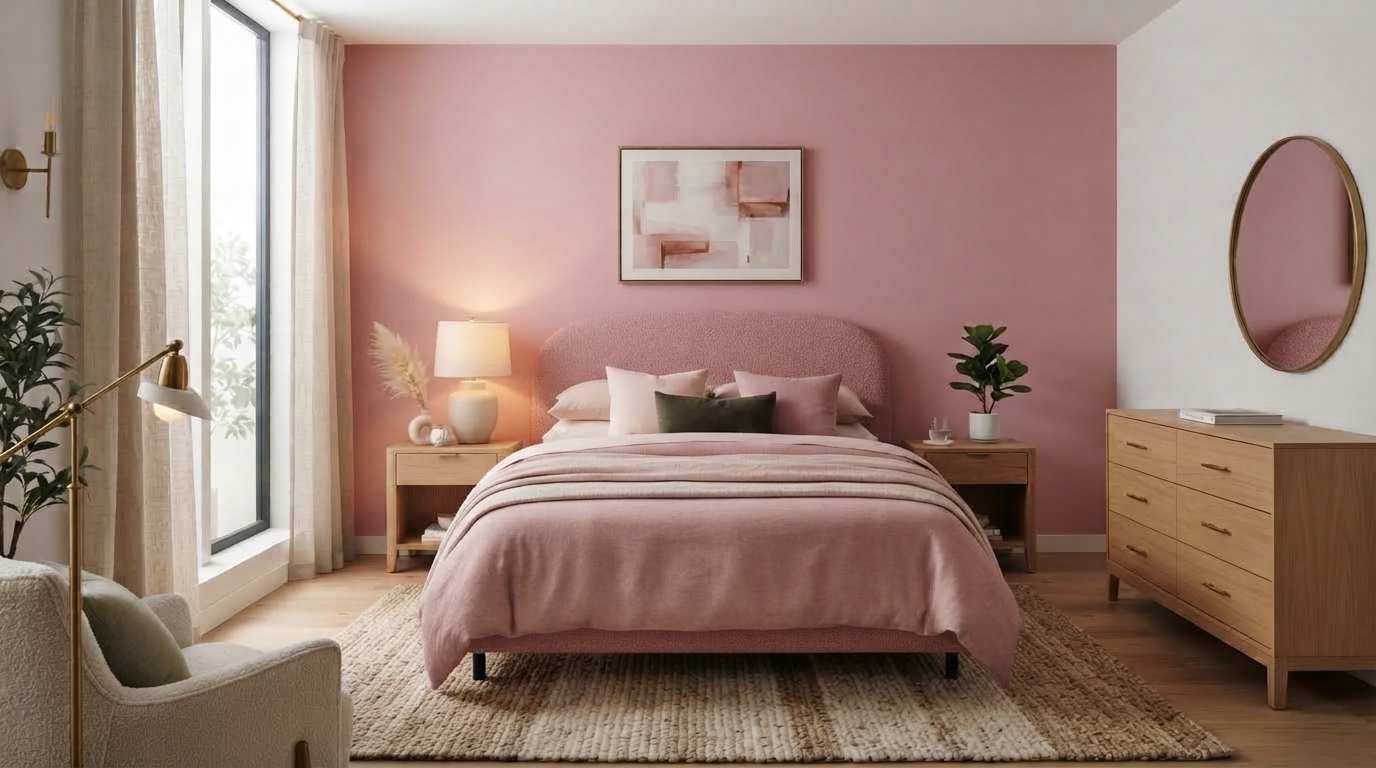
The most valuable lesson from Japanese interior design is not a particular piece of furniture or a specific colour palette. Read this Pink Room Ideas That Look Stylish, Cozy and Modern for 2026!
It is the idea that a home can feel better when every decision has a reason.
A room does not need more objects simply because there is an empty shelf.
A wall does not need artwork simply because it is blank.
A large room does not need to be filled with furniture.
A natural material does not need to be hidden behind a perfect finish.
Japanese-inspired interiors invite you to look at those decisions differently.
Use space intentionally.
Choose materials that age well.
Let natural light participate in the room.
Keep useful things accessible and unnecessary clutter out of sight.
Allow texture to replace excessive decoration.
Give important objects enough space to be appreciated.
And above all, design for the way the home is actually lived in.
That is what keeps Japanese interior design relevant in 2026.
It is not really about making a home look Japanese.
It is about creating a home that feels considered, useful, calm and connected to the natural world.