

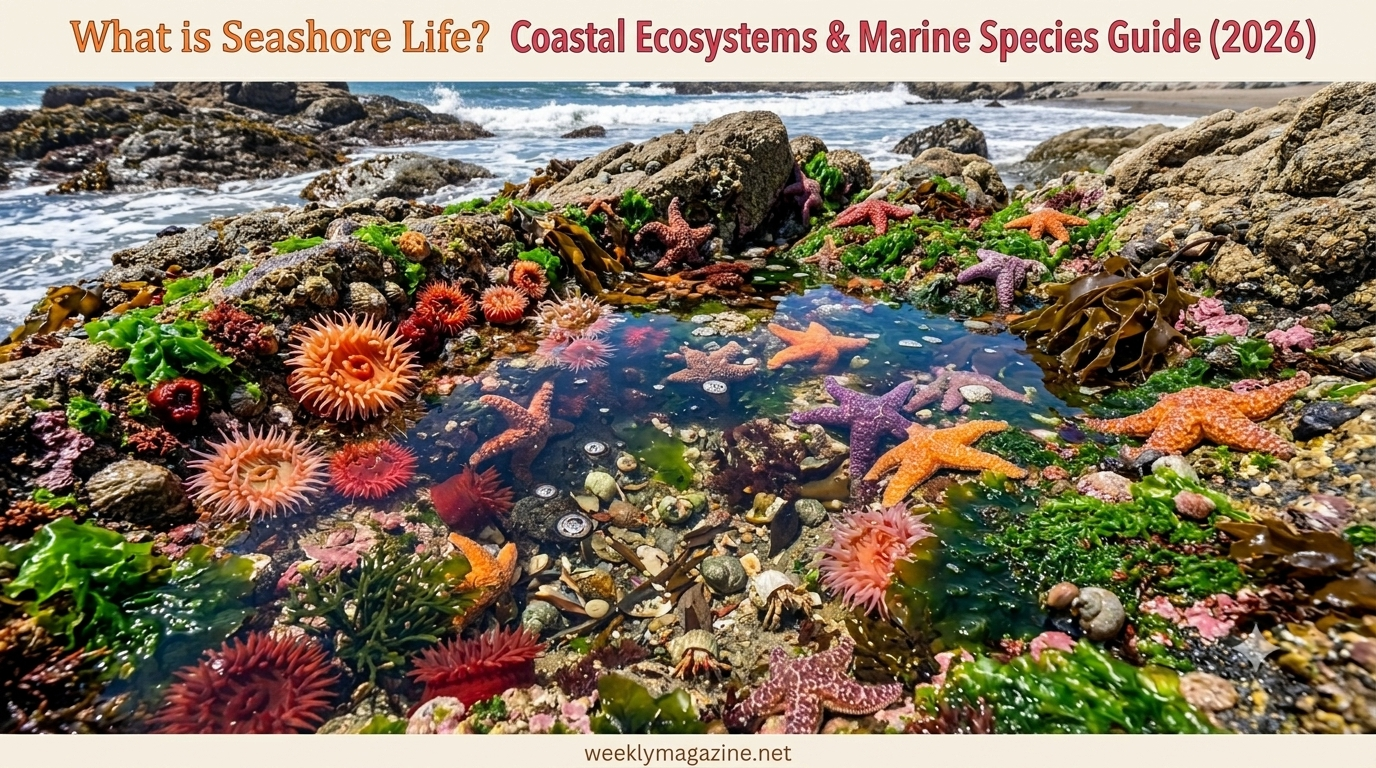
Exploring Seashore Life: The Ultimate Guide to Coastal Marine Ecosystems
Where the ocean meets the shore, a vibrant and dynamic environment unfolds. Dive into our complete guide to seashore life, intertidal organisms, tide pool biology, and coastal conservation.
Quick Summary: Key Takeaways
- Four Intertidal Zones: Coastal seashore life is organized across four distinct zones ranging from the splash zone down to the low intertidal zone.
- Adaptive Survival: Marine organisms endure high salinity, drying winds, crashing waves, and drastic temperature shifts daily.
- Crucial Ecological Role: Shoreline marine life supports global ocean oxygen levels, regulates nutrient cycles, and protects coastlines from severe storm erosion.
What is Seashore Life? Understanding Coastal Marine Environments
The term seashore life refers to the thousands of plant, animal, and algal species that inhabit the coastal transition zone between land and sea. This unique marine ecosystem, known as the intertidal zone, is alternately submerged in saltwater at high tide and exposed to sunlight, wind, and air at low tide.
Living along the coastline requires exceptional evolutionary resilience. Marine creatures inhabiting rocky shores, sandy beaches, and muddy estuaries face intense daily environmental stressors. Within hours, water temperatures can spike, oxygen levels can plummet, and heavy crashing waves can wash unprotected organisms out to sea. Despite these grueling challenges, shorelines are among the most biodiverse regions on Earth.
From microscopic plankton floating in tide pools to massive bull kelp forests and predatory shorebirds, understanding coastal species offers valuable insights into ocean conservation and climate resilience. For more insightful feature stories and lifestyle guides, check out the main hub at Weekly Magazine.
The Architecture of the Shoreline: The Four Intertidal Zones
The distribution of seashore life is primarily governed by vertical zonation—the separation of species into specific physical bands along the shore according to their tolerance for air exposure and water loss.
1. The Supratidal (Splash) Zone
Located above the highest spring tide mark, this zone receives moisture only from ocean spray and crashing waves. Organisms here face harsh drying winds and intense sun exposure. Typical inhabitants include maritime lichens, sea holly, and rough periwinkle snails that can seal their shells tightly to trap internal water.
2. The High Intertidal Zone
Submerged only during peak high tides, the high intertidal zone experiences long hours of sun exposure and dry air. Species here, such as acorn barnacles and limpets, attach firmly to rocks using muscular feet or waterproof adhesives to prevent drying out and detachment from wave energy.
3. The Middle Intertidal Zone
Flooded and exposed twice daily with the rhythm of the tides, this zone is characterized by moderate environmental stability and high biological competition. Mussels, sea anemones, shore crabs, and green sea lettuces dominate rocky surfaces in this region.
4. The Low Intertidal Zone
Exposed only during the lowest spring tides, the low intertidal zone remains underwater most of the time. This area boasts the highest biodiversity of all shoreline habitats, serving as home to sea stars, octopus species, sea urchins, nudibranchs, and thick kelp forests.
| Zone | Water Exposure | Main Stressors | Common Species |
|---|---|---|---|
| Splash Zone | Ocean spray only | Desiccation, UV rays, heat | Lichens, periwinkles, sea holly |
| High Zone | Submerged during high tides | Drying out, wave impact | Barnacles, limpets, blue mussels |
| Middle Zone | Submerged ~50% of the day | Wave shock, competition for space | Sea anemones, rockweeds, crabs |
| Low Zone | Exposed only during spring low tides | Predation, light limitation | Sea stars, kelp, sea urchins |
Invertebrate Life on the Seashore
Invertebrates represent over 90% of all animals inhabiting shoreline environments. These fascinating creatures have evolved extraordinary mechanisms to trap food, defend against predators, and keep wet when the tide recedes.
1. Mollusks (Snails, Mussels, and Clams)
Mollusks are master survivalists of the beach. Bivalves like mussels utilize incredibly strong silk-like threads (byssal threads) to attach to granite rocks, preventing them from being swept away by heavy surf. Gastropods such as limpets use a specialized rasping tongue called a radula, studded with iron-reinforced teeth, to scrape algae off rock surfaces.
2. Crustaceans (Crabs, Barnacles, and Hermit Crabs)
Crustaceans feature thick chitinous exoskeletons that shield them from predators and mechanical wave damage. Hermit crabs utilize empty snail shells for protection, constantly upgrading to larger shells as they mature. Meanwhile, barnacles glue themselves permanently to rocks head-first and sweep the water column for plankton using delicate, feather-like legs (cirri).
3. Echinoderms (Sea Stars, Urchins, and Cucumbers)
Echinoderms rely on a hydraulic water-vascular system that powers hundreds of tiny tube feet. Sea stars use these tube feet to pull open tightly sealed bivalve shells before extending their stomach outward to digest prey. Sea urchins use five sharp teeth (Aristotle’s lantern) to graze on kelp and keep seaweed populations balanced.
Environmental Insight: Oxygen Production
Coastal seaweeds and micro-algae produce over 50% of the world’s atmospheric oxygen through photosynthesis, making coastal conservation vital for all terrestrial life. Discover global ocean initiatives on the Ocean Conservancy Portal.
Marine Plants and Algae of the Shore
Unlike terrestrial plants, marine seaweeds do not possess true roots, stems, or leaves. Instead, they absorb water and nutrients directly from the ocean through their entire body (thallus). They secure themselves to rocks using root-like structures called holdfasts.
- Green Algae: Commonly found in upper intertidal pools where sunlight is abundant (e.g., Sea Lettuce).
- Brown Algae: Dominant in cold, temperate waters; includes large kelp and bladderwrack with air-filled bladders that float fronds toward sunlight.
- Red Algae: Highly adaptable algae capable of growing at deeper underwater depths due to unique light-absorbing pigments.
Coastal Birds and Fish Species
Intertidal fish such as sculpins and blennies are built to survive in shallow, oxygen-depleted tide pools during low tide. Many lack swim bladders and can rest at the bottom without floating. Meanwhile, shorebirds like oystercatchers and sandpipers use specialized beaks to probe deep into wet sand or pry mussels off rocks, forming a critical link in the coastal food web.
Tide Safety Warning
Always consult local tide schedules before exploring rocky intertidal regions. Incoming tides can rapidly isolate low-lying rocks and cut off safety routes back to dry beach areas.
Ethical Tide Pooling Practices
Observing seashore life up close is an exciting activity, but visitors must protect fragile tide pool habitats by following these simple guidelines:
- Watch Your Step: Walk carefully on bare rock surfaces to avoid crushing sensitive barnacle colonies, anemones, or mussels.
- Touch Softly: Use two wet fingers to gently touch marine animals. Never pull attached creatures forcefully off rocks.
- Replace Overturned Rocks: If you turn over a rock to observe hidden sea life, gently place it back exactly as you found it.
- Leave Wildlife on the Beach: Keep living organisms in their native tide pool homes. Removing them causes stress and eventual death.
Frequently Asked Questions About Seashore Life
Q1: What is the main difference between marine life and seashore life?
A: Marine life encompasses all life across ocean environments, including open sea and deep sea ecosystems. Seashore life specifically focuses on species inhabiting the coastal edge and intertidal zones where land meets water.
Q2: How do tide pool creatures survive out of water?
A: Intertidal species use clever adaptations. Hard-shelled animals seal their operculum to lock in moisture, while soft-bodied animals retract tentacles and secrete a thick slime layer to resist drying out under the sun.
Q3: When is the best time to go tide pooling?
A: The ideal time is during low tide, particularly during spring low tides (around full and new moons). Plan to arrive at the beach roughly one hour before the lowest predicted tide.
Q4: Why are coastal seaweeds important?
A: Seaweeds anchor coastal ecosystems. They produce vast amounts of oxygen, provide shelter and nurseries for young marine life, and reduce the force of waves hitting shorelines.
Q5: Is it safe to collect seashells from the beach?
A: Taking a few empty shells is usually fine, but leave most behind. Shells break down to replenish coastal minerals and provide homes for hermit crabs and small organisms.
About the Author
Syeda — Senior Outreach & Content Strategist at Weekly Magazine. Syeda produces deeply researched editorial guides, technology analysis, and agricultural features tailored for high-ranking digital publications across international markets.