
Spanish tapas are one of the easiest ways to turn simple vegetables into dishes that feel special.
You do not always need complicated techniques, expensive ingredients, or a long list of spices. Many Spanish tapas recipes rely on good olive oil, garlic, fresh vegetables, herbs, peppers, potatoes, or legumes and let those ingredients do most of the work.
That is one reason Trending Tapas Recipes continue to attract attention from home cooks. They can work as appetizers, side dishes, party food, light lunches, or part of a larger Spanish-style dinner.
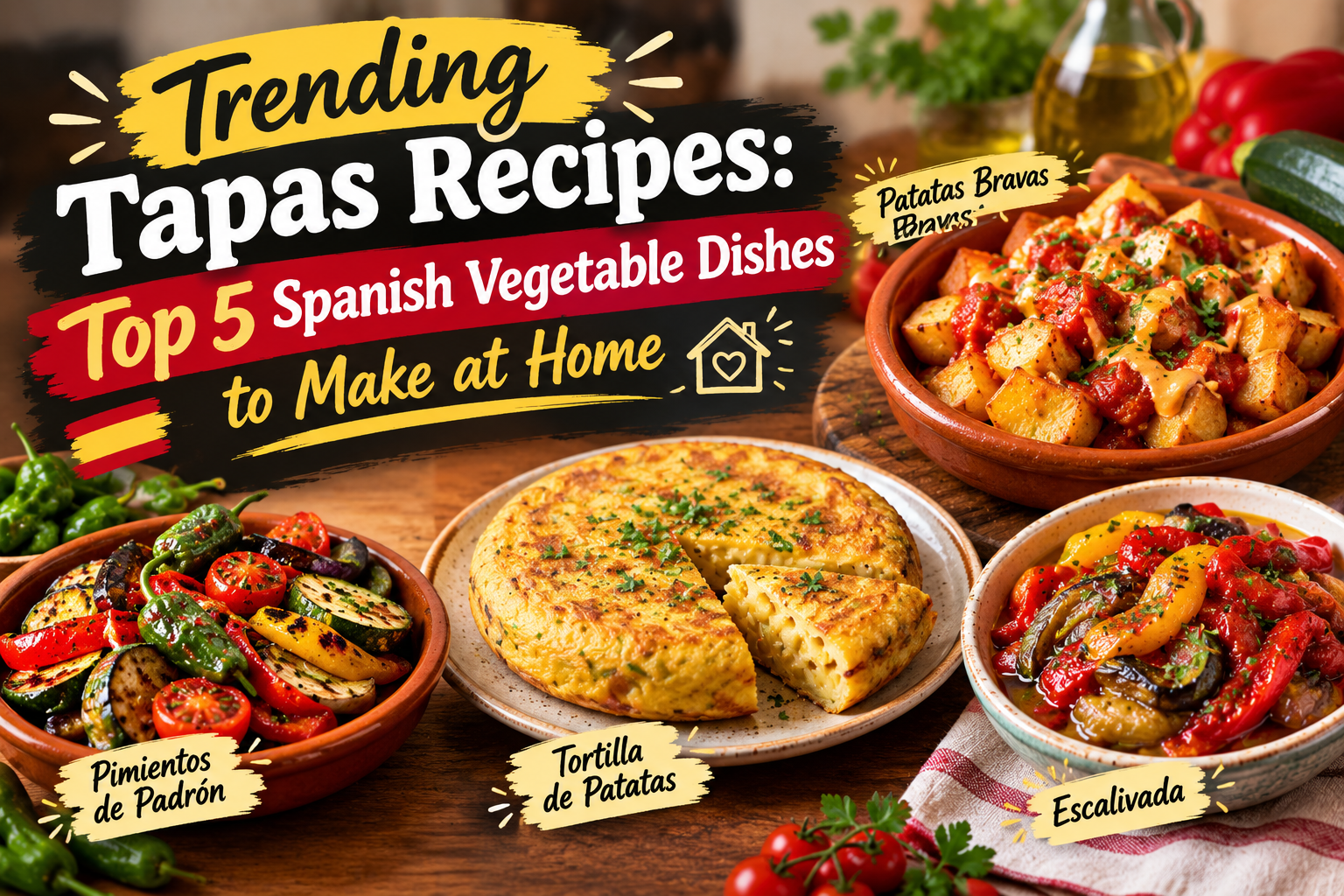
Among the many recipes available from The Spanish Radish, several vegetable-focused tapas stand out for their straightforward preparation and Mediterranean flavors. Its tapas collection currently includes Spanish Garlic Zucchini, Berenjena con Miel, Padrón Peppers, Spanish Vegetable Pisto, and Spinach with Chickpeas among its vegetable and vegetarian-friendly choices.
This guide brings five of those vegetable-forward ideas together and explains how to prepare each one, what ingredients matter, how the cooking process works, and how to serve them.
What Makes These Trending Tapas Recipes Worth Making?
Spanish tapas are small dishes, but small does not mean boring.
The best recipes create contrast through texture, temperature, acidity, salt, herbs, and quality olive oil.
Vegetables work especially well in this style of cooking because they can be grilled, pan-fried, roasted, stewed, or combined with simple sauces.
The five recipes below also give you different cooking experiences.
Spanish Garlic Zucchini is quick, garlicky, and pan-fried.
Berenjena con Miel brings together soft eggplant and a sweet finishing element.
Padrón Peppers are fast to prepare and work beautifully as a snack or sharing plate.
Spanish Vegetable Pisto is slower and more comforting, with several vegetables cooked together.
Spinach with Chickpeas combines leafy greens and legumes with garlic and Spanish seasoning.
Together, they create a useful starting point for anyone who wants to explore Spanish vegetable tapas.
1. Spanish Garlic Zucchini: A Golden, Garlicky Tapas Favorite
Spanish Garlic Zucchini, known as calabacín al ajillo, is one of the clearest examples of how a simple vegetable can become an excellent tapas dish.
The Spanish Radish describes it as an easy vegetarian tapas or side dish, with zucchini cooked until golden and finished with garlic, parsley, olive oil, and optional cheese.
The key is not simply frying zucchini.
The important part is controlling moisture.
Zucchini contains a lot of water. If it goes straight into a lukewarm or overcrowded pan, it can soften too quickly instead of developing a golden exterior.
Ingredients for Spanish Garlic Zucchini
For approximately four tapas servings, you can use:
- 1–2 large zucchinis
- 6 garlic cloves
- 3 tablespoons extra virgin olive oil
- Fresh parsley
- Sea salt
- Black pepper
- Parmesan or Manchego cheese, optional
The original recipe also emphasizes using fresh parsley and plenty of extra virgin olive oil.
How to Prepare the Zucchini
Start by washing the zucchini and drying it thoroughly.
Cut it into rounds about half an inch thick.
This thickness matters because very thin slices can become soft before they develop enough color.
Season the rounds with salt and leave them to rest for about 30 minutes.
This step helps draw out excess moisture.
After resting, quickly rinse away excess salt and pat the zucchini completely dry.
Do not skip the drying stage.
The drier the zucchini, the easier it is to brown in the pan.
How to Make the Garlic and Parsley Sauce
Finely crush the garlic.
Chop the parsley.
Heat a large skillet and add a little olive oil.
Cook the garlic briefly until fragrant.
Do not let it become dark brown.
Burned garlic can taste bitter and will overpower the mild zucchini.
Remove the garlic from the heat and combine it with parsley and some of the remaining olive oil.
Season lightly.
Now you have the finishing mixture that will go over the cooked zucchini.
How to Cook the Zucchini
Heat the skillet properly before adding the zucchini.
Place the rounds in a single layer.
Avoid crowding them.
Cook the first side until golden, then turn each piece and cook the other side.
The Spanish Radish recipe uses roughly three minutes per side and stresses using a hot pan and a single layer to prevent sogginess.
Transfer the cooked zucchini to paper towels briefly.
Arrange the rounds on a serving plate.
Spoon the garlic and parsley mixture over the top.
Finish with shaved Parmesan or Manchego if desired.
How to Serve Spanish Garlic Zucchini
Serve it warm with fresh bread.
The bread is useful because the garlic-and-oil mixture becomes part of the experience.
You can also add a small amount of lemon juice or sherry vinegar at the end for extra acidity.
For a vegan version, simply leave out the cheese. The Spanish Radish also publishes a vegan version using garlic, parsley, extra virgin olive oil, and Jerez sherry vinegar.
The Biggest Mistake to Avoid
Do not overcrowd the pan.
If too many zucchini pieces are packed together, steam builds up.
Instead of browning, the zucchini starts cooking in its own moisture.
A hot pan, dry zucchini, and enough space around each piece are the simple rules that make the biggest difference.
2. Berenjena con Miel: Spanish Eggplant With a Sweet Finish
Eggplant is another excellent vegetable for Spanish tapas.
Berenjena con Miel combines cooked eggplant with a sweet finishing element, creating the kind of sweet-and-savory contrast that works particularly well as a small plate.
The Spanish Radish includes Berenjena con Miel among its trending and classic Spanish tapas selections.
The recipe is especially useful if you want something different from the usual potato or tomato-based tapas.
Ingredients for Berenjena con Miel
A simple version can include:
- Fresh eggplant
- Flour, if using a traditional coated preparation
- Olive oil
- Salt
- Honey
- Optional fresh herbs
- Optional lemon or another acidic garnish
The exact quantity depends on how many people you are serving.
Choose firm eggplants with smooth skin.
How to Prepare the Eggplant
Wash the eggplant and trim the ends.
Cut it into sticks, slices, or wedges depending on the presentation you want.
If the eggplant is particularly large, lightly salting the pieces and allowing them to rest can help manage moisture.
Pat them dry before cooking.
This is especially useful if you plan to fry or roast the eggplant.
Cooking the Eggplant
Eggplant absorbs oil quickly, so temperature control matters.
If frying, make sure the oil is properly heated before adding the pieces.
Cook in batches instead of filling the pan completely.
The exterior should become golden while the interior becomes tender.
For a lighter preparation, you can roast or air-fry the eggplant instead.
The goal is still the same: a tender center with enough exterior texture to stand up to the sweet topping.
Adding the Honey
Once the eggplant is cooked, arrange it on a serving plate.
Drizzle a small amount of honey over the top.
You do not need to flood the eggplant with honey.
The purpose is contrast.
The eggplant has a soft, savory character, while honey introduces sweetness.
A small amount can be enough to create that difference.
How to Make It More Balanced
If the finished dish tastes too sweet, add acidity.
A tiny amount of lemon juice or vinegar can provide balance.
Fresh herbs can also add brightness.
The important thing is to maintain the relationship between savory eggplant and sweet topping rather than turning the dish into a dessert.
Best Way to Serve It
Berenjena con Miel works especially well as part of a tapas spread.
Place it beside other small dishes with contrasting flavors.
For example, a table could include garlicky zucchini, salty olives, roasted peppers, tomato bread, and sweet-and-savory eggplant.
This creates variety without requiring one huge main course.
3. Padrón Peppers: One of the Fastest Spanish Vegetable Tapas
If you want one of the simplest vegetable tapas ideas, Padrón Peppers are hard to overlook.
The Spanish Radish lists them as a five-minute recipe and vegan tapas option in its tapas collection.
The appeal comes from simplicity.
You do not need a complicated sauce.
You need good peppers, olive oil, and salt.
Ingredients for Padrón Peppers
Use:
- Fresh Padrón peppers
- Extra virgin olive oil
- Sea salt
That is the basic preparation.
Some cooks add additional seasoning, but it is not necessary.
How to Prepare Padrón Peppers
Wash the peppers and dry them thoroughly.
Water and hot oil do not mix well, so drying the peppers is important.
Heat a skillet over medium-high to high heat.
Add olive oil.
Place the peppers into the pan.
Cook until the skin begins to blister and develop dark spots.
Turn them regularly so different sides come into contact with the hot surface.
The peppers should become tender while retaining some texture.
Why High Heat Works
Padrón peppers are ideal for quick cooking.
The goal is not to slowly stew them.
You want surface browning and blistering.
A properly heated pan gives the peppers that characteristic roasted appearance without requiring a long cooking time.
Finish With Sea Salt
Transfer the cooked peppers to a serving plate.
Sprinkle it with sea salt.
That is often all they need.
The combination of olive oil, blistered pepper skin, and salt creates a surprisingly satisfying tapa.
What Makes Padrón Peppers Interesting?
Traditionally, Padrón peppers are known for variation in heat.
Most are mild, but an occasional pepper can be noticeably hotter.
That unpredictability is part of the appeal when they are served as a shared dish.
If you are serving guests who cannot tolerate spicy food, make sure they understand that individual peppers can vary.
How to Serve Padrón Peppers
Serve them immediately.
They work as a starter, side dish, or part of a larger tapas board.
Fresh bread, olives, Manchego, or other Spanish-style small plates can accompany them.
Because the cooking time is short, they are also useful when you are preparing several dishes at once.
4. Spanish Vegetable Pisto: A Comforting One-Pan Tapas Dish
Not every Spanish vegetable tapa needs to be quick.
Spanish Vegetable Pisto is a slower, more comforting style of dish built around vegetables cooked together.
The Spanish Radish lists Spanish Vegetable Pisto among its tapas recipes and describes it as an easy one-pot recipe.
Pisto is especially useful when you have several vegetables that need to be used.
What Is Spanish Vegetable Pisto?
Pisto is a Spanish vegetable preparation often compared with a Mediterranean vegetable stew.
The exact ingredients can vary.
A vegetable-focused version may include:
- Tomatoes
- Zucchini
- Onion
- Bell peppers
- Eggplant
- Olive oil
- Garlic
- Salt
- Pepper
- Herbs or paprika, depending on the preparation
The vegetables are cooked gradually so their flavors blend.
How to Start the Pisto
Begin with the vegetables that need the most time.
Dice the onion and cook it gently in olive oil.
Add garlic once the onion begins to soften.
Avoid burning the garlic.
Next, add firmer vegetables such as peppers.
Allow them to soften before adding vegetables that cook more quickly.
Add the Zucchini and Eggplant
Cut the zucchini and eggplant into similarly sized pieces.
This helps them cook more evenly.
Add them to the pan and stir gently.
The vegetables will release some moisture as they cook.
Continue cooking until they become tender.
Add Tomato
Tomatoes provide acidity and moisture.
Fresh chopped tomatoes can work well, while canned tomatoes can be convenient when fresh tomatoes are not at their best.
Add enough tomato to create a cohesive vegetable mixture without turning the dish into soup.
Simmer gently.
Seasoning the Pisto
Keep the seasoning relatively simple.
Salt and pepper are essential.
A little paprika can add warmth.
Extra virgin olive oil is also important because it helps carry the flavors of the vegetables.
Taste near the end and adjust the seasoning.
How to Serve Pisto
Pisto can be served warm or at room temperature depending on the preparation.
Fresh bread is an obvious companion.
You can also serve it alongside grilled vegetables, eggs, or other Spanish tapas.
For a more substantial meal, top it with a fried or poached egg.
Why Pisto Belongs in a Vegetable Tapas Collection
Pisto demonstrates a different side of Spanish vegetable cooking.
The zucchini recipe focuses on browning.
Padrón peppers focus on blistering.
Berenjena con Miel focuses on sweet-and-savory contrast.
Pisto focuses on slow cooking and the way several vegetables combine into one dish.
That variety is exactly what makes a Spanish tapas spread interesting.
5. Spinach With Chickpeas: A Classic Andalusian Vegetable Combination
The fifth recipe moves from fresh vegetables to a hearty combination of greens and legumes.
Spinach with chickpeas, or espinacas con garbanzos, is strongly associated with Andalusian tapas, particularly Seville. The Spanish Radish describes it as a quick and easy tapas recipe requiring only a small number of key ingredients.
The main ingredients include spinach, chickpeas, extra virgin olive oil, garlic, sweet paprika, and salt.
Ingredients for Spinach With Chickpeas
You will need:
- Fresh spinach
- Cooked chickpeas
- Extra virgin olive oil
- Garlic
- Sweet paprika
- Salt
- Optional bread for serving
These ingredients are inexpensive and easy to find.
That is one reason this type of dish works so well for home cooking.
Prepare the Chickpeas
If using canned chickpeas, rinse and drain them thoroughly.
If using dried chickpeas, they need to be soaked and cooked before starting the dish.
The chickpeas should be tender but not falling apart.
Prepare the Garlic
Slice or chop the garlic.
Heat olive oil in a skillet.
Add the garlic and cook gently.
You want the oil to become fragrant without letting the garlic burn.
Add the Spinach
Add the spinach in batches.
Fresh spinach takes up a lot of space initially but quickly wilts as it heats.
Stir gently.
Once the spinach has reduced significantly, add the chickpeas.
Add Paprika
Sweet paprika gives the dish its characteristic Spanish flavor.
Add it carefully and stir so it coats the ingredients.
Avoid cooking paprika aggressively at high heat for too long because it can become bitter.
Combine Everything
Continue cooking until the chickpeas are heated through and the spinach is tender.
Taste for salt.
The final dish should be savory, garlicky, and earthy, with the olive oil helping bring the ingredients together.
How to Serve Espinacas con Garbanzos
Serve it warm.
Fresh bread is an excellent addition because it works with the olive-oil-based sauce.
It can be served as a tapas portion or as part of a larger meal.
Unlike some lighter vegetable tapas, chickpeas make this dish more substantial.
How to Build a Spanish Vegetable Tapas Night
One of the easiest ways to use these Trending Tapas Recipes is to prepare several together.
You do not need to make five huge portions.
Tapas are designed for sharing.
Start with one warm vegetable dish.
Spanish Garlic Zucchini provides garlic, olive oil, and golden edges.
Add Padrón peppers for something fast and salty.
Then add Berenjena con Miel for sweetness.
Pisto provides a softer, stew-like vegetable component.
Finally, serve spinach with chickpeas for a more filling dish.
Add fresh bread.
You can also include olives, cheese, tomato bread, or another simple Spanish side.
The result feels much more varied than serving one large vegetable dish.
Which Trending Tapas Recipe Is Fastest?
If speed is your main priority, Padrón Peppers are among the quickest options in the collection.
Spanish Garlic Zucchini takes longer because the zucchini benefits from a resting period and careful browning.
Spinach with chickpeas is also relatively straightforward.
Pisto generally takes more time because the vegetables need to soften and combine.
Berenjena con Miel depends on the cooking method and preparation.
Which Recipe Is Best for a Vegetarian Tapas Menu?
All five choices can fit into a vegetarian-focused spread when prepared with suitable ingredients.
Spanish Garlic Zucchini can be made without cheese.
Padrón peppers are naturally simple and vegetable-forward.
Berenjena con Miel centers on eggplant.
Pisto is built around mixed vegetables.
Spinach with chickpeas combines greens and legumes.
The Spanish Radish’s wider collection also includes a number of vegetarian and vegan tapas, including its vegan Spanish Garlic Zucchini and Spinach with Chickpeas.
How to Keep Spanish Vegetable Tapas From Becoming Soggy
Texture is one of the biggest factors separating an average vegetable tapa from a memorable one.
For zucchini, salt and rest the slices, rinse lightly, and dry them thoroughly before cooking.
For peppers, dry them before placing them into hot oil.
For eggplant, avoid overcrowding the cooking surface.
For pesto, allow the vegetables to cook gradually instead of boiling them aggressively.
For spinach and chickpeas, drain excess liquid so the finished dish remains concentrated rather than watery.
The common theme is moisture control.
Why Extra Virgin Olive Oil Matters
Olive oil is not simply a cooking medium in these dishes.
It also contributes flavor.
Garlic, herbs, peppers, and vegetables absorb some of that flavor during cooking.
That is why using a good extra virgin olive oil can make a noticeable difference in simple recipes.
You do not need excessive quantities.
The goal is enough to cook the ingredients properly and carry the flavors.
How to Choose the Right Vegetables
Freshness matters.
Choose zucchini that feels firm.
Eggplant should have smooth skin and feel relatively heavy for its size.
Padrón peppers should look fresh and vibrant.
Spinach should have crisp leaves rather than wilted ones.
Tomatoes for pesto should have good flavor because tomato contributes significantly to the final dish.
Seasonal vegetables are also useful.
The Spanish Radish emphasizes easy-to-find, seasonal ingredients across its broader Spanish recipe collection, including vegetable-based preparations.
Can You Prepare These Tapas Ahead of Time?
Some can be prepared partially in advance.
For example, you can wash and cut vegetables earlier in the day.
You can prepare chickpeas and chop garlic ahead of time.
Pisto can also benefit from resting because the flavors have time to combine.
However, dishes such as Padrón peppers and crispy or golden zucchini are generally best served soon after cooking.
If texture is important, finish these closer to serving time.
Final Thoughts on Trending Tapas Recipes
The best Trending Tapas Recipes do not have to be complicated.
Spanish cooking repeatedly shows how a few well-chosen ingredients can create dishes with plenty of character.
Spanish Garlic Zucchini demonstrates the importance of browning and garlic.
Berenjena con Miel shows how sweet and savory flavors can work together.
Padrón Peppers prove that a vegetable can become an excellent tapa with little more than hot oil and salt.
Spanish Vegetable Pisto turns several everyday vegetables into a comforting one-pan dish.
Spinach with chickpeas combines greens, legumes, garlic, olive oil, and paprika into a hearty Andalusian-style tapa.
If you are planning a Spanish dinner, these recipes also give you different textures and flavors to work with.
You can serve a quick pepper dish beside a slow-cooked vegetable preparation, then add garlicky zucchini and a hearty chickpea plate.
That balance is what makes a tapas table feel complete.
Rather than searching for complicated recipes with dozens of ingredients, start with fresh vegetables, quality olive oil, garlic, sensible seasoning, and good timing. Also read this Best Ensalada con Palta Near Me: Fresh Recipe, Ingredients & Local Search Guide.
Those simple principles can turn everyday produce into some of the most enjoyable dishes on the table.