
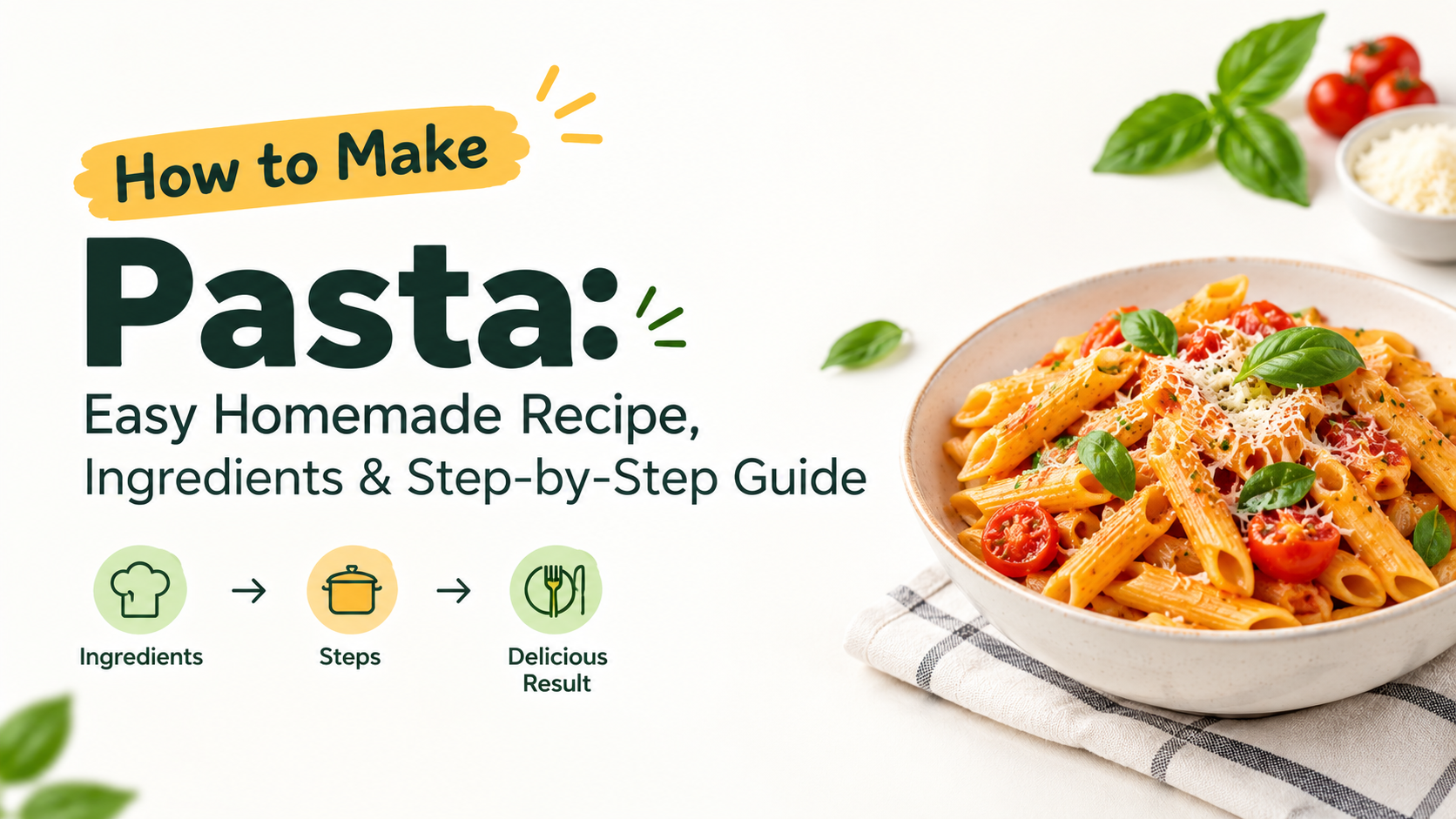
How to Make Pasta at Home
If you want to learn how to make pasta, you can start with a few basic ingredients such as flour and eggs. Homemade fresh pasta does not require complicated equipment, and you can make the dough by hand, roll it with a rolling pin, cut it with a knife, and cook it in boiling water.
The basic process is simple: make the dough, knead it, let it rest, roll it thin, cut it into your preferred shape, and cook it until tender. Fresh homemade pasta also cooks much faster than most dried pasta.
Whether you are making pasta for the first time or looking for an easy homemade pasta recipe, understanding each step will help you get smooth dough and properly cooked pasta.
What Ingredients Do You Need to Make Pasta?
Fresh pasta can be made with a surprisingly short ingredient list.
For a basic homemade pasta dough, you generally need:
- All-purpose or pasta flour
- Eggs
- Salt
- A small amount of water if needed
- Olive oil if your chosen recipe calls for it
A simple starting formula is flour and eggs.
One commonly used fresh pasta ratio is approximately 100 grams of flour per person with one egg, although the exact amount can vary depending on the flour, egg size, humidity, and desired pasta texture.
For a small batch, you can use:
- 2 cups flour
- 2 whole eggs
- 4 additional egg yolks
- Salt as needed
The egg-yolk-heavy dough creates a rich pasta dough, while other recipes may use whole eggs or a combination of eggs and water.
How to Make Pasta Step by Step
The basic homemade pasta process has several stages.
Step 1: Measure the Flour
Start by placing your flour on a clean work surface or in a large bowl.
If you are working directly on the counter, arrange the flour into a mound.
The amount of flour you need depends on how much pasta you want to make.
For a small batch, around two cups of flour is a practical starting point.
Keep a little extra flour nearby for dusting the work surface and preventing the dough from sticking.
Step 2: Make a Well in the Flour
Push the center of the flour mound down with your fingers to create a wide well.
The flour should form a ring around the center.
This traditional method gives you space to add the eggs while gradually incorporating the flour.
If you prefer a cleaner method, you can also make the dough inside a large mixing bowl.
Both approaches can work.
Step 3: Add the Eggs
Crack the eggs into the center of the flour well.
If you are following an egg-rich pasta dough, add the extra egg yolks as well.
Use a fork to beat the eggs gently in the center.
As you mix, begin pulling a small amount of flour from the sides into the eggs.
Continue gradually rather than mixing all of the flour into the eggs at once.
This helps you control the consistency of the dough.
Step 4: Bring the Dough Together
As more flour becomes incorporated, the egg mixture will become thicker.
Eventually, the mixture will turn into a rough dough.
At this point, you can start using your hands.
Press the mixture together and gather any loose flour into the dough.
If the dough feels extremely dry, a small amount of water can help bring it together.
Avoid adding too much liquid at once.
Pasta dough should become firm rather than wet and sticky.
How Do You Knead Pasta Dough?
Kneading is an important part of learning how to make pasta because it develops the structure of the dough.
Place the dough on a lightly floured surface.
Press the dough forward with the heel of your hand.
Fold it back toward you, turn it slightly, and repeat.
Continue kneading until the dough becomes smoother and more elastic.
A typical hand-kneading process can take around 10 minutes.
The finished dough should feel relatively smooth and firm.
It does not need to look perfectly polished immediately because resting will make it easier to work with.
Why Does Pasta Dough Need to Rest?
Fresh pasta dough benefits from resting before you roll it.
After kneading, shape the dough into a ball or compact disk.
Wrap it well and let it rest at room temperature for approximately 30 minutes.
Resting allows the dough to relax.
If you try to roll pasta immediately after extensive kneading, it may resist the rolling pin and spring back.
After resting, the dough should feel easier to flatten and roll.
How Do You Roll Fresh Pasta Without a Machine?
You do not need a pasta machine to make fresh pasta.
A rolling pin can work perfectly well.
First, divide the rested dough into smaller portions.
Working with smaller pieces makes it easier to achieve an even thickness.
Flatten one piece with your hands.
Then begin rolling it with a rolling pin.
Roll from the center outward and turn the dough regularly.
Continue rolling until the sheet is thin enough for the pasta shape you want to make.
If the dough starts sticking to the surface or rolling pin, lightly dust it with flour.
Avoid using excessive flour because too much can make the finished pasta dry.
How Thin Should Fresh Pasta Be?
The ideal thickness depends on the type of pasta you are making.
For noodles such as tagliatelle or fettuccine, the dough should be rolled thin enough to cook quickly and have a pleasant texture.
Thicker sheets can work well for certain filled pastas.
The important goal is consistency.
If some parts of the sheet are extremely thin while others are much thicker, the pasta may cook unevenly.
A smooth, evenly rolled sheet will produce more consistent noodles.
How Do You Cut Homemade Pasta?
Once your pasta sheet has been rolled thin, you can cut it into different shapes.
For simple noodles, lightly dust the sheet with flour.
You can then fold or loosely roll the sheet and use a sharp knife to cut it into strips.
For wider noodles, cut wider strips.
For thinner noodles, make narrower cuts.
You can also use a pasta cutter or pasta machine if you have one.
One of the advantages of making pasta at home is that you can choose the shape and thickness yourself.
How to Make Pasta Without a Machine
If you do not own a pasta machine, you can still make excellent fresh pasta.
The basic process is:
- Make the dough.
- Knead it until smooth.
- Let it rest.
- Divide the dough into smaller pieces.
- Flatten each piece.
- Roll it thin with a rolling pin.
- Cut the sheet into strips.
- Dust the noodles lightly with flour.
- Cook them in boiling water.
A knife and rolling pin are enough for a basic homemade pasta preparation.
This makes fresh pasta accessible even if you are trying it for the first time.
How Do You Cook Fresh Pasta?
Once the pasta has been rolled and cut, cooking it is straightforward.
Fill a large pot with plenty of water.
Bring the water to a strong boil.
Add salt to the cooking water.
Once the water is boiling, carefully add the fresh pasta.
Fresh pasta generally cooks much faster than dried pasta.
Depending on its thickness and shape, fresh pasta may take only a few minutes.
For a thin homemade noodle, approximately two to three minutes can be enough, but always check the pasta rather than relying only on a timer.
How Do You Know When Fresh Pasta Is Done?
The best way to check fresh pasta is to taste a piece.
It should be cooked through but still have some firmness.
This texture is commonly described as al dente.
Fresh pasta can go from undercooked to overcooked quickly because it is thinner and more delicate than many dried pasta products.
Start checking it early.
If the pasta is tender but still has a slight firmness when you bite it, it is generally ready to drain.
Should You Add Salt to Pasta Water?
Salt is commonly added to pasta cooking water to season the pasta as it cooks.
Bring the water to a boil first, then add the salt.
The exact amount can depend on the amount of water and your personal preference.
The cooking water should be seasoned, but you do not need to make it excessively salty.
Salt becomes particularly useful when the pasta is combined with a simple sauce because the noodles themselves contribute to the overall flavor.
Should You Add Oil to Pasta Water?
For ordinary pasta cooking, adding oil to the water is generally unnecessary.
Oil floats on the surface of the water rather than becoming an effective way to prevent pasta from sticking.
Instead, use plenty of water and stir the pasta during the early stages of cooking.
Once the pasta is cooked, drain it and combine it with the sauce promptly.
Proper cooking and handling are more useful than adding oil to the pot.
How Do You Make Pasta With Sauce?
Once your fresh pasta is cooked, you can serve it with almost any sauce that complements the shape.
Popular options include:
- Tomato sauce
- Cream sauce
- Alfredo-style sauce
- Pesto
- Garlic and olive oil
- Butter and Parmesan
- Meat sauce
- Vegetable-based sauces
For a simple meal, toss freshly cooked pasta with a tomato sauce and grated cheese.
For a richer option, a creamy sauce can be combined with noodles such as fettuccine.
Fresh pasta absorbs and carries sauce well, so the shape and thickness of the noodles can influence the final dish.
How to Make Pasta With Tomato Sauce
A simple tomato pasta can be prepared with basic ingredients.
Start by preparing your homemade pasta.
While the pasta dough rests or while the noodles cook, prepare a tomato sauce using ingredients such as tomatoes, garlic, olive oil, herbs, salt, and pepper.
Cook the sauce until the flavors come together.
Boil the fresh pasta separately.
Before draining, you can reserve some pasta cooking water.
Add the cooked pasta to the sauce and toss everything together.
The result is a simple homemade pasta dish without requiring a complicated recipe.
How to Make Pasta With a Creamy Sauce
Creamy pasta is another popular way to serve fresh noodles.
A basic creamy sauce can use ingredients such as butter, milk or cream, cheese, garlic, and seasoning.
Prepare the sauce separately.
Cook the fresh pasta until tender.
Drain the pasta and add it directly to the sauce.
Toss until the noodles are evenly coated.
If the sauce becomes too thick, a small amount of pasta cooking water can help loosen it.
How to Make Pasta at Home Easy
The easiest way to make pasta at home is to keep the process simple.
You do not need specialized equipment.
Start with flour and eggs.
Make the dough.
Knead it.
Let it rest.
Roll it with a rolling pin.
Cut it into noodles.
Then cook it in boiling salted water.
The biggest challenge for beginners is usually getting the dough consistency and thickness right.
With practice, you will become better at judging how much flour and liquid the dough needs.
How to Make Pasta With Water
Water can be used when making pasta dough, depending on the recipe.
Egg pasta gets much of its moisture from eggs.
Other pasta dough recipes use water instead of eggs or combine water with other ingredients.
When adding water to flour, add it gradually.
You want enough moisture to bring the dough together without making it overly sticky.
A dough that contains too much water can become difficult to roll and cut.
The exact amount can vary according to the type of flour and the recipe.
How to Make Pasta With Milk
Milk is not necessary for basic fresh pasta dough.
Traditional egg pasta recipes generally rely on flour and eggs rather than milk.
However, milk may appear in some homemade pasta recipes or pasta dishes, particularly in sauces.
If you are learning the basic technique, starting with a simple flour-and-egg dough is easier because you can focus on kneading, resting, rolling, cutting, and cooking.
How to Make Pasta at Home: Ingredients You Should Have
For a basic homemade pasta recipe, keep these ingredients available:
Flour: All-purpose flour can work for a simple homemade version, while pasta-specific flours can provide different textures.
Eggs: Eggs add moisture and richness to egg-based pasta dough.
Salt: Salt can season the dough and is commonly added to the cooking water.
Water: Water may be used in some dough recipes when additional moisture is needed.
Olive oil: Some pasta recipes include a small amount of olive oil, although it is not essential for every dough.
The exact combination depends on the style of pasta you want to make.
What Are the Most Common Homemade Pasta Shapes?
Once you know how to make the dough, you can experiment with different shapes.
Some familiar pasta types include:
Tagliatelle
Tagliatelle consists of long, relatively wide ribbons.
Fresh tagliatelle is particularly suitable for rich sauces.
Fettuccine
Fettuccine is another long, flat noodle.
It is commonly served with creamy or cheese-based sauces.
Pappardelle
Pappardelle features very wide ribbons and works well with substantial sauces.
Lasagna Sheets
Instead of cutting the pasta into noodles, you can leave the sheets wide and use them to build a lasagna.
Ravioli
Ravioli uses pasta sheets to enclose a filling.
The dough is rolled thin, filled, sealed, and cut into individual portions.
Learning the basic dough technique gives you a foundation for many of these pasta shapes.
What Are 7 Types of Pasta?
There are hundreds of pasta shapes, but seven familiar examples include:
- Spaghetti
- Penne
- Fettuccine
- Tagliatelle
- Ravioli
- Lasagna
- Macaroni
These shapes differ in size, structure, and ideal sauce pairings.
Long noodles are often used with smooth or textured sauces, while shapes such as penne can hold sauce inside their tubes and ridges.
Fresh pasta can also be shaped into several of these styles.
How Do You Store Fresh Homemade Pasta?
If you are not cooking the pasta immediately, handle it carefully.
Lightly dust freshly cut noodles with flour to prevent them from sticking.
Arrange the noodles loosely rather than compressing them into a tight pile.
For short-term storage, fresh pasta can be refrigerated according to the recipe and food-safety guidance you are following.
Fresh pasta can also be dried or frozen using an appropriate method.
The storage method can depend on whether the pasta contains eggs and how long you intend to keep it.
How Much Pasta Should You Make Per Person?
The amount of pasta needed depends on whether it is the main course, the type of pasta, and the appetite of the people eating.
A commonly used fresh pasta starting point is around 100 grams of flour per person when making egg pasta.
This is not a rigid rule.
You may need more or less depending on the dish and whether you are serving vegetables, meat, salad, bread, or another side.
For beginners, it is useful to make a little extra dough while learning because practice helps you understand the ideal portion and thickness.
Common Mistakes When Making Homemade Pasta
Adding Too Much Water
Pasta dough should not be overly wet.
Add liquid gradually if the dough needs it.
Skipping the Resting Period
Resting helps the dough relax and become easier to roll.
Using Too Much Flour
Excess flour can make the pasta dry and affect its texture.
Use only enough flour to prevent sticking.
Rolling Unevenly
Uneven pasta sheets can cook at different speeds.
Try to create a consistent thickness.
Overcooking Fresh Pasta
Fresh pasta cooks quickly.
Start checking it early rather than assuming it needs the same cooking time as dried pasta.
Forgetting to Stir
Fresh noodles can stick together if they are left undisturbed.
A gentle stir during cooking can help separate them.
Waiting Too Long Before Serving
Freshly cooked pasta is best combined with its sauce soon after draining.
How to Make Pasta More Successfully
Good homemade pasta comes down to controlling the dough and cooking process.
Start with accurately measured ingredients.
Knead the dough thoroughly.
Give it enough time to rest.
Roll it evenly.
Keep cut noodles lightly dusted so they do not stick.
Use plenty of boiling water.
Salt the water.
Watch the cooking time carefully.
Finally, combine the pasta with the sauce while it is still hot.
These small details make the process much easier.
How to Make Pasta for Beginners
If this is your first time making fresh pasta, do not try to make several complicated shapes at once.
Start with a basic noodle.
Make a simple dough from flour and eggs.
Knead it until smooth.
Rest it for around 30 minutes.
Roll it thin with a rolling pin.
Cut it into strips with a knife.
Cook the noodles for a few minutes.
Then serve them with a sauce you already enjoy.
Once you are comfortable with the basic dough, you can experiment with ravioli, lasagna sheets, wider noodles, and other shapes.
How to Make Pasta Recipe at Home
A simple homemade pasta process can be summarized as follows:
Ingredients
- 2 cups flour
- 2 whole eggs
- 4 egg yolks
- Salt as needed
- Water if necessary
Method
Place the flour on a clean work surface and make a well in the center.
Add the eggs and egg yolks.
Beat the eggs with a fork while gradually incorporating flour from the sides.
Once the mixture becomes thick, use your hands to bring the dough together.
Knead the dough for about 10 minutes or until it becomes smooth.
Wrap the dough and let it rest for around 30 minutes.
Divide it into smaller portions.
Roll each portion thin with a rolling pin.
Cut the pasta into strips.
Bring a large pot of salted water to a boil.
Add the fresh pasta and cook for approximately two to three minutes, checking for the desired texture.
Drain and serve with your preferred sauce.
How to Make Pasta With a Pasta Machine
A pasta machine is not essential, but it can make rolling the dough easier and more consistent.
After resting the dough, divide it into smaller portions.
Flatten each portion enough to fit through the machine.
Start with the widest setting.
Pass the dough through several times, gradually reducing the thickness.
Once the sheet reaches the desired thickness, use the machine’s cutter attachment to create noodles.
Dust the finished noodles lightly with flour so they do not stick together.
The machine is especially useful when making several batches or when you want very consistent sheets.
Can You Make Pasta Without Eggs?
Yes, different pasta styles use different dough formulas.
Egg pasta is popular for fresh homemade pasta, but some pasta doughs use flour and water instead.
The choice depends on the pasta style you want to make.
Eggs contribute richness and structure, while water-based doughs can produce a different texture.
If you are following a specific traditional recipe, use the ingredient ratios provided for that style rather than replacing ingredients randomly.
How Is Pasta Made Simple?
The simplest explanation is:
Mix → Knead → Rest → Roll → Cut → Boil → Serve
First, mix the ingredients into a dough.
Second, knead until smooth.
Third, let the dough rest.
Fourth, roll it thin.
Fifth, cut it into the desired shape.
Sixth, cook it in boiling salted water.
Finally, combine it with sauce and serve.
Once you understand this sequence, making fresh pasta becomes much less intimidating.
Final Tips for Making Homemade Pasta
Making fresh pasta is mostly about technique rather than complicated ingredients.
Use a manageable amount of dough when you are starting.
Give the dough enough time to rest.
Roll it evenly.
Keep the noodles lightly floured.
Use plenty of boiling water.
Check fresh pasta early because it cooks quickly.
And most importantly, taste the pasta before draining it.
The texture you want is generally tender with some firmness rather than completely soft. Also read this Best Tarta de Choclo Near Me: Top Chilean Spots in the US.
Frequently Asked Questions
How to make pasta step by step?
To make fresh pasta, combine flour and eggs, bring the mixture together into a dough, knead it until smooth, let it rest for about 30 minutes, roll it thin, cut it into noodles, and cook it in boiling salted water for a few minutes.
How do I cook pasta?
Bring plenty of water to a boil, add salt, then add the pasta. Fresh pasta usually cooks quickly, often within a few minutes depending on its thickness and shape. Taste it to check when it reaches the desired texture.
How is pasta made simple?
Pasta can be made using a simple sequence: make the dough, knead it, rest it, roll it, cut it, boil it, and serve it with sauce.
What are 7 types of pasta?
Seven common pasta types are spaghetti, penne, fettuccine, tagliatelle, ravioli, lasagna, and macaroni. Many additional pasta shapes are available.
People Also Search For
How to Make Pasta With Sauce
Cook the fresh pasta separately, prepare your preferred sauce, and toss the drained pasta with the sauce while it is hot. Tomato, pesto, cream, cheese, and garlic-based sauces are common choices.
How to Make Pasta at Home Easy
Start with flour and eggs, knead the dough, let it rest, roll it with a rolling pin, cut it into strips, and cook it in boiling salted water. No pasta machine is required.
How to Make Pasta Recipe at Home
A basic homemade pasta recipe uses flour and eggs. Mix them into dough, knead until smooth, rest the dough, roll it thin, cut it into noodles, and cook the fresh pasta for a few minutes.
How to Make Pasta Easy
The easiest method is to use a simple flour-and-egg dough and make basic noodles. A rolling pin and knife are enough if you do not have a pasta machine.
How to Make Pasta With Water
Some pasta dough recipes use water instead of eggs or as additional moisture. Add water gradually until the flour forms a firm, workable dough.
How to Make Pasta With Milk
Milk is not required for basic fresh pasta dough. It may be used in some variations or pasta sauces, while traditional fresh egg pasta generally relies on flour and eggs.
How to Make Pasta at Home Ingredients
Basic fresh pasta can be made with flour and eggs. Depending on the recipe, you may also use salt, water, or olive oil.
Final Thoughts
Learning how to make pasta at home does not require expensive equipment or advanced cooking skills. With flour, eggs, a little time, and a rolling pin, you can make fresh pasta from scratch.
The key stages are simple: prepare the dough, knead it properly, let it rest, roll it evenly, cut it into your preferred shape, and cook it briefly in boiling salted water.
Once you master the basic dough, you can experiment with different pasta shapes and sauces. Homemade pasta can become the foundation for simple weeknight meals as well as more elaborate dishes.